
Nonoperative dilatation of coronary-artery stenosis: Percutaneous transluminal coronary angioplasty.
Publication Details
New Eng. J. Med., 301, 61-68. 1979 CE.
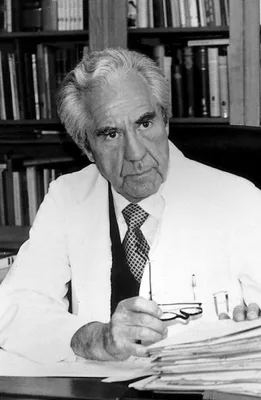
Grüntzig developed the first successful balloon angioplasty for expanding lumens of narrowed arteries.
Abstract
"In percutaneous transluminal coronary angioplasty, a catheter system is introduced through a systemic artery under local anesthesia to dilate a stenotic artery by controlled inflation of a distensible balloon.
"Over the past 18 months, we have used this technic in 50 patients. The technic was successful in 32 patients, reducing the stenosis from a mean of 84 to 34 per cent (P<0.001) and the coronary-pressure gradient from a mean of 58 to 19 mm Hg (P<0.001). Twenty-nine patients showed improvement in cardiac function during follow-up examination. Because of acute deterioration in clinical status, emergency bypass was later necessary in five patients; three showed electrocardiograpic evidence of infarcts.
"Patients with single-vessel disease appear to be most suitable for the procedure, and a short history of pain indicates the presence of a soft (distensible) atheroma likely to respond to dilatation. We estimate that only about 10 to 15 per cent of candidates for bypass surgery have lesions suitable for this procedure. A prospective randomized trial will be necessary to evaluate its usefulness in comparison with surgical and medical management. (N Engl J Med 301:61–68, 1979)."
Prior to the 1979 paper Grüntzig published a preliminary, abbreviated paper on the method: "Perkutane Dilatation von Coronarstenosen — Beschreibung eines neuen Kathetersystems. Percutaneous dilatation of experimental coronary artery stenosis — description of a new catheter system," Klinische Wochenschrift, 54 (1976) 543-545.
Browse Tags
Thematic Classifications
| Catalog Metadata | Reference Information |
|---|---|
| Entry Number | #12239 |
| Permanent Link | https://hom-sveltekit.fly.dev/entry/14453 |
| Author Bio Link | Wikipedia ↗ |
| External URL | nonoperative-dilatation-of-coronaryartery-stenosis-percutaneous-transluminal-coronary-angioplasty |