
Effects of chloroform and of strong chloric ether, as narcotic agents.
Publication Details
Boston: William D. Ticknor, 1849 CE.
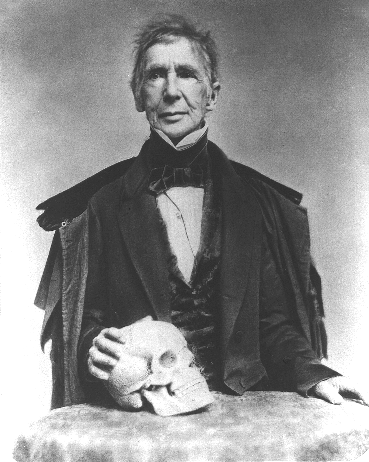
“On October 16, 1846, at Massachusetts General Hospital, Warren participated in the first public demonstration of anesthesia for surgery. He was the surgeon for the first surgical patient given ether anesthesia, and William T. G. Morton was the anesthetist…. More than a year later, in November 1847, Sir James Young Simpson of Edinburgh discovered the anesthetic properties of chloroform. However, on January 28, 1848, the first fatal chloroform anesthesia was reported. Within a year, reports of more than 10 such cases appeared. As an authority on surgical anesthesia, Warren was often asked by concerned physicians about the safety of this new anesthetic. To draw his own conclusions, Warren reviewed and analyzed all of the fatal cases of chloroform anesthesia….Because of the potential hazards of chloroform, Warren proposed that the agent not be used in minor surgical cases and encouraged its substitution with chloric ether and sulfuric ether” (Sim, The Heritage of Anesthesia, pp. 85-86, 135).
(Thanks to Malcolm Kottler for this reference.)
Browse Tags
Thematic Classifications
| Catalog Metadata | Reference Information |
|---|---|
| Entry Number | #14327 |
| Permanent Link | https://hom-sveltekit.fly.dev/entry/16652 |
| Author Bio Link | Wikipedia ↗ |
| External URL | effects-of-chloroform-and-of-strong-chloric-ether-as-narcotic-agents- |
Geographic Context
Publication place: Boston
Mentioned in annotation: Edinburgh