
Observationes medicae.
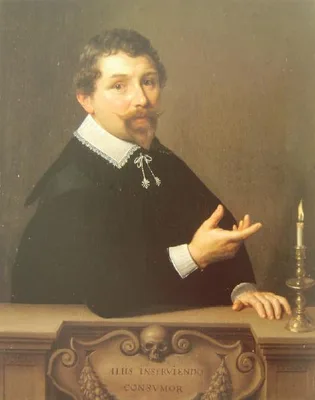
Publication Details
Amsterdam: apud L. Elzevirium, 1652 CE.
One of the earliest accounts of beri-beri is on pp. 300-05 of this work. Tulp, notable as the demonstrator in Rembrandt’s “Anatomy Lesson”, was among the first, in the same book, to describe the ileo-caecal valve (“Tulp’s valve”). The first edition was published in 1641.
"Tulp's book has various accounts of unusual illnesses and primarily growths or carcinomas, but also has accounts of creatures brought back from Dutch East India Company ships. His drawing of a Chimpanzee is considered the first of its kind.[2] This creature was called an Indian Satyr, since all ships cargo was considered Indonesian. However, the accompanying text claims the animal came from Angola. This drawing was copied many times and formed the basis for many theories on the origin of man. Most notably, Tulp's work and that of Jacob de Bondt (alias Jacobus Bontius) was copied and republished by Linnaeus to show a link between apes and man.[2]" (Wikipedia article on Observationes medicae (Tulp).
Digital facsimile of the 1652 edition from Google Books at this link.
Browse Tags
Thematic Classifications
| Catalog Metadata | Reference Information |
|---|---|
| Entry Number | #3737 |
| Permanent Link | https://hom-sveltekit.fly.dev/entry/4530 |
| Author Bio Link | Wikipedia ↗ |
| External URL | observationes-medicae |
Geographic Context
Publication place: Amsterdam