
Cicutae aquaticae historia et noxae.
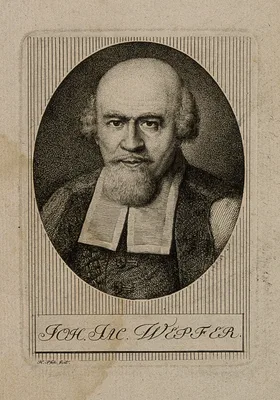
Publication Details
Basel: J. R. König, 1679 CE.
This is primarily a work on the poisonous water hemlock, its dangerous effects, its medicinal uses, and antidotes to counter the poison. However, it also contains the first description of the tiny glands in the mucosa of the duodenum, now called Brunner’s glands. Brunner was the author’s father-in-law; however, Wepfer first described them in this work. "They are described in the summary of an experiment on a dog, on pages 206 and 207. Parts of the book contains letters or extracts of letters between Wepfer and other toxicologists of that era. Four engraved plates illustrate one species of the hemlock family, the roots and lower stalk, the branching stalks, the leaves and the flowers and seeds. ... Wepfer systematically studied poisons, with particular attention to the toxic water hemlocks. He was the first to analyze the pharmacological effects of coniine, an alkaloid of hemlock that was not isolated until much later; and his classic description of hemlock poisoning was often cited as the standard" (Heirs of Hippocrates 535.5). Digital facsimile from Google Books at this link.
Thematic Classifications
| Catalog Metadata | Reference Information |
|---|---|
| Entry Number | #974.1 |
| Permanent Link | https://hom-sveltekit.fly.dev/entry/576 |
| Author Bio Link | Wikipedia ↗ |
| External URL | cicutae-aquaticae-historia-et-noxae |
Geographic Context
Publication place: Basel