
Specific cleavage of simian virus 40 DNA by restriction endonuclease of Hemophilus influenzae.
Publication Details
Proc. Natl. Acad. Sci. U.S A., 68, 2913-17. 1971 CE.
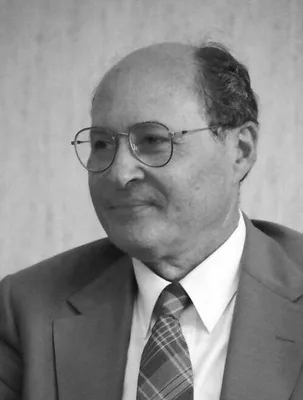
Nathans showed that the restriction enzyme discovered by Hamilton Smith cleaved SV40 DNA into 11 specific pieces. Nathans and his student Kathleen Danna wrote:
"The availability of pieces of SV40 DNA from specific sites in the molecule should be helpful for the analysis of the function of the SV40 genome. For example, when the order of fragments in the genome is known, it should be possible to map “early” and “late” genes and those genes that function in all transformed cells. It may also be possible to localize specific genes by testing for biological activity, e.g., T-antigen production or abortive transformation. If specific deletion mutants become available, the analysis of restriction enzyme digests may . . . [allow] mapping of such mutants. Comparison of restriction endonuclease digests by polyacrylamide gel electrophoresis has also provided a new method for detecting differences in DNA . . . It should [also] be possible to . . . obtain quite small, specific fragments useful for the determination of nucleotide sequence.” Quoted by Daniel Dimaio, "Daniel Nathans 1928-1999," Biographical Memoirs of the National Academy of Sciences 79 (2001) 7.
In 1978 Nathans shared the Nobel Prize in Physiology or Medicine with Hamilton Smith and Werner Arber "for the discovery of restriction enzymes and their application to problems of molecular genetics."
Thematic Classifications
| Catalog Metadata | Reference Information |
|---|---|
| Entry Number | #6890 |
| Permanent Link | https://hom-sveltekit.fly.dev/entry/9054 |
| Author Bio Link | Wikipedia ↗ |
| External URL | specific-cleavage-of-simian-virus-40-dna-by-restriction-endonuclease-of-hemophilus-influenzae |