
Facets
Browse across eight MeSH (opens in new tab) facets — era, geography, science, specialty, technology, history, culture, and reference. Select one tag per group; counts update across the others.
Clear filtersFacet filters
Geography
Specialties & Disease
- Anatomy & Pathology 0
- Cardiology & Blood 0
- Neurology & Psychiatry 1
- Obstetrics & Reproductive 1
- Infectious Disease (General) 0
- Surgery & Anesthesia 0
- Public Health 4
- Immunology & Dermatology 0
- General Clinical Medicine 2
- Military Medicine 1
- Psychology 0
- Alternative & Fringe Medicine 20
- Pediatrics 0
- Ophthalmology & Vision 0
- ENT & Hearing 0
- Urology & Nephrology 0
- Gastroenterology & Hepatology 0
- Pulmonary & Respiratory 0
- Rheumatology, Rehab & Pain 1
- Internal, Emergency & Geriatric 0
- Veterinary Medicine 0
- Epidemiology & Demography 4
- Physiology & Embryology 1
- Dentistry 0
- Plagues & Epidemics 3
- Microbiology & Virology 0
Social & Historical Studies
Institutions & Culture
Reference & Scholarly Works
Drugs & Technology
71 entries match Traditional & Indigenous [G02.403.700] · United States [Z01.058]
1801 CE
#1838.2
The American herbal, or materia medica.
The first herbal both produced and printed in the United States, as opposed to those which were reprints of European works. Includes information on native American remedies. Digital facsimile from the Medical Heritage…
1672 CE
#7007
The American physician : or, a treatise of the roots, plants, trees, shrubs, fruit, herbs, etc., growing in the English Plantations in America ; ... whereunto is added a discourse of the Cacao-nut-Tree, and the use of its fruit ; with all the ways of making Chocolate
The earliest work in English on the medicinal virtues of North American tropical plants. Based on first-hand observations made in the West Indies, Evidence suggests that Hughes began his career in 1651 with a privatee…
1900 CE
#9475
The ethno-botany of the Coahuilla Indians.
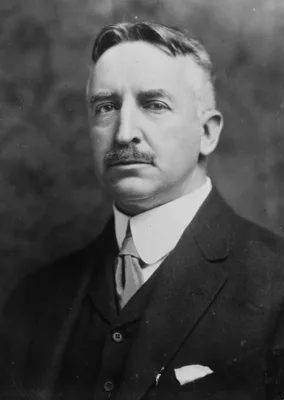
"The ʔívil̃uqaletem (or Ivilyuqaletem) are Native Americans of the inland areas of southern California.[2] Their original territory included an area of about 2,400 square miles (6,200 km2). The traditional Cahu…
1911 CE
#9347
The ethno-botany of the Gosiute Indians of Utah.
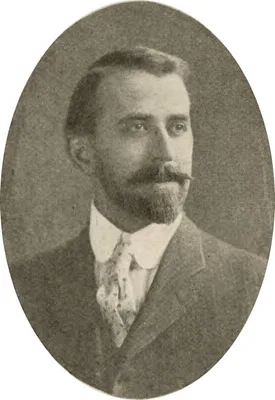
Digital facsimile from the Internet Archive at this link.
1936 CE
#9304
The ethnobiology of the Chiricahua and Mescalero Apache: A. the use of plants for food, beverages and narcotics. Ethnobiological studies in the American Southwest, Vol. 3. Biological series (Vol. 4, No. 5); Bulletin, University of New Mexico, whole, (No. 297).
1935 CE
#9303
The ethnobiology of the Papago Indians. Ethnological Studies in the American Southwest II.
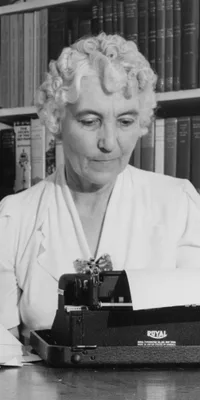
"The Tohono O’odham ... are a Native American people of the Sonoran Desert, residing primarily in the U.S. state of Arizona and the Mexican state of Sonora. Tohono O’odham means "Desert People." The federa…
1932 CE
#9283
The ethnobotany of the Acoma and Laguna Indians. M.A. thesis.
1972 CE
#9918
The ethnobotany of the California Indians: A compendium of the plants, their users, and their uses.
Revised, expanded, and updated edition, La Grande, OR: E-Cat Worlds, 2014.
1991 CE
#10409
The great American medicine show: Being an illustrated history of hucksters, healers, health evangelists and heroes from plymouth rock to the present.

1994 CE
#10084
The health of Native Americans: Towards a biocultural epidemiology.
1775 CE
#7505
The history of the American Indians; particularly those nations adjoining to the Missisippi [sic] East and West Florida, Georgia, South and North Carolina, and Virginia: containing an account of their origin, language, manners, religious and civil customs, laws, form of government, punishments, conduct in war and domestic life, their habits, diet, agriculture, manufactures, diseases and method of cure... With observations on former historians, the conduct of our colony governors, superintendents, missionaries, & c. Also an appendix, containing a description of the Floridas, and the Missisippi [sic] lands, with their productions--the benefits of colonizing Georgiana, and civilizing the Indians--and the way to make all the colonies more valuable to the mother country....
The author characterized himself on the title page as "a Trader with the Indians and a Resident in their Country for Forty Years." Digital facsimile from the Internet Archive at this link.
1798 CE
#8654
The influence of metallic tractors on the human body, in removing various painful inflammatory diseases, such as rheumatism, pleurisy, some gouty affections, &c. &c: Lately discovered by Dr. Perkins, of North America; and demonstrated in a series of experiments and observations....by which the importance of the discovery is fully ascertained, and a new field of enquiry opened in the modern science of Galvanism, or animal electricity
In 1795 Dr. Elisha Perkins (1741-1799) of Connecticut introduced the use of “Metallic Tractors” for the treatment of a wide range of disorders, including pains in the head, face, teeth, breast, side, stoma…
1990 CE
#10874
The medicine men: Oglala Sioux ceremony and healing.
1892 CE
#6452.1
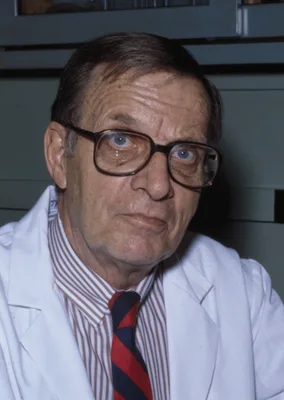
The medicine-men of the Apache.
Bourke, a U.S. Army officer with experience on the American Indian frontier, was a pioneer student of native American medicine and anthropology. Digital facsimile from the Internet Archive at this link.
1946 CE
#8741
The midwest pioneer: His ills, cures, & doctors.
The first general history of frontier or pioneer medicine in America, covering mainly the first half of the 19th century, and including many folk medicine treatments. First published privately in Crawfordsville, India…
1737 CE
#12473
The natural history of North Carolina. With an account of the trade, manners and customs of the Christian and Indian inhabitants. Illustrated with copper-plates, whereon are curiously engraved the map of the country, several strange beasts, birds, fishes, snakes, insects, trees, and plants, &c.
Brickell accompanied provincial governor George Burrington to North Carolina in 1724, remaining in the region for six years and becoming one of the first medical doctors in North Carolina. Brickell took the material o…
2012 CE
#9977
The New Encyclopedia of Southern Culture: Volume 22: Science and medicine. Edited by James G. Thomas, Jr. & Charles Reagan Wilson.
2001 CE
#9408
The people's doctors: Samuel Thomson and the American Botanical Movement 1790-1860.
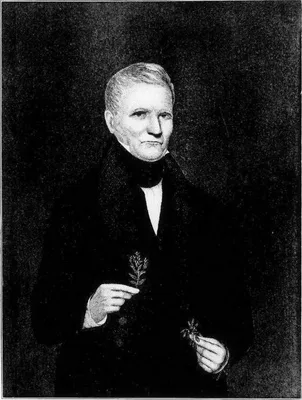
"Samuel Thomson, born in New Hampshire in 1769 to an illiterate farming family, had no formal education, but he learned the elements of botanical medicine from a "root doctor," who he met in his youth. Thomson sought …
1988 CE
#9291
The use of medicinal plants by the Alaska natives.
1928 CE
#9271
Use of plants by the Chippewa Indians. Smithsonian Institution-Bureau of American Ethnology Annual Report 44.
Digital facsimile from the Internet Archive at this link.
1919 CE
#9287
Uses of plants by the Indians of the Missouri River region. Thirty-third annual report of the Bureau of American Ethnology, 1911-1912.
Medicinal and edible plants used by the Dakota, Omaha/Ponca, Winnebago and Pawnee peoples. Gilmore reports on 180 plants, and offers 16 pages of tables of names in various languages. Digital facsimile from the Biodive…