
Facets
Browse across eight MeSH (opens in new tab) facets — era, geography, science, specialty, technology, history, culture, and reference. Select one tag per group; counts update across the others.
Clear filtersFacet filters
Geography
Specialties & Disease
- Anatomy & Pathology 8
- Cardiology & Blood 7
- Neurology & Psychiatry 25
- Obstetrics & Reproductive 13
- Infectious Disease (General) 2
- Surgery & Anesthesia 30
- Public Health 99
- Immunology & Dermatology 6
- General Clinical Medicine 23
- Military Medicine 107
- Psychology 1
- Alternative & Fringe Medicine 29
- Pediatrics 6
- Ophthalmology & Vision 2
- ENT & Hearing 0
- Urology & Nephrology 0
- Gastroenterology & Hepatology 3
- Pulmonary & Respiratory 1
- Rheumatology, Rehab & Pain 2
- Internal, Emergency & Geriatric 5
- Veterinary Medicine 1
- Epidemiology & Demography 38
- Physiology & Embryology 6
- Dentistry 7
- Plagues & Epidemics 81
- Microbiology & Virology 30
Social & Historical Studies
Institutions & Culture
Reference & Scholarly Works
Drugs & Technology
29 entries match United States [Z01.058] · Alternative & Fringe Medicine [G02.403.750 / M01]
1998 CE
#9642
"Every man his own doctor." Popular medicine in early America: An exhibition drawn from the collections of Charles E. Rosenberg, William H. Helfand and the Library Company of Philadelphia.
2015 CE
#10275
A Cree healer and his medicine bundle: Revelations of indigenous wisdom: Healing plants, practices, and stories.
"With the rise of urban living and the digital age, many North American healers are recognizing that traditional medicinal knowledge must be recorded before being lost with its elders. A Cree Healer and His Medicine B…
2006 CE
#8656
A most amazing scene of wonders: Electricity and enlightenment in early America.
"By examining the lives and visions of natural philosophers, spectacular showmen, religious preachers and medical therapists, he shows how electrical experiences of wonder, terror, and awe were connected to a broad ar…
1887 CE
#8716
American medicinal plants; an illustrated and descriptive guide to the American plants used as homoeopathic remedies: Their history, preparation, chemistry and physiological effects. Illustrated by the author.
Plates printed by chromolithography. Digital facsimile from the Internet Archive at this link.
1998 CE
#10332
An alternative Path: The making and remaking of Hahnemann Medical College and Hospital.
"When Hahnemann Medical College was founded in Philadelphia in 1848, it was the only institution in the world to offer an M. D. degree in homeopathy, a therapeutic and intellectual alternative to orthodox medicine. Th…
2014 CE
#7837
Border medicine: A transcultural history of Mexican American curanderismo.
1963 CE
#7868
Botanic manuscript of Jane Colden, 1724-1766. Edited by H.W. Rickett and E.C. Hall.
Colden was the first distinguished American woman botanist. Her work is known only from an untitled manuscript by her on the flora of the lower Hudson River Valley of New York that is preserved in the Natural History …
1838 CE
#10402
Botica general de los remedios esperimentados. Que á beneficio del público se reimprime por su original en Cadiz, en Sonoma, de la alta California: Por M. G. V.
The first medical book printed in California, a small 23-page pamphlet of folk or popular medicine. It was printed by Agustín V. Zamorano, the first printer in Alta California under Mexican rule before the regi…
1977 CE
#9288
Childbirth in the ghetto: Folk beliefs of negro women in a North Philadelphia hospital ward.
1991 CE
#9673
Enter the physician: The transformation of domestic medicine, 1760-1860.
2003 CE
#9631
Folk medicine in southern Appalachia.
1935 CE
#8616
Folk medicine of the Pennsylvania Germans: The non-occult cases.
1905 CE
#6868
History of homoeopathy and its institutions in America: Their founders, benefactors, faculties, officers, hospitals, alumni, etc., with a record of achievement of its representatives in the world of medicine .... 4 vols.
Digital facsimile from the Internet Archive at this link.
2016 CE
#10048
Nature's path: A history of naturopathic healing in America.
1841 CE
#10072
Notes on the United States of North America during a phrenological visit in 1838-9-40. 3 vols.
Digital facsimile from the Hathi Trust at this link.
1988 CE
#6956
Other healers: Unorthodox medicine in America. Edited by Norman Gevitz.
1988 CE
#8788
Ritual healing in suburban America. By Meredith B. McGuire with the assistance of Debra Kantor.
1994 CE
#10090
Secret doctors: Ethnomedicine of African Americans.
"Based on an ethnographic study of the traditional medicine of African Americans in the rural southern United States, this work concentrates on the original Louisiana Territory, with its Native and African American in…
1999 CE
#9745
Southern folk medicine 1750-1820.
1825 CE
#6861
The characteristics of homoeopathia. From Hahnemann's "Geist der Homöopathischen Heil-lehre."
The first publication on homeopathy issued in the United States— a translation of Hahnemann's essay. The 24-page pamphlet was dedicated to David Hosack of New York, and gratuitously distributed to leading physic…
1991 CE
#10409
The great American medicine show: Being an illustrated history of hucksters, healers, health evangelists and heroes from plymouth rock to the present.
2013 CE
#9405
The history of American homeopathy: From rational medicine to holistic health care.
2005 CE
#9406
The history of American homeopathy: The academic years, 1820-1935.
1798 CE
#8654
The influence of metallic tractors on the human body, in removing various painful inflammatory diseases, such as rheumatism, pleurisy, some gouty affections, &c. &c: Lately discovered by Dr. Perkins, of North America; and demonstrated in a series of experiments and observations....by which the importance of the discovery is fully ascertained, and a new field of enquiry opened in the modern science of Galvanism, or animal electricity
In 1795 Dr. Elisha Perkins (1741-1799) of Connecticut introduced the use of “Metallic Tractors” for the treatment of a wide range of disorders, including pains in the head, face, teeth, breast, side, stoma…
1990 CE
#10874
The medicine men: Oglala Sioux ceremony and healing.
1892 CE
#6452.1
The medicine-men of the Apache.
Bourke, a U.S. Army officer with experience on the American Indian frontier, was a pioneer student of native American medicine and anthropology. Digital facsimile from the Internet Archive at this link.
1946 CE
#8741
The midwest pioneer: His ills, cures, & doctors.
The first general history of frontier or pioneer medicine in America, covering mainly the first half of the 19th century, and including many folk medicine treatments. First published privately in Crawfordsville, India…
2012 CE
#9977
The New Encyclopedia of Southern Culture: Volume 22: Science and medicine. Edited by James G. Thomas, Jr. & Charles Reagan Wilson.
2001 CE
#9408
The people's doctors: Samuel Thomson and the American Botanical Movement 1790-1860.
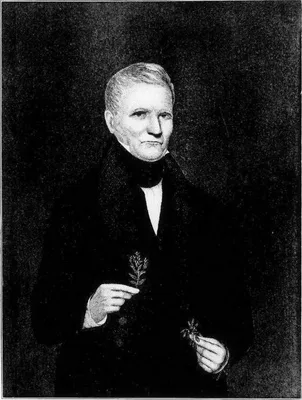
"Samuel Thomson, born in New Hampshire in 1769 to an illiterate farming family, had no formal education, but he learned the elements of botanical medicine from a "root doctor," who he met in his youth. Thomson sought …