
Facets
Browse across eight MeSH (opens in new tab) facets — era, geography, science, specialty, technology, history, culture, and reference. Select one tag per group; counts update across the others.
Clear filtersFacet filters
Geography
Specialties & Disease
- Anatomy & Pathology 0
- Cardiology & Blood 0
- Neurology & Psychiatry 0
- Obstetrics & Reproductive 0
- Infectious Disease (General) 0
- Surgery & Anesthesia 2
- Public Health 2
- Immunology & Dermatology 3
- General Clinical Medicine 0
- Military Medicine 0
- Psychology 1
- Alternative & Fringe Medicine 0
- Pediatrics 0
- Ophthalmology & Vision 0
- ENT & Hearing 0
- Urology & Nephrology 0
- Gastroenterology & Hepatology 0
- Pulmonary & Respiratory 0
- Rheumatology, Rehab & Pain 0
- Internal, Emergency & Geriatric 0
- Veterinary Medicine 0
- Epidemiology & Demography 1
- Physiology & Embryology 8
- Dentistry 1
- Plagues & Epidemics 0
- Microbiology & Virology 0
Social & Historical Studies
Institutions & Culture
Reference & Scholarly Works
Drugs & Technology
24 entries match Professions & Education [M01 / N02] · Physics, Math & Biomechanics [K01.900.400]
1966 CE
#14064
"Fertile" intestine nuclei.
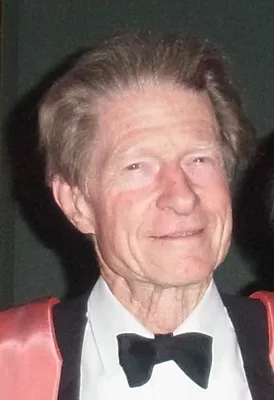
Gurdon and Uehlinger replaced the cell nucleus of frog ova with frog intestinal nuclei to generate tadpoles, some of which became fertile adult male and female frogs. In 2012 the Nobel Prize in Physiology or Medicine …
2012 CE
#14013
A physics-based virtual simulator for cranial microneurosurgery training.

"Abstract "BACKGROUND: "A virtual reality neurosurgery simulator with haptic feedback may help in the training and assessment of technical skills requiring the use of tactile and visual cues. "OBJECTIVE: "To develop a…
1958 CE
#6911
A three-dimensional model of the myoglobin molecule obtained by x-ray analysis.
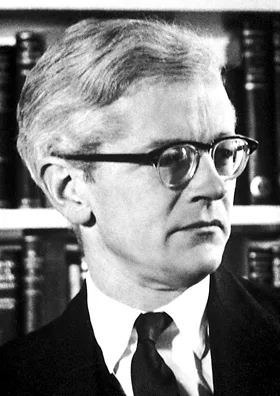
Initial paper on the first solution of the three-dimensional molecular structure of a protein. Computing the molecular structure in 3 dimensions was possible through the use of the Cambridge EDSAC stored-program elect…
2017 CE
#10555
Cancer, radiation therapy, and the market.
1973 CE
#2700.4
Computerized transverse axial scanning (tomography).
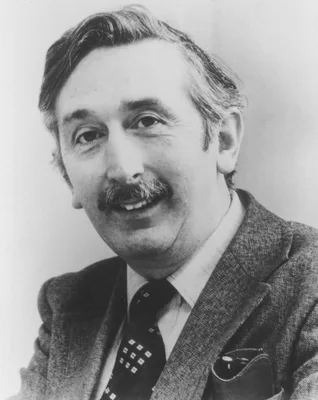
Hounsfield invented computer-assisted tomography (CAT), or computed tomography (CT). In 1979 Hounsfield shared the Nobel Prize in Physiology or Medicine with Allen M. Cormack "for the development of computer assisted …
1680 CE–1681 CE
#3669.3
De motu animalium. 2 pts.
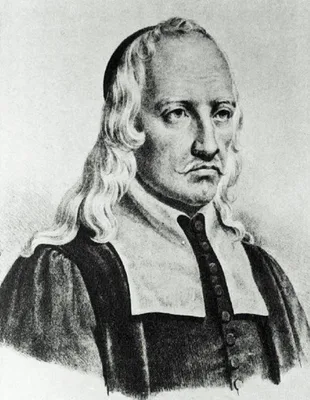
Borelli originated the neurogenic theory of the heart’s action and first suggested that the circulation resembled a simple hydraulic system. He was the first to insist that the heart beat was a simple muscular c…
2003 CE
#14300
Design of a novel globular protein fold with atomic-level accuracy.
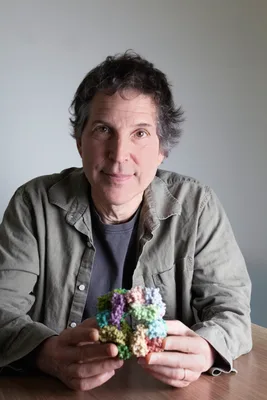
Called, "the breakthrough in computational de novo protein design." This was the proof of concept paper that computers and AI could be used to predict protein structures accurately and much faster than with convention…
2018 CE
#10121
Digital health: Scaling healthcare to the world. Edited by Homero Rivas and Katarzyna Wac.
Probably the first book published on "digital health." "This book presents a comprehensive state-of the-art approach to digital health technologies and practices within the broad confines of healthcare practices. It p…
1981 CE
#13285
Establishment in culture of pluripotential cells from mouse embryos.
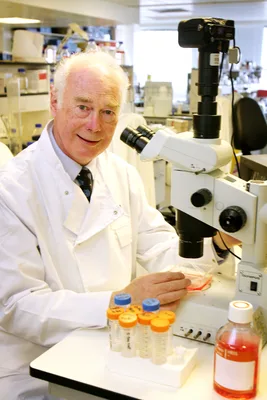
Evans and Kauffman were the first to identify, isolate and successfully culture embryonic stem cells using mouse blastocysts. This discovery opened the doors to the creation of “murine genetic models” -- m…
2021 CE
#14026
Highly accurate protein structure prediction with AlphaFold.



Abstract: "Proteins are essential to life, and understanding their structure can facilitate a mechanistic understanding of their function. Through an enormous experimental effort1,2,3,4, the structures of around 100,0…
2006 CE
#13287
Induction of pluripotent stem cells from mouse embryonic and adult fibroblast cultures by defined factors.
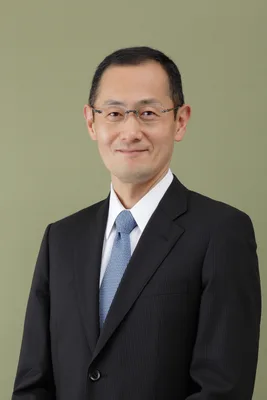
Takahashi and Yamanaka reprogrammed mice fibroblast cells, which can produce only other fibroblast cells, to become pluripotent stem cells, which have the capacity to produce many different types of cells. This they a…
2019 CE
#14014
Machine learning identification of surgical and operative factors associated with surgical expertise in virtual reality simulation.
"Abstract "Importance Despite advances in the assessment of technical skills in surgery, a clear understanding of the composites of technical expertise is lacking. Surgical simulation allows for the quantitation of ps…
2022 CE
#14106
Performance of ChatGPT on USMLE: Potential for AI-assisted medical education using large language models.
Abstract: "We evaluated the performance of a large language model called ChatGPT on the United States Medical Licensing Exam (USMLE), which consists of three exams: Step 1, Step 2CK, and Step 3. ChatGPT performed at o…
1990 CE
#14340
Phage antibodies: Filamentous phage displaying antibody variable domains.


Working in the Laboratory of Molecular Biology at Cambridge University, Winter became interested in the idea that all antibodies have the same basic structure, with only small changes making them specific for one targ…
1963 CE
#8149
Representation of a Function by its Line Integrals, with Some Radiological Applications.

Cormack showed that changes in tissue density could be computed from x-ray data. Because of limitations in computing power no machine was constructed during the 1960s. Cormack's papers generated little interest until …
2016 CE
#8847
Simulation in healthcare education: An extensive history.
The first history of this topic on the history of mannikins and the unusually wide variety of devices, including interactive software, used in the training of the different specialties in medicine and nursing.
1987 CE
#13931
Site-directed mutagenesis by gene targeting in mouse embryo-derived stem cells.
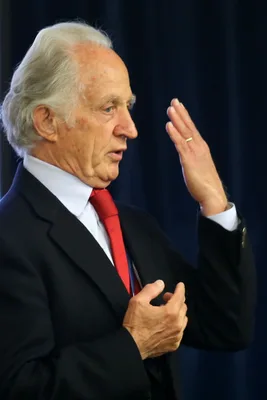
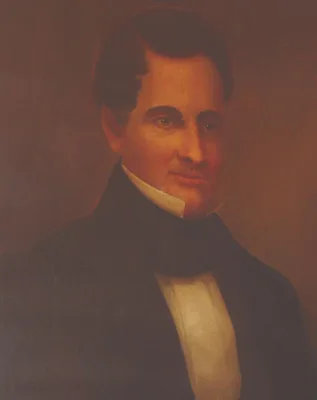
In 2007 Capecchi shared the 2007 Nobel Prize in Physiology or Medicine with Martin J. Evans and Oliver Smithies "for their discoveries of principles for introducing specific gene modifications in mice by the use of em…
2002 CE
#13598
Stem cells and the future of regenerative medicine.
In 2001 this report cited the following diseases with high prevalence in the United States as likely candidates for stem cell research: Cardiovascular Disease: 58 million U.S. patients Automimmune Disease: 30 million …
1835 CE
#1698.1
Sur l’homme et le développement des facultés, ou essai de physique sociale. 2 vols.
Quetelet’s statistical researches on the development of the physical and intellectual qualities of man, and an exposition of his concept of the “average man”, which became the by-word of quantitative…
1896 CE
#2001
Sur les radiations émises par phosphorescence.
The discovery of radioactivity – research stimulated by Roentgen’s discovery of x rays. In 1903 Becquerel received half of the Nobel Prize in Physics 1903 "in recognition of the extraordinary services he h…
1987 CE
#13940
Targeted correction of a mutant HPRT gene in mouse embryonic stem cells.
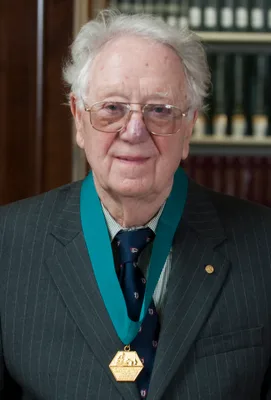
Smithies discovered, simultaneously with Mario Capecchi and Martin Evans, the technique of homologous recombination of transgenic DNA with genomic DNA, a much more reliable method of altering animal genomes than previ…
2013 CE
#13284
The California Institute for Regenerative Medicine. Science, governance, and the pursuit of cures
The California Institute for Regenerative medicine was the first state-fund institution that provided stable, in-state funding on a very large scale for biomedical research. "The California Institute for Regenerative …
2011 CE
#13319
The delivery of regenerative medicines and their impact on healthcare. Edited by Catherine D. Prescott and Dame Julia Polak.
1981 CE
#13068
The mismeasure of man.

A critique of statistical methods and cultural motivations underlying biological determinism. "Gould argues that the primary assumption underlying biological determinism is that, “worth can be assigned to indivi…