
Facets
Browse across eight MeSH (opens in new tab) facets — era, geography, science, specialty, technology, history, culture, and reference. Select one tag per group; counts update across the others.
Clear filtersFacet filters
Geography
Specialties & Disease
- Anatomy & Pathology 37
- Cardiology & Blood 5
- Neurology & Psychiatry 5
- Obstetrics & Reproductive 0
- Infectious Disease (General) 4
- Surgery & Anesthesia 2
- Public Health 64
- Immunology & Dermatology 15
- General Clinical Medicine 12
- Military Medicine 22
- Psychology 5
- Alternative & Fringe Medicine 5
- Pediatrics 1
- Ophthalmology & Vision 0
- ENT & Hearing 1
- Urology & Nephrology 2
- Gastroenterology & Hepatology 1
- Pulmonary & Respiratory 2
- Rheumatology, Rehab & Pain 2
- Internal, Emergency & Geriatric 0
- Veterinary Medicine 2
- Epidemiology & Demography 17
- Physiology & Embryology 10
- Dentistry 3
- Plagues & Epidemics 17
- Microbiology & Virology 48
Social & Historical Studies
Institutions & Culture
Reference & Scholarly Works
Drugs & Technology
5 entries match Alternative & Fringe Medicine [G02.403.750 / M01] · Natural History & Evolution [K01.900.500]
1509 CE
#8445
Medicinae Pliniae libri quinque finiunt foeliciter.
The Medicina Plinii was an anonymous compilation of remedies dating to the early 4th century CE ."The excerptor, saying that he speaks from experience, offers the work as a compact resource for travelers in dealing wi…
1879 CE
#8852
Gold as a remedy in disease, notably in some forms of organic heart disease, angina pectoris, melancholy, tedium vitae, scrofula, syphilis, skin disease, & as an antidote to the ill effects of mercury.
Burnett, a homeopath, provided an excellent summary of the history of gold as it was used in medicine, with extensive references to the historical literature. Digital facsimile from the Hathi Trust at this link.
1511 CE
#9183
Libellus de lapidibus preciosis nuper editus.
The earliest medieval lapidary, and also the one which was quoted most widely. By the fourteenth century it was translated into French, Provençal, Italian, Irish, and Danish, and it was the first of Marbodius's…
2004 CE
#10074
Phrenology and the origins of Victorian scientific naturalism.
1828 CE
#10071
The constitution of man considered in relation to external objects.
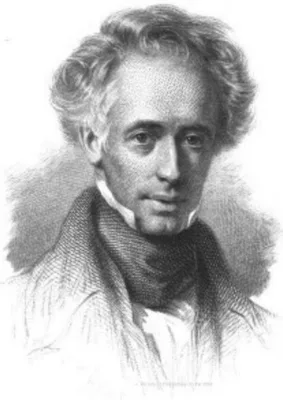
"Combe argues that the human mind is best understood through Phrenology, and that the relative size of the various regions of the brain defined by Phrenology determines a persons behavior and potential interactions wi…