
Facets
Browse across eight MeSH (opens in new tab) facets — era, geography, science, specialty, technology, history, culture, and reference. Select one tag per group; counts update across the others.
Clear filtersFacet filters
Geography
Specialties & Disease
- Anatomy & Pathology 7
- Cardiology & Blood 94
- Neurology & Psychiatry 27
- Obstetrics & Reproductive 5
- Infectious Disease (General) 1
- Surgery & Anesthesia 76
- Public Health 8
- Immunology & Dermatology 50
- General Clinical Medicine 1
- Military Medicine 0
- Psychology 3
- Alternative & Fringe Medicine 0
- Pediatrics 44
- Ophthalmology & Vision 12
- ENT & Hearing 5
- Urology & Nephrology 0
- Gastroenterology & Hepatology 9
- Pulmonary & Respiratory 5
- Rheumatology, Rehab & Pain 4
- Internal, Emergency & Geriatric 0
- Veterinary Medicine 2
- Epidemiology & Demography 4
- Physiology & Embryology 23
- Dentistry 3
- Plagues & Epidemics 27
- Microbiology & Virology 22
Social & Historical Studies
Institutions & Culture
Reference & Scholarly Works
Drugs & Technology
27 entries match Neurology & Psychiatry [C10 / F04] · Genetics & Heredity [K01.900.300]
1974 CE
#5019.15
A centennial bibliography of Huntington’s chorea, 1872-1972.
Over 2,000 references to original works. Chronological arrangement. Author, geographic and other indexes. With F. Baro and N. C. Myrianthopoulos.
1911 CE
#4822
A first study of inheritance of epilepsy.
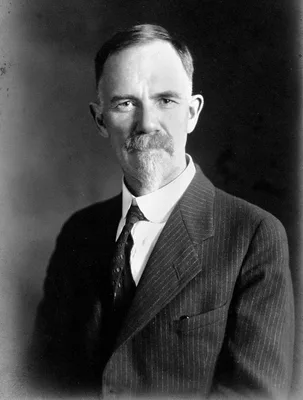
Davenport and Weeks produced strong evidence in support of the hereditary origin of epilepsy.
1993 CE
#14008
A novel gene containing a trinucleotide repeat that is expanded and unstable on Huntington's disease chromosomes.
Identification by the many scientists in The Huntington's Disease Collaborative Research Group, including Gusella, of the single defective gene on chromosome 4 that causes the progressive brain disorder, Huntington's …
1784 CE
#2734.4
A treatise on the diseases of children.
Underwood laid the foundation of modern pediatrics. His work was superior to anything that had previously appeared and remained the most important book on the subject for sixty years, passing through many editions. Th…
1814 CE
#216.1
A treatise on the supposed hereditary properties of diseases, containing remarks on the unfounded terrors and ill-judged cautions consequent on such erroneous opinions; with notes, illustrative of the subject, particularly in madness and scrofula.
Adams was a pioneer in medical genetics. He distinguished between familial and hereditary diseases, saw that an increase in hereditary disease frequency in isolated areas could be caused by inbreeding, and suggested t…
1880 CE
#4700
Contribution à l’étude de l’idiotàie.
“Bourneville’s disease”, tuberous sclerosis, epiloia (p. 81). Digital facsimile from biuSante.parisdescartes.fr at this link. For the history of the understanding of this disease see the remarkable W…
1861 CE
#4693
Klinik der Leberkrankheiten. Bd. 2.
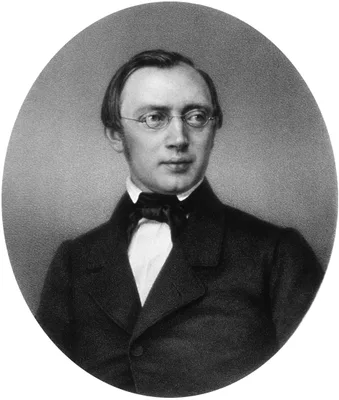
Pp. 62-64: First description of progressive familial hepatolenticular degeneration (“Kinnier Wilson’s disease”; see No. 4717).
1614 CE
#3789
Observationum in hominis affectibus plerisque, corpori & animo, functionum laesione, dolore, aliave molestia & vitio incommodantibus, libri tres.
First known report of a case of death from hypertrophy of the thymus, in an infant, is reported on p. 172; it is reproduced on p. 239 of J. Ruhräh’s Pediatrics of the past, New York, 1925. Platter first des…
1887 CE
#4705
On arrested cerebral development, with special reference to its cortical pathology.
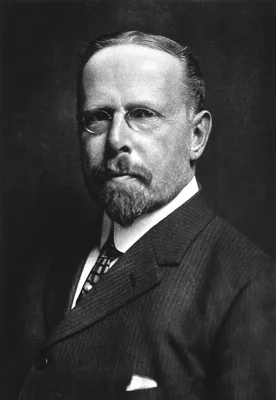
Sachs described the cerebral changes in amaurotic familial idiocy. Earlier, Tay (No. 5918) had recorded the ocular manifestations of this condition, which became known as “Tay-Sachs’s disease”. Two f…
1879 CE
#5917
On astigmatism as a cause for persistent headache and other nervous symptoms.
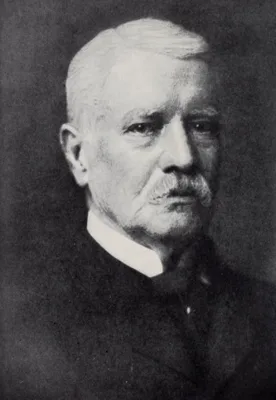
Thomson was a pioneer in the study of refraction. He was much interested in color-blindness and modified Holmgren’s wool-skein test. Himself affected with hypermetropia, he made important investigations on this …
1872 CE
#4699
On chorea.
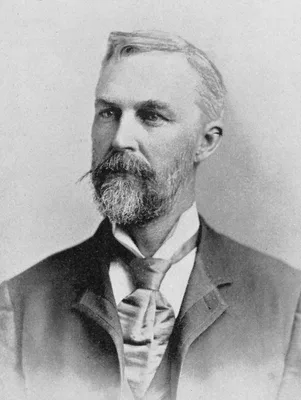
The classic description by Huntington of the chronic degenerative hereditary type of chorea led to the eponym “Huntington’s chorea”. Earlier accounts of the disease were given by John Elliotson (Lanc…
1842 CE
#4691
Practice of medicine: A treatise on special pathology and therapeutics. 2 vols.
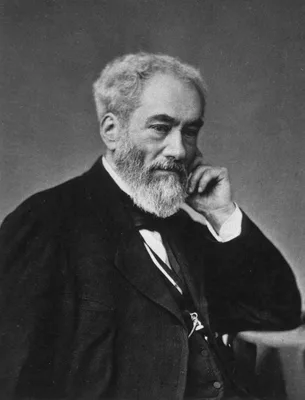
A case of chronic hereditary chorea in adults (“Huntington’s chorea”, see No. 4699) is described on pp. 312-13 of vol. 2. This is in the form of a letter from one of Dunglison's recently graduated st…
1827 CE
#11126
Recherches sur l’agénésie cérébrale et la paralysie congénitale.
“The first scientific paper on paralysis in children was published in 1827 by Jean Baptiste Cazauvieilh, who […] noted that congenital hemiplegia was associated with cerebral atrophy and differentiated th…
1893 CE
#4708.1
Sur l’hérédo-ataxie cérébelleuse.
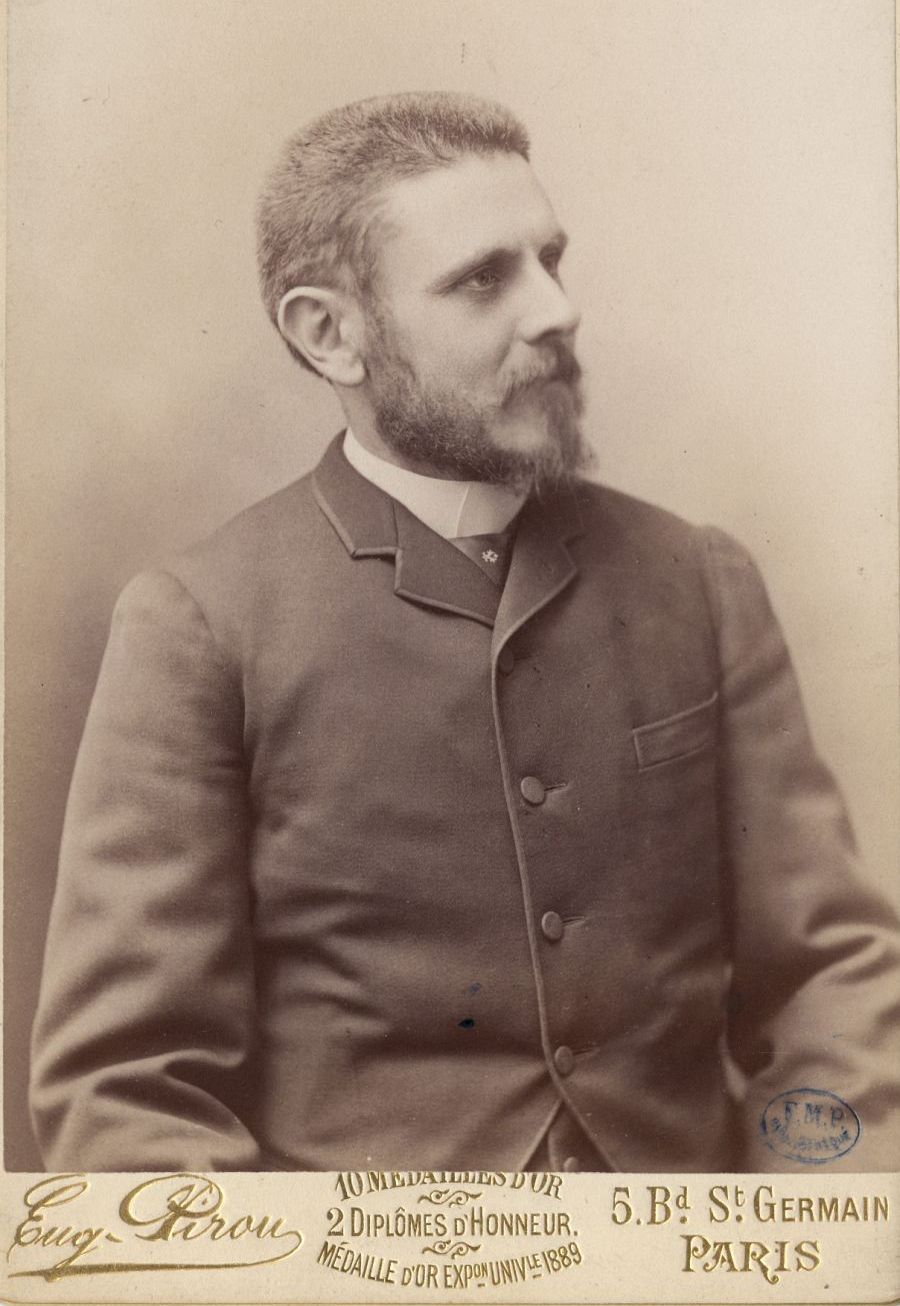
Original description of hereditary cerebellar ataxia.
1880 CE–1881 CE
#5918
Symmetrical changes in the region of the yellow spot in each eye of an infant.
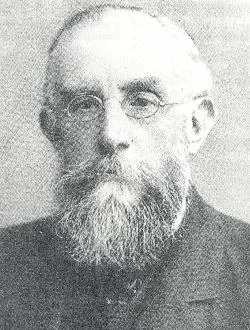
Tay was the first to describe amaurotic familial idiocy, his paper dealing mainly with the ocular manifestations. The condition later became known as “Tay-Sachs’s disease” (see also No. 4705).
1949 CE
#4962.2
The biology of mental defect.
1923 CE
#7407
The elephant man and other reminiscences.
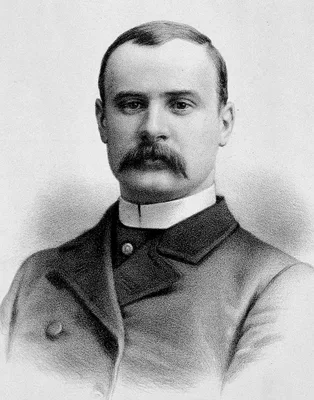
The story of Treves's patient, Joseph Carey Merrick (1862-1890), incorrected identified by Treves in these reminiscences as "John Merrick." The story was retold in The elephant man, Bernard Pomerance's 1977 play about…
1912 CE
#11535
The Kallikak family: A study in the heredity of feeble-mindedness.
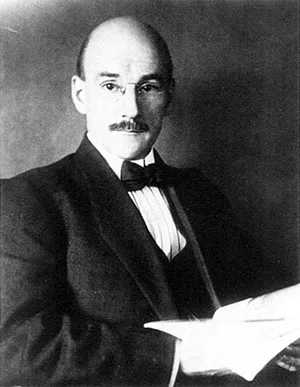
When this book was published Goddard was Director of the Research Laboratory of the Training School at Vineland, New Jersey, for Feeble-minded Girls and Boys. Though this work drew wide attention to the problems of pe…
1886 CE
#4750
The peroneal type of progressive muscular atrophy. Thesis for the degree of M.D. in the University of Cambridge.
Tooth described peroneal muscular atrophym a hereditary motor and sensory neuropathy of the peripheral nervous system, independently of, and in the same year as, Charcot and Marie. Known as Charcot-Marie-Tooth (CMT) d…
1876 CE
#4744
Tonische Krämpfe in willkürlich beweglichen Muskeln in Folge von ererbter psychischer Disposition (Ataxia muscularis?).
Thomsen suffered from muscle weakness and cramps, an issue that all his sons inherited. Realizing that this was a hereditary disease, Thomsen managed to trace the disease for six generations, and found over 20 cases o…
1857 CE
#4933.1
Traité des dégénérescences physiques, intellectuelles et morales de l’espèce humaine. 1 vol. and atlas.
The main support for the theory of mental illness as regression which dominated psychiatric practice for several decades. Morel described and illustrated the nature, causes, and signs of human degeneration. He focused…
1926 CE
#4609
Über das morphologische Wesen und die Histopathologie der hereditaersystematischen Nervenkrankheiten.
Schaffer was a pioneer Hungarian neuropathologist. He laid down a triad of criteria for judging whether or not a neurological disease is hereditary.
1863 CE
#4696
Ueber degenerative Atrophie der spinalen Hinterstränge.
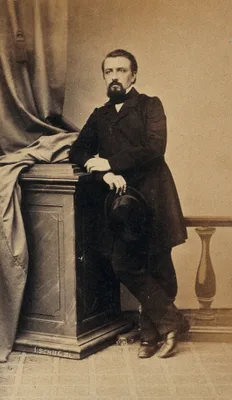
Friedreich was the first to describe a form of ataxia (“Friedreich’s ataxia”), hereditary, attended with impairment of speech, lateral curvature of the spine, and with paralysis of the muscles of the…
1886 CE
#4704
Ueber eine bestimmte Form der primären combinirten Systemerkrankungen des Rückenmarks.
“Strümpell’s disease” – hereditary spastic spinal paralysis, previously described by Erb and by Charcot.
1871 CE
#5906
Ueber hereditäre und congenital-angelegte Sehnervenleiden.
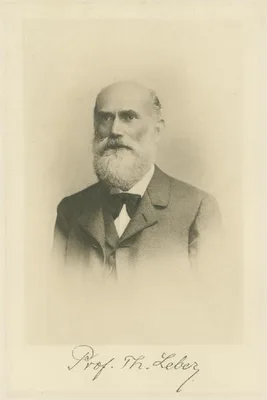
First description of hereditary optic atrophy, “Leber’s optic atrophy”.
1934 CE
#3924
Utskillelse av fenylpyrodruesyre i urinen som stoffskifteanomali i forbindelse med imbecilletet.
Phenylketonuria (PKU) first described. This was the first hereditary metabolic disorder shown to be responsible for mental retardation. German translation in Hoppe-Seyl. Z. physiol. Chem., 1934, 227, 169-76. English t…
1995 CE
#11343
Whole-genome random sequencing and assembly of Haemophilus influenzae Rd.


First sequence of the complete genome of a free-living non-viral organism—Haemophilus influenzae—the bacterium that causes lower respiratory tract infections and meningitis in infants and young children. T…