
Facets
Browse across eight MeSH (opens in new tab) facets — era, geography, science, specialty, technology, history, culture, and reference. Select one tag per group; counts update across the others.
Clear filtersFacet filters
Geography
Specialties & Disease
- Anatomy & Pathology 2
- Cardiology & Blood 43
- Neurology & Psychiatry 9
- Obstetrics & Reproductive 29
- Infectious Disease (General) 0
- Surgery & Anesthesia 78
- Public Health 3
- Immunology & Dermatology 4
- General Clinical Medicine 7
- Military Medicine 5
- Psychology 2
- Alternative & Fringe Medicine 0
- Pediatrics 2
- Ophthalmology & Vision 25
- ENT & Hearing 25
- Urology & Nephrology 11
- Gastroenterology & Hepatology 9
- Pulmonary & Respiratory 14
- Rheumatology, Rehab & Pain 2
- Internal, Emergency & Geriatric 13
- Veterinary Medicine 0
- Epidemiology & Demography 1
- Physiology & Embryology 38
- Dentistry 22
- Plagues & Epidemics 5
- Microbiology & Virology 0
Social & Historical Studies
Institutions & Culture
Reference & Scholarly Works
29 entries match Obstetrics & Reproductive [C13 / G02.403.615] · Instruments & Devices [E07]
1752 CE
#6154
A treatise on the theory and practice of midwifery.
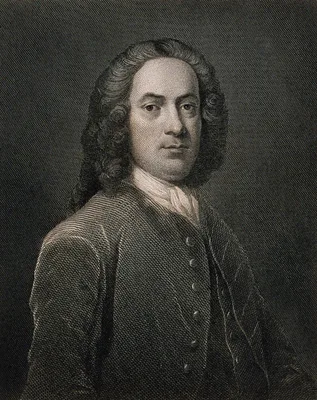
Smellie contributed more to the fundamentals of obstetrics than virtually any individual. In his Treatise he described more accurately than any previous writer the mechanism of parturition, stressing the importance of…
1759 CE
#6848
Abregé de l'art des accouchements, dans lequel on donne les préceptes nécessaires pour le mettre heureusement en pratique, et auquel on a joint plusieurs observations intéressantes sur des cas singuliers.
After ten years as a midwife in Paris, Madame du Coudray was hired by King Louis XV to travel across France to better train rural midwives.There were political motivations for this; Louis wanted to boost a “decl…
1733 CE
#6156.2
An essay on the improvement of midwifery.
Gives the first published account of the forceps, kept secret by the Chamberlen family for generations. Chapman was the second person in England to teach midwifery publicly. The first edition of his book was not illus…
1734 CE
#6156.3
Cases in midwifry. Revised by Edward Hody.
Giffard was one of the first, after the Chamberlens, to use the forceps. His book contains, under case 14, the earliest published record of the use of the hitherto secret Chamberlen forceps, in 1726, together with ill…
1867 CE
#11641
Catalogue and report of obstetrical and other instruments exhibited at the Conversazione of the Obstetrical Society of London...held, by permission, at the Royal College of Physicians, March 28th, 1866.
“ A key reference source for mid-19th century [obstetrical] instruments. Many of these instruments became incorporated into the Museum of the Obstetrical Society of London, the contents of which became the prope…
1866 CE
#6057
Clinical notes on uterine surgery, with reference to the management of the sterile condition.
A revolutionary and controversial work, written in Paris while Sims was in voluntary exile because of the U.S. Civil War, and first serialized in Lancet 2 (1864) and 1 (1865). Includes, pp. 16-18, the description of S…
1869 CE
#5610
Collezione della memorie chirurgiche ed ostetriche. 2 vols.
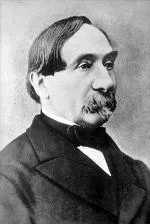
Rizzoli was Professor of Surgery at Bologna and an outstanding operative surgeon. He introduced a compressor for aneurysms, a tracheotome, cystotome, lithotrite, enterotome, osteoclast, and performed acupressure as ea…
1668 CE
#6147
Des maladies des femmes grosses et accouchées.
The outstanding textbook of the time. Mauriceau, leading obstetrician of his day, introduced the practice of delivering his patients in bed instead of in the obstetrical chair. It was to Mauriceau that Hugh Chamberlen…
1877 CE
#6192
Description de deux nouveaux forceps.
Tarnier invented the axis-traction forceps. See also Ann. Gynéc., 1877, 7, 241-64
1554 CE
#463
Ein schön lustig Trostbüchle von den Empfengknussen und Geburten der Menschen…
An improved version of Rösslin’s Swangern frawen. This contains the first true anatomical pictures in an obstetrics book. Rueff described smooth-edged forceps for delivery of a live baby, preceding Chamberl…
1887 CE
#6286
Histoire des accouchements chez tous les peuples.
182-page appendix: "L'arsenal obstétrical", containing numerous illustrations of instruments, at end. Digital facsimile from the Internet Archive at this link.
2013 CE
#7501
Imaging and imagining the fetus: The development of obstetric ultrasound.

1842 CE–1843 CE
#6033
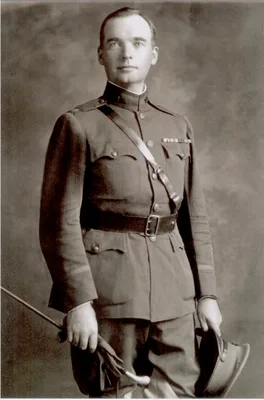
Invention du spéculum plein et brisé.
Description of the speculum invented by Récamier.
1753 CE
#6153
L’art des accouchemens.
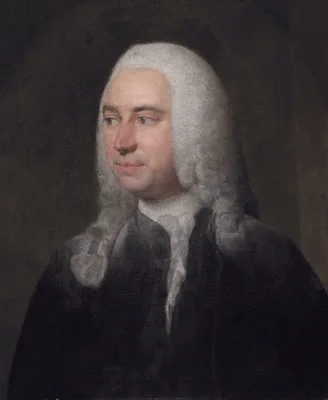
Besides introducing a curved forceps (see No. 6152) Levret invented several other obstetric instruments and made fundamental observations on pelvic anomalies. His book covered the whole field of obstetrics and remaine…
1862 CE
#2166.1
Notes on arrow wounds.
The definitive work on American Indian arrow wounds suffered by U. S. troops and settlers in frontier warfare during the Western expansion of the United States. Bill eventually developed a "Forceps for the Extraction …
1747 CE
#6152
Observations sur les causes et les accidens de plusieurs accouchemens laborieux.
Levret, who improved the obstetric forceps, was a famous teacher in Paris.
1929 CE
#6299.1
Obstetric forceps, its history and evolution.
1860 CE
#6043.1
On diseases peculiar to women, including displacements of the uterus.
Chapter 5 includes a lengthy description of the “Hodge pessary”. See No. 6185.
1879 CE
#5615
Remarks on forcipressure and the use of pressure-forceps in surgery.
Spencer Wells forceps.
1857 CE
#6043
System of practical surgery. 4th ed.
Fergusson’s vaginal speculum is described on p. 724.
1882 CE
#6283
The Chamberlens and the midwifery forceps.
1949 CE
#6310
The development of gynaecological surgery and instruments… from the Hippocratic age to the Antiseptic period.
Reprint, San Francisco, Norman Publishing, 1990.
1786 CE
#11534
The first American edition, An abridgement of the practice of midwifery: and a set of anatomical tables.
An abridgement of Smellie's obstetrical writings, with plates engraved by the editor and publisher, John Norman, was the first medical book with engraved illustrations published in North America, and also the first bo…
1938 CE
#2682.51
The history of the forceps: An investigation on the occurrence, evolution, and use of the forceps from prehistoric times to the present (with a summary in Danish). Translated by William Ernest Calvert.
Not limited to the obstetric forceps.
2000 CE
#6904
The obstetrician’s armamentarium: Historical obstetric instruments and their inventors.
1864 CE
#6185
The principles and practice of obstetrics.
Hodge, nearly blind, dictated this superb textbook from memory to his son. It includes his concept of “parallel planes” at the various levels of the pelvic canal, and his placental forceps for the completi…
1920 CE
#12489
The prophylactic forceps operation.
DeLee's advocacy of prophylactic forceps delivery made forceps deliveries more common. It remains probably his most controversial contribution to obstetrics. "At a meeting of the American Gynecological Society in 1920…
1947 CE
#6311
The secret instrument. The birth of the midwifery forceps.
Reprinted with No. 6311.5, San Francisco, Norman Publishing, 1989.
1916 CE
#6219
Ueber die Anlegung der Zange am nicht rotierten Kopf mit Beschreibung eines neuen Zangenmodelles und einer neuen Anlegungsmethode.
Kielland forceps. English translation and historical background in E.P. Jones, Kielland’s forceps, London, 1952.