
Facets
Browse across eight MeSH (opens in new tab) facets — era, geography, science, specialty, technology, history, culture, and reference. Select one tag per group; counts update across the others.
Clear filtersFacet filters
Geography
Specialties & Disease
- Anatomy & Pathology 2
- Cardiology & Blood 43
- Neurology & Psychiatry 9
- Obstetrics & Reproductive 29
- Infectious Disease (General) 0
- Surgery & Anesthesia 78
- Public Health 3
- Immunology & Dermatology 4
- General Clinical Medicine 7
- Military Medicine 5
- Psychology 2
- Alternative & Fringe Medicine 0
- Pediatrics 2
- Ophthalmology & Vision 25
- ENT & Hearing 25
- Urology & Nephrology 11
- Gastroenterology & Hepatology 9
- Pulmonary & Respiratory 14
- Rheumatology, Rehab & Pain 2
- Internal, Emergency & Geriatric 13
- Veterinary Medicine 0
- Epidemiology & Demography 1
- Physiology & Embryology 38
- Dentistry 22
- Plagues & Epidemics 5
- Microbiology & Virology 0
Social & Historical Studies
Institutions & Culture
Reference & Scholarly Works
78 entries match Surgery & Anesthesia [E04 / G02.403.810] · Instruments & Devices [E07]
2000 CE
#8718
A brief history of endoscopy.
1988 CE
#7952
A robot with improved absolute positioning accuracy for CT guided stereotactic brain surgery.
With Jin Hou, E. A. Jonckheere, and S. Hyati.
1956 CE
#3047.9
A simple, expendable, artificial oxygenator for open heart surgery.
DeWall bubble oxygenator. With six co-authors.
1949 CE
#11987
A stereotaxic apparatus for intracerebral surgery.
"In 1947 Leksell visited Wycis in Philadelphia and then developed and described his instrument in a publication in 1949. This was the first example of a stereotactic system based on the principle of ‘‘cent…
1973 CE
#9353
Albucasis on surgery and instruments. A definitive edition of the Arabic text, with English translation and commentary by M. S. Spink and G. L. Lewis.
1997 CE
#6906
American surgical instruments: The history of their manufacture and a directory of instrument makers to 1900.
1935 CE
#858.1
An apparatus for the culture of whole organs.
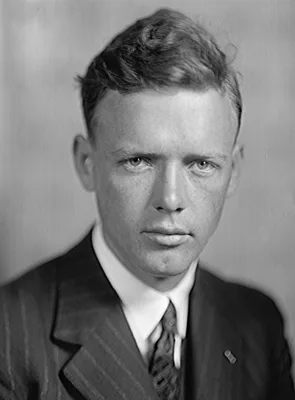
In 1931, the year before his son’s sensational kidnapping, the celebrity aviator began working with Alexis Carrel at the Rockefeller Institute on a perfusion pump which would allow the cultivation of whole organ…
1939 CE
#3038.1
An oxygenator with a large surface–volume ratio.
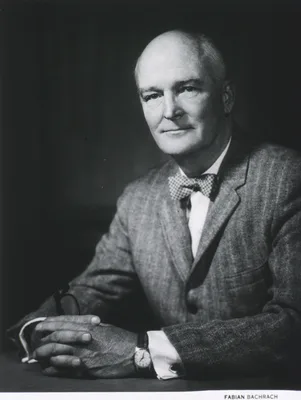
First heart–lung machine used successfully on an animal.
1954 CE
#3047.5
Application of a mechanical heart and lung apparatus to cardiac surgery.
First pump oxygenator used on humans. Performed on May 6, 1953, this was the first successful intracardiac operation in a patient with the use of total heart-lung bypass.
1867 CE–1872 CE
#14321
Arsenal de la chirurgie contemporaine. Description, mode d'emploi et appréciation des appareils et instruments en usage pour le diagnostic et le traitement des maladies chirurgicales, l'orthopédie, la prothèse, les opérations simples, générales, spéciales et obstétricales. 2 vols.
Digital facsimile from Google Books at this link.
1931 CE
#4400.1
Arthroscopy or the direct visualization of joints: An experimental cadaver study.
The first description of arthroscopic appearance of joints other than the knee, and a classic on the fundamental principles of the procedure. Follow-up paper by Burman, H. Finkelstein, & L. Mayer: Arthroscopy of the k…
2018 CE
#10186
Artificial hearts: The allure and ambivalence of a controversial medical technology.
1957 CE
#4405.01
Atlas of arthroscopy.
The first atlas of arthroscopy, a major step in gaining wide acceptance of this operating technique. The color illustrations were prepared by an artist as available arthroscopes did not permit color photography. Watan…
1967 CE
#6942
Biomedical aspects of the laser: The introduction of laser applications into biology and medicine.
The first book on the use of lasers in medicine and biology.
1478 CE
#3666.83
Chirurgia [French]. Translated by Nicolaus Panis.
Guy de Chauliac studied medicine and surgery in Montpellier and Paris, and served as the personal physician to Popes Clement VI, Innocent VI and Urban V. His Chirurgia magna, written in the early 1360s, remained a sta…
1500 CE–1501 CE
#3666.82
Chirurgia cum formis instrumentorum (Tr: Gerardus Cremonensis). IN: Guy de Chauliac: Chirurgia parva. Add: Albulcasis: Chirurgia cum formis instrumentorum. Jesus filius Hali: De oculis (Tr: Dominicus Marrochinus). Canamusali de Baldach: De oculis.
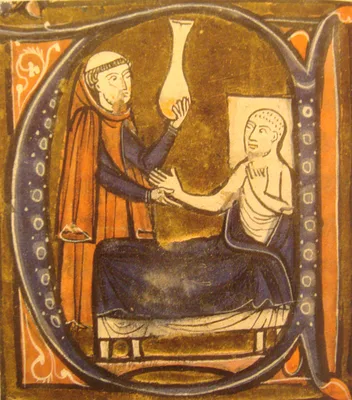
The surgical section of Albucasis’s Altasrif, the first rational, complete and illustrated treatise on surgery and surgical instruments. The author was an Arab Muslim physician and surgeon who lived in Al-Andalu…
1573 CE
#4850.4
Chirurgiae Ioannis Andrea a Cruce, Veneti medici libri septem, Quamplurimis instrumentorum imaginibus arti chirurgicae opportunis suis locis exornati, theoricam, practicam ac verissimam experientiam continentes....
Croce improved the instruments for trephination, and published classic woodcuts depicting the operation, including the first illustration of a neurological surgery operation actually taking place. The work is also imp…
1984 CE
#12333
Cold hearts: The story of hypothermia and the pacemaker in heart surgery.
1869 CE
#5610
Collezione della memorie chirurgiche ed ostetriche. 2 vols.
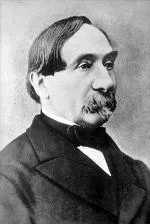
Rizzoli was Professor of Surgery at Bologna and an outstanding operative surgeon. He introduced a compressor for aneurysms, a tracheotome, cystotome, lithotrite, enterotome, osteoclast, and performed acupressure as ea…
1955 CE
#3047.7
Controlled cross circulation for direct-vision intracardiac surgery; correction of ventricular septal defects, atrioventricularis communis, and tetralogy of Fallot.
Controlled cross circulation (human heart–lung “machine”) for intracardiac surgery.
1987 CE
#7136
Correction of astigmatism with the excimer laser.
In 1985 Seiler performed the first large area ablation in a human eye to remove a corneal scar, having previously performed T-incisions with an excimer laser to correct for astigmatism.
1828 CE
#3255
Description of a forceps, employed to facilitate the extirpation of the tonsil.
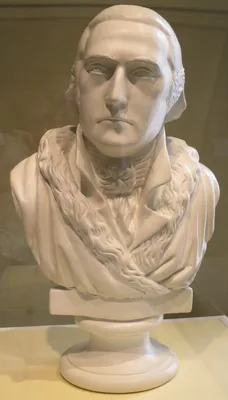
Invention of the modern tonsillotome.
1867 CE
#5668
Description of a new apparatus for administering narcotic vapors.
Junker’s chloroform inhaler.
1873 CE
#5671
Description of a new double current inhaler for administering ether.
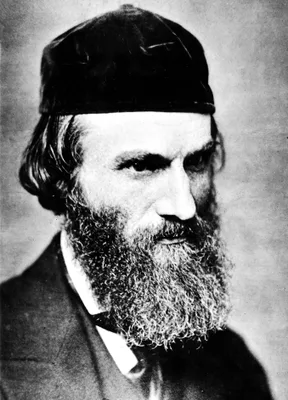
Clover’s gas-ether inhaler.
1766 CE
#7808
Descrizione degl'instrumenti, delle macchine, e delle suppellettili raccolte ad uso chirurgico e medico dal P. Don Ippolito Rondinelli...
Catalogue of the private museum of surgical and medical instruments established by Father Ippolito Rondinelli in Ravenna, which Soldo described as “the first museum of medicine and surgery.” Extensively il…
1921 CE
#4388.2
Die Arthroendoskopie.
First published account of the use of the laparoscope for arthroscopy.
1854 CE
#5604
Die Galvanokaustik.
Middeldorpf improved the galvano-cautery and introduced it in major surgery.
1925 CE
#3573.1
Die Handschrift des Schnitt- und Augenarztes Caspar Stromayr in Lindau im Bodensee: In der Lindauer Handschrift (P.1.46) vom 4. Juli 1559. Mit einer historischen Einführung und Wertung von Walter von Brunn.
Stroymayr's manuscript was discovered in Lindau in 1909, and remained unpublished until the above edition, which reproduced his drawings in color. Like Bartisch (No. 5817) Stromayr specialized in hernia repair and eye…
1564 CE
#3668.1
Dix livres de la chirurgie avec le magasin des instruments necessaires à icelle.
Paré’s first general treatise on surgery, and the most comprehensive of his treatises before his collected works (1575). Dix livres included Paré's first description of the use of the ligature in a…
1963 CE
#6941
Effect of the laser beam on the skin.
One of the first papers on the application of lasers in medicine. In 1961 Goldman became the first researcher to use a laser to treat a human skin disease when he treated melanoma. The method later became popular in r…
1959 CE
#14227
Einführung in die stereotaktischen Operationen mit einem Atlas des menschlichen Gehirns. Introduction to stereotaxis with an atlas of the human brain. Large folio text plus 2 large folio binders of plates with captions.
1928 CE
#4897.1
Electro-surgery as an aid to the removal of intracranial tumors. With a preliminary note on a new surgical-current generator by W.T. Bovie.
Introduction of electrocoagulation in neurosurgery.
1891 CE
#7243
Entsefalometriya mozga cheloveka v otnoshenii k polu, vozrastu i cherepnomu ukazatelyu [in Cyrillic].
In 1889, nearly 20 years before Horsley and Clarke published their paper on the use of stereotaxy to examine the brain, Dmitrii Zernov, a professor of anatomy at Moscow University, invented the first prototype of a st…
1894 CE
#5682.1
Further observations on the use of oxygen with nitrous oxide.
Includes description of Hewitt’s nitrous oxide/oxygen stopcock.
1962 CE
#11602
Heart-lung bypass: Principles and techniques of extracorporeal circulation.
2013 CE
#12927
History of orthodontics.
This history covers 19th century and earlier developments but emphasizes 20th century material including "History of dental lasers and their applications in orthodontics," "History of of Invisalign," etc.
1781 CE
#10715
Instrumentarium chirurgicum Viennense oder, Wiennerische chirurgische Instrumenten-Sammlung.
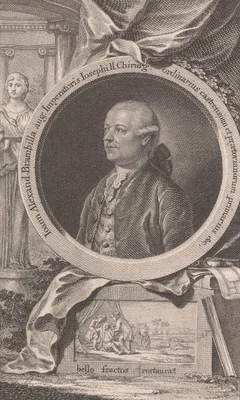
Brambilla was a personal physician to Holy Roman Emperor Joseph II and the first director of the Vienna hospital and the Josefinum school for military surgeons (now a medical museum). Brambilla provided a history of s…
1903 CE
#3526
Instruments for use through cylindrical rectal specula, with the patients in the knee-chest posture.
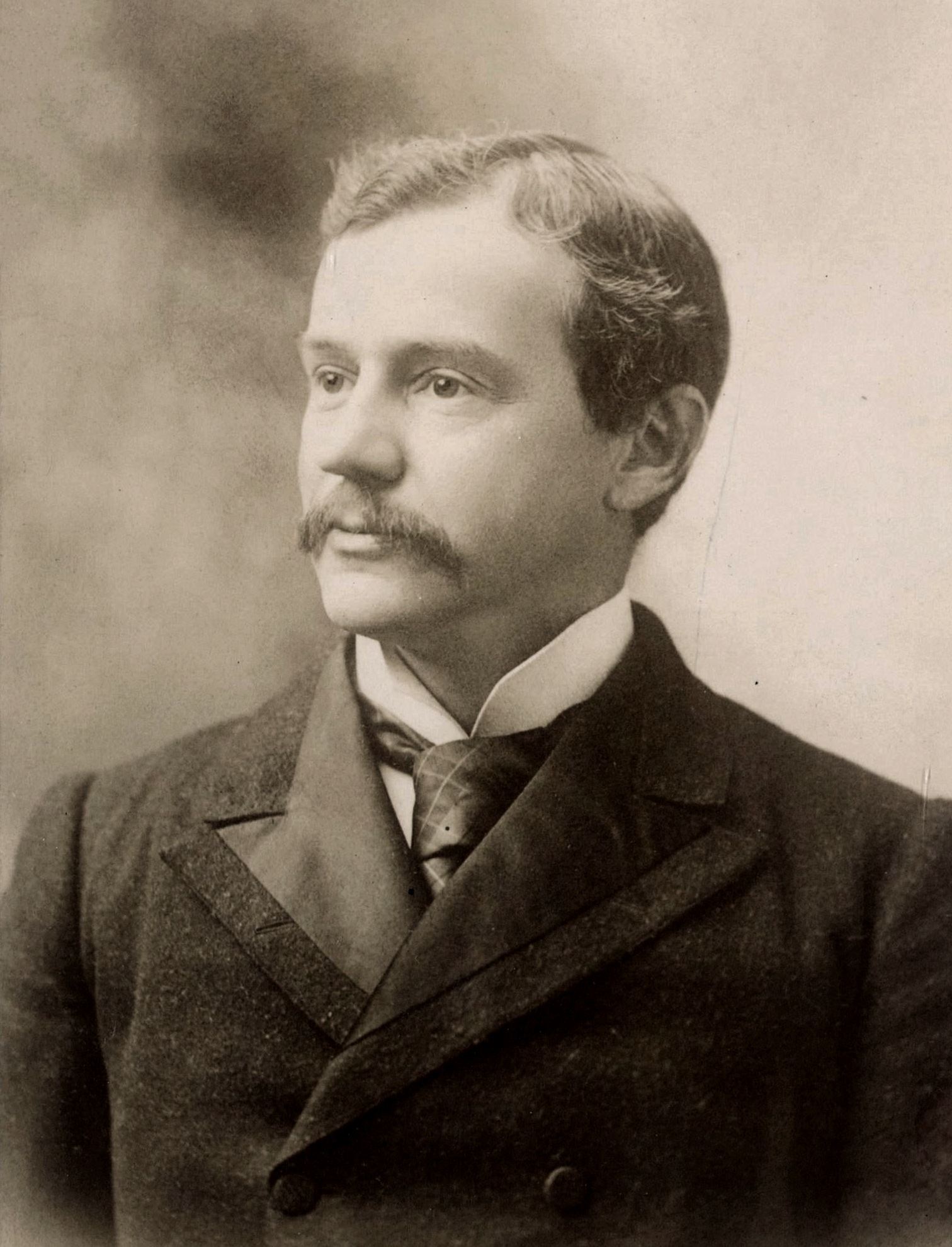
Various rectal and vesical specula were designed by Kelly.
1744 CE
#3355
Instruments proposed to remedy some kinds of deafness proceeding from obstructions in the external and internal auditory passages.
Cleland, an army surgeon, devised the method of catheterization of the Eustachian tube by way of the nose; he designed the instruments necessary for the operation.
1955 CE
#10995
Intracardiac surgery with the aid of a mechanical pump oxygenator system (Gibbon type): Report of eight cases.
Co-authored with JW Dushane, RT Patrick, DE Donald, PS Hetzel and EH Wood, "Kirklin refined the heart-lung machine (screen type) originally developed by Gibbon, to the point that it allowed the person to receive oxyge…
1913 CE
#5699.2
Intratracheal anaesthesia.
Kelly’s intratracheal ether apparatus.
2012 CE
#8402
La chirurgie en Égypte ancienne. À propos des instruments médico-chirurgicaux métalliques égyptiens conserves au musée du Louvre.
1594 CE
#3669
La chirurgie françoise recueillie des antiens médecins et chirurgiens.
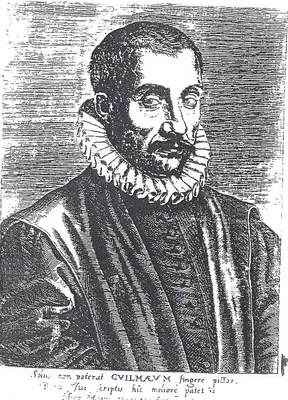
Guillemeau was Paré’s son-in-law. His splendidly illustrated work is of special importance for dentistry and for surgery for cleft lip. It describes pyorrhea alveolaris for the first time and is also the …
1990 CE
#7135
Laser in situ keratomileusis.
Though several researchers developed the procedures for using an excimer laser to perform in situ karatomileusis (LASIK), "Pallikaris also independently conceived of a hinged flap using a microkeratome he had specific…
1867 CE
#10718
Mechanical therapeutics. A practical treatise on surgical apparatus, appliances, and elementary operations; embracing bandaging, minor surgery, orthopraxy, and the treatment of fractures and dislocations.
Digital facsimile from the Hathi Trust at this link.
1926 CE
#4273
Minor surgery of the prostate gland; a new cystoscopic instrument employing a cutting current capable of operation in a water medium.
Stern’s resectoscope.
1845 CE
#1968
Neuralgia - introduction of fluid to the nerve.
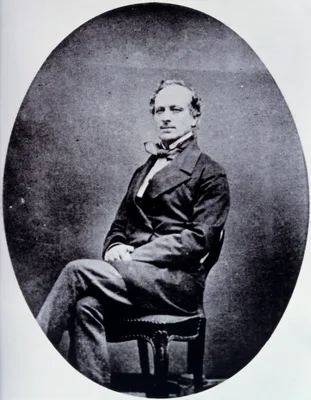
Rynd, an Irish physician, invented the hollow needle used in hypodermic syringes. The description of his instrument is given in Dublin Quart. J. med. Sci., 1861, 32, 13.
1855 CE
#1969
New method of treating neuralgia by the direct application of opiates to the painful joints.
Wood of Edinburgh was the first (1853) to employ hypodermic injection that used a true syringe and hollow needle as a therapeutic procedure. He referred to his invention as "subcutaneous" rather than hypodermic. See a…
1912 CE
#5698
Nitrous oxide-oxygen-ether anesthesia: notes on administration; a perfected apparatus.
Boothby and Cotton’s flowmeter.
1917 CE–1918 CE
#5700
Nitrous oxide-oxygen-ether outfit.
Boyle’s continous-flow anesthetic machine.