
Facets
Browse across eight MeSH (opens in new tab) facets — era, geography, science, specialty, technology, history, culture, and reference. Select one tag per group; counts update across the others.
Clear filtersFacet filters
Geography
Specialties & Disease
- Anatomy & Pathology 2
- Cardiology & Blood 43
- Neurology & Psychiatry 9
- Obstetrics & Reproductive 29
- Infectious Disease (General) 0
- Surgery & Anesthesia 78
- Public Health 3
- Immunology & Dermatology 4
- General Clinical Medicine 7
- Military Medicine 5
- Psychology 2
- Alternative & Fringe Medicine 0
- Pediatrics 2
- Ophthalmology & Vision 25
- ENT & Hearing 25
- Urology & Nephrology 11
- Gastroenterology & Hepatology 9
- Pulmonary & Respiratory 14
- Rheumatology, Rehab & Pain 2
- Internal, Emergency & Geriatric 13
- Veterinary Medicine 0
- Epidemiology & Demography 1
- Physiology & Embryology 38
- Dentistry 22
- Plagues & Epidemics 5
- Microbiology & Virology 0
Social & Historical Studies
Institutions & Culture
Reference & Scholarly Works
25 entries match Ophthalmology & Vision [C11] · Instruments & Devices [E07]
1971 CE
#6007.1
A history of the ophthalmoscope.
1851 CE
#5866
Beschreibung eines Augen-Spiegels zur Untersuchung der Netzhaut im lebenden Auge.
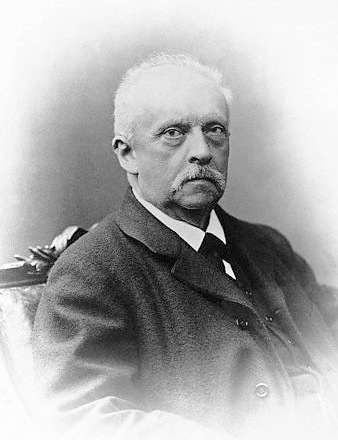
Invention of the ophthalmoscope, one of the greatest events in the history of ophthalmology. English translation by T. H. Shastid, Chicago, Cleveland Press, 1916.
1500 CE–1501 CE
#3666.82
Chirurgia cum formis instrumentorum (Tr: Gerardus Cremonensis). IN: Guy de Chauliac: Chirurgia parva. Add: Albulcasis: Chirurgia cum formis instrumentorum. Jesus filius Hali: De oculis (Tr: Dominicus Marrochinus). Canamusali de Baldach: De oculis.
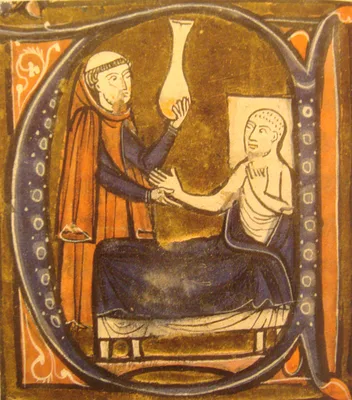
The surgical section of Albucasis’s Altasrif, the first rational, complete and illustrated treatise on surgery and surgical instruments. The author was an Arab Muslim physician and surgeon who lived in Al-Andalu…
1823 CE
#1492.1
Commentatio de examine physiologico organi visus et systematis cutanei.
Purkynĕ was first to examine the interior of the human eye and the dog eye, using only a candle and a concave spherical lens. He thus invented the ophthalmoscope three decades before Helmholtz (1851; No. 5866). Reprin…
1987 CE
#7136
Correction of astigmatism with the excimer laser.
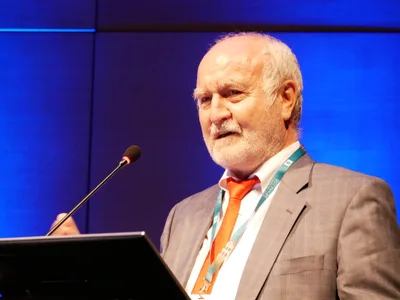
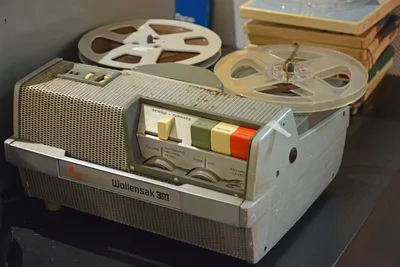
In 1985 Seiler performed the first large area ablation in a human eye to remove a corneal scar, having previously performed T-incisions with an excimer laser to correct for astigmatism.
1852 CE
#5866.1
Der Augenspiegel und des Optometer für practische Aerzte.
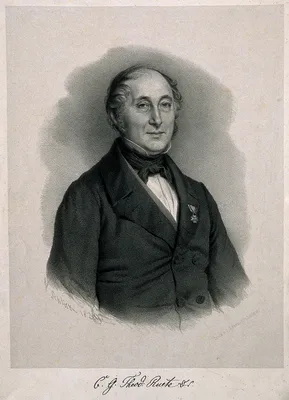
Ruete introduced a practical lens system for examining the inverted image, and improved the illumination, producing the first practical ophthalmoscope.
1885 CE
#5927
Der Electromagnet in der Augenheilkunde.
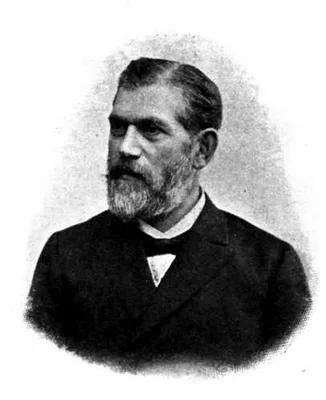
The introduction of the electromagnet into ophthalmology. A pupil of Helmholtz, Hirschberg was one of the most voluminous writers in the field of ophthalmology. Besides his dictionary (see No. 5932) he wrote a classic…
2014 CE
#10489
Die Erfindung der Ophthalmoskopie dargestellt in den Originalbeschreibungen der Augenspiegel von Helmholtz, Ruete und Giraud-Teulon. Eingeleitet und erläutert von Wolfgang Jaeger.
1925 CE
#3573.1
Die Handschrift des Schnitt- und Augenarztes Caspar Stromayr in Lindau im Bodensee: In der Lindauer Handschrift (P.1.46) vom 4. Juli 1559. Mit einer historischen Einführung und Wertung von Walter von Brunn.
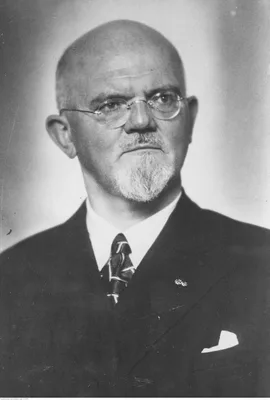
Stroymayr's manuscript was discovered in Lindau in 1909, and remained unpublished until the above edition, which reproduced his drawings in color. Like Bartisch (No. 5817) Stromayr specialized in hernia repair and eye…
1853 CE
#5869.1
Dissertatio ophthalmologica inauguralis de speculo oculi.
Trigt's thesis contains the first printed illustrations of the fundus of the eye. Digital facsimile from Google Books at this link. The following year Trigt's thesis was translated into German by C. H. Schauenberg as …
1996 CE
#7024
Eye and instruments: Nineteenth-century ophthalmological instruments in the Netherlands.
Extremely high quality color images throughout compliment the expert text.
1925 CE
#5968
Gonioscopy and its clinical applications.
Troncoso’s gonioscope.
1971 CE
#7405
Histology of the human eye.
Hogan and Alvarado's work was the first book on histology of the eye to include electron microscopy. It also reproduced spectacular three-dimensional representations of ocular ultrastructures by Joan Esperson Weddell.
1858 CE
#5883
Klinische Analyse der Motilitätsstörungendes Auges.
Alfred Carl Graefe, cousin of Albrecht, made a careful clinical analysis of disordered movements of the eye. He also invented a special “localization ophthalmoscope”, and, with Saemisch, edited the great H…
1990 CE
#7135
Laser in situ keratomileusis.
Though several researchers developed the procedures for using an excimer laser to perform in situ karatomileusis (LASIK), "Pallikaris also independently conceived of a hinged flap using a microkeratome he had specific…
1882 CE
#5922
Neue Instrumente.
Introduction of the keratoscope.
1863 CE–1865 CE
#4537
Observations on defects of sight in brain disease.
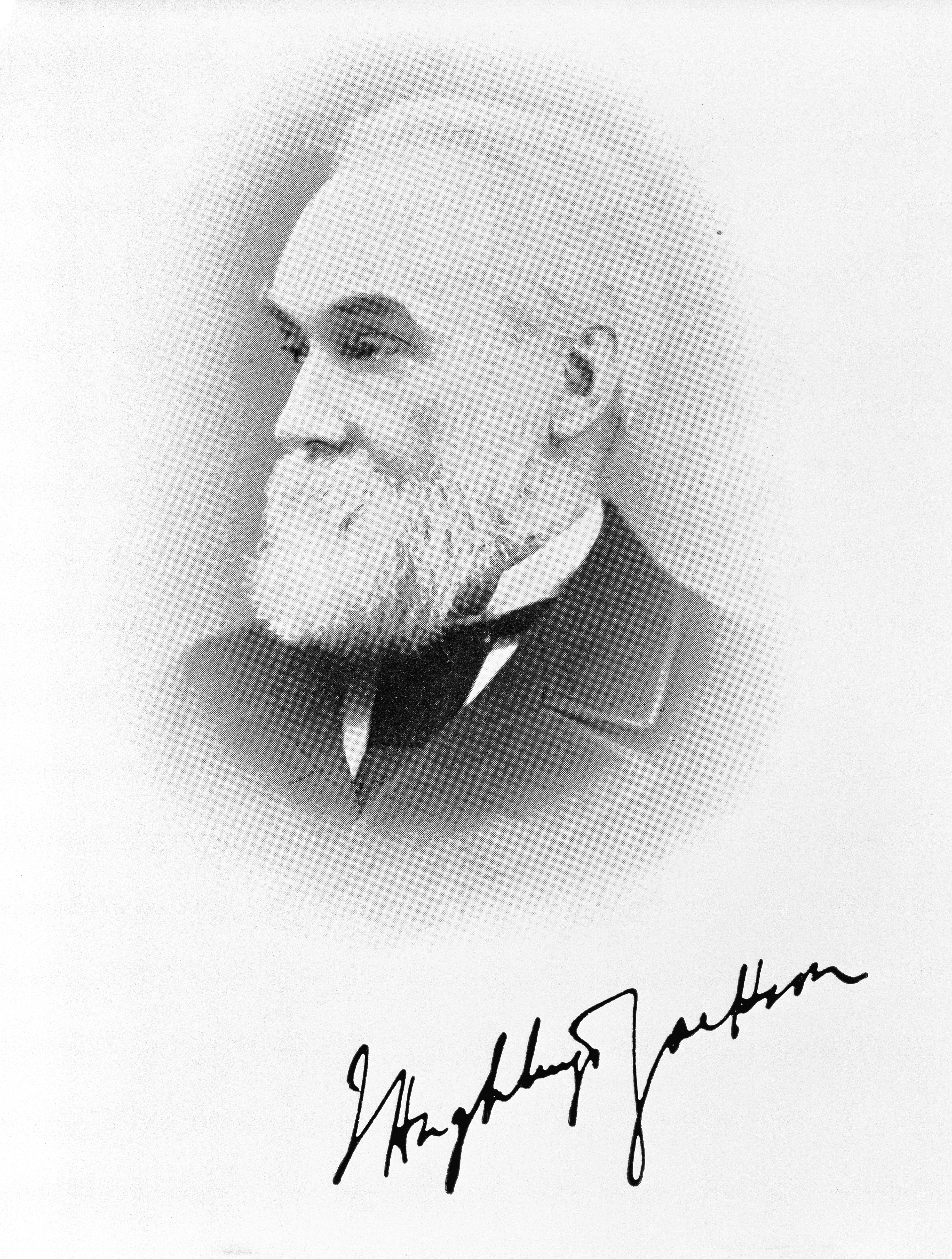
In this work Jackson showed the importance of the ophthalmoscope in the investigation of diseases of the nervous system. Reprinted in Med. Classics, 1939, 3, 918-26.
1981 CE
#6007.2
Ophthalmologisch-optische Untersuchungsgeräte.
English translation by F.C. Blodi as The history of optical instruments for the examination of the eye, Bonn: J. P. Wayenborgh, 1986.
1854 CE
#5874
Report on the ophthalmoscope.
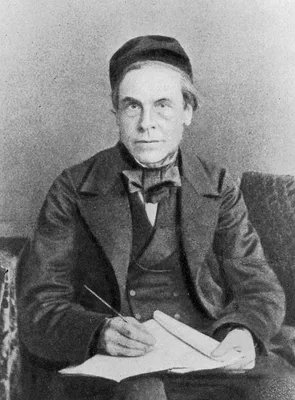
Jones reported that Charles Babbage (1792-1871), the computer pioneer, had produced a simple ophthalmoscope in 1847. After the success of Helmholtz’s instrument in 1851 (No. 5866) Jones wrote about Babbage&rsquo…
1996 CE
#6907
Spectacles and other vision aids: A history and guide to collecting.
The most comprehensive history of the development of spectacles and other vision aids in Europe, America, Japan, and China. With over 780 photographs, of which 310 are in color.
1867 CE
#5901
Sur un nouvel instrument pour la détermination de l’astigmatisme.
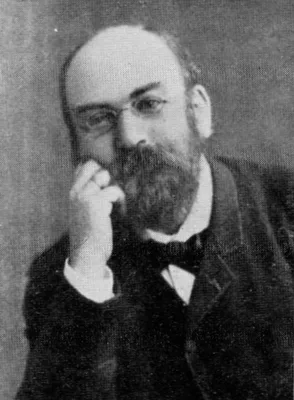
Javal invented the astigmometer, and described it in the above paper.
1937 CE
#9441
The cataract operations of 'Ammar Ibn Alī Al-Mausilī by Max Meyerhof.
Mausilī invented a hollow metallic syringe, which he applied through the sclerotic, and successfully extracted cataracts through suction.
1996 CE–1997 CE
#10850
The ophthalmoscope - Der Augenspiegel. Textbook and atlas. 2 vols. Translated by Donald L. Blanchard.
1854 CE–1855 CE
#1509
Ueber die Accommodation des Auges.
Helmholtz determined the optical constants and explained the mechanism of accommodation, with the help of the ophthalmometer which he had invented in 1852.
1881 CE
#5920
Un ophtalmomètre pratique.
Javal and Schiötz here describe an ophthalmometer invented by them.