
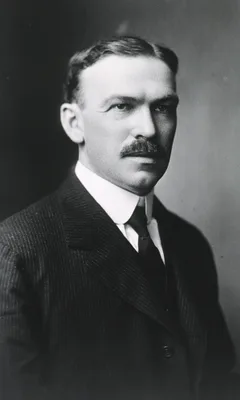
TYZZER, Ernest Edward (1875 – 1965)
1875 – 1965
6 entries in the GMN corpus.
Image source J.E. Purdy & Co., photographer. The National Library of Medicine believes this item to be in the public domain. · resource.nlm.nih.gov · CC0
1905 CE–1906 CE
#5440
The histology of the skin lesions in varicella.
Tyzzer was first to recognize inclusion bodies in varicella.
1907 CE
#12432
A sporozoan found in the peptic glands of the common mouse.
Tyzzer first identified cryptosporidium in mice and named it Cryptosporidium muris, spec. nov. (Thanks to Juan Weiss for this reference and its interpretation.)
1907 CE–1908 CE
#2633
A study of heredity in relation to the development of tumours in mice.
First experimental study of the heredity of mouse cancer.
1912 CE
#12433
Cryptosporidium parvum (sp. nov.) a coccidium found in the small intestine of the common mouse.
Tyzzer described an even smaller species of cryptosporidium, Cryptosporidium parvum (sp. nov.), later recognized as the chief species infecting humans. His paper reproduced color lithographs of all the different life …
1915 CE
#12573
Report of first expedition to South America 1913.
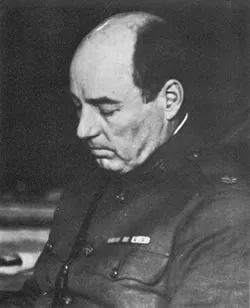
Strong was the first professor of tropical medicine at Harvard. The Harvard School of Tropical Medicine was founded in 1913, the year they undertook this expedition. Digital facsimile from Google Books at this link.
1916 CE
#2570
Further experimental studies on the inheritance of susceptibility to a transplantable tumour, carcinoma (J. W. A.) of the Japanese waltzing mouse.
Marks the beginning of the study of histocompatibility antigens.