
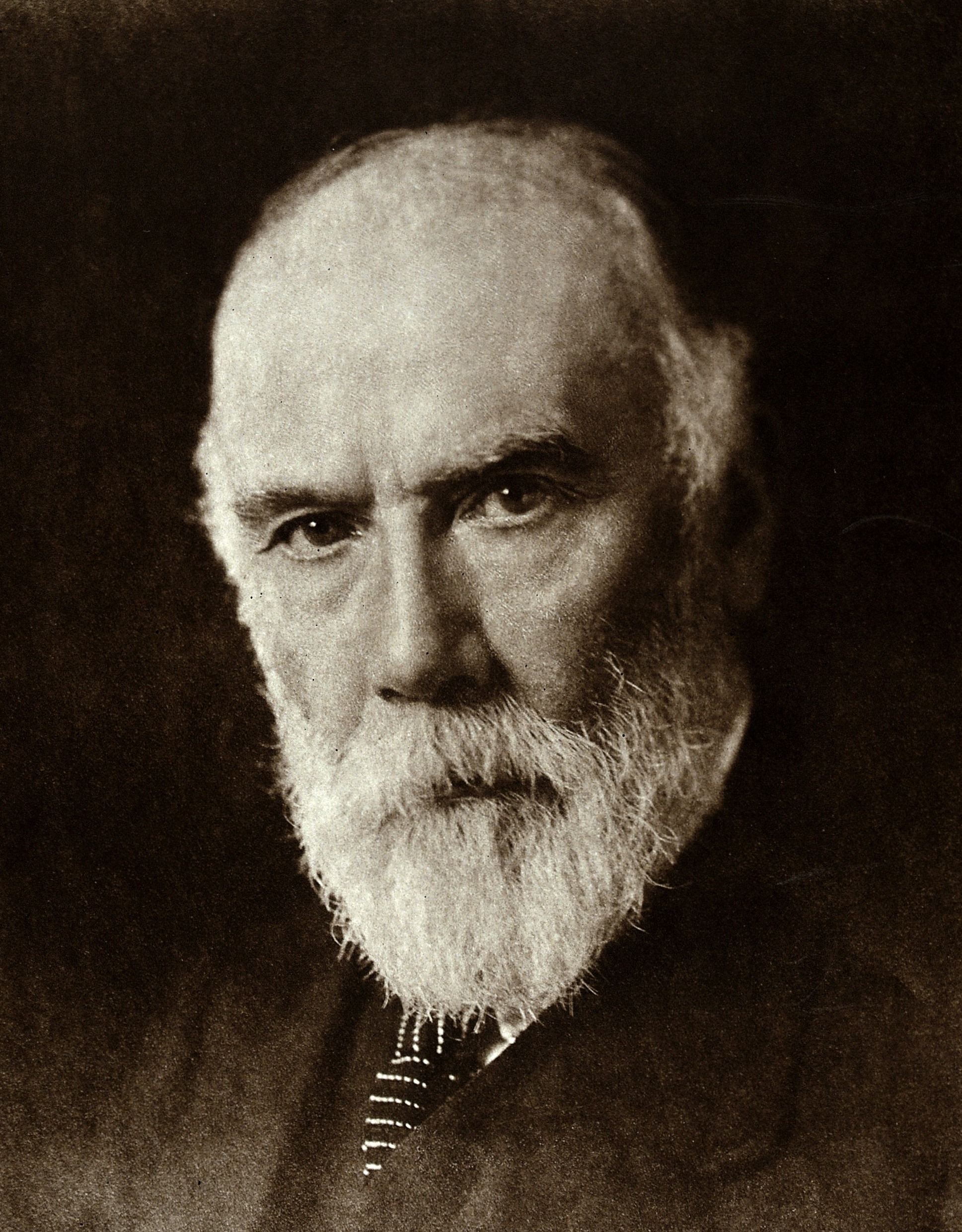
MACKENZIE, Sir James (1853 – 1925)
1853 – 1925
7 entries in the GMN corpus.
Image source Unknown author Unknown author · [1] · CC BY 4.0
1892 CE
#834
Pulsation in the veins, with the description of a method for graphically recording them.
The phlebograph, which developed into the polygraph. With it Mackenzie obtained simultaneous tracings of the pulsations of the jugular vein and radial artery.
1902 CE
#2812
The study of the pulse.
In his classic monograph Mackenzie included (p. 10) a description and illustration of his polygraph, with which he made simultaneous tracings of the pulse, apex beat, etc.
1905 CE
#2819
New methods of studying affections of the heart.
Mackenzie established the remarkable action of digitalis in auricular fibrillation.
1907 CE–1908 CE
#847
The extra-systole. A contribution to the functional pathology of the primitive cardiac tissue.
1908 CE
#2826
Diseases of the heart.
Chapter 30 of the third edition (1914) includes Mackenzie’s classic description of the clinical picture of “nodal rhythm” (auricular fibrillation). Reprinted in Willius & Keys, Cardiac classics, 1941…
1923 CE
#2897
Angina pectoris.
A classic description of angina by “the beloved physician”, one of the greatest of all cardiologists. Mackenzie considered the disease to be due to cardiac failure.
1930 CE
#11686