
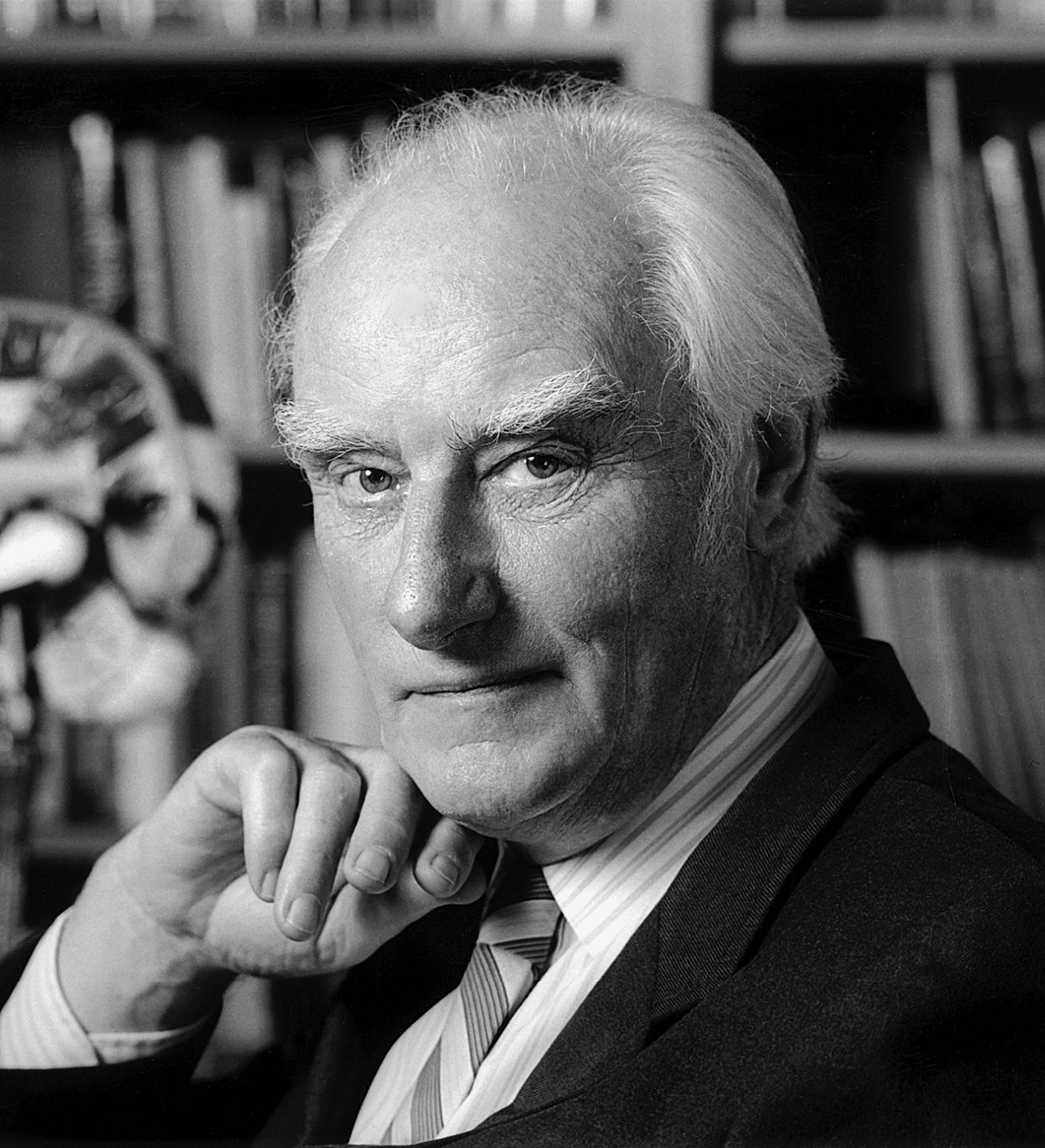
CRICK, Francis Harry Compton (1916 – 2004)
1916 – 2004
8 entries in the GMN corpus.
Image source Francis_Crick.png : Photo: Marc Lieberman, per ticket:2015100910022707 derivative work: Materialscientist ( talk ) · This file was derived from: Francis Crick.png : · CC BY 2.5
1952 CE
#13998
The structure of synthetic polypeptides. 1. The transform of atoms on a helix.
This paper gives the formulae for the Fourier transforms of a number of helical structures, and provides evidence that the structure of a synthetic polypeptide was based on the alpha helix of Pauling and Corey. "It wa…
1953 CE
#7138
Genetical implications of the structure of deoxyribonucleic acid.
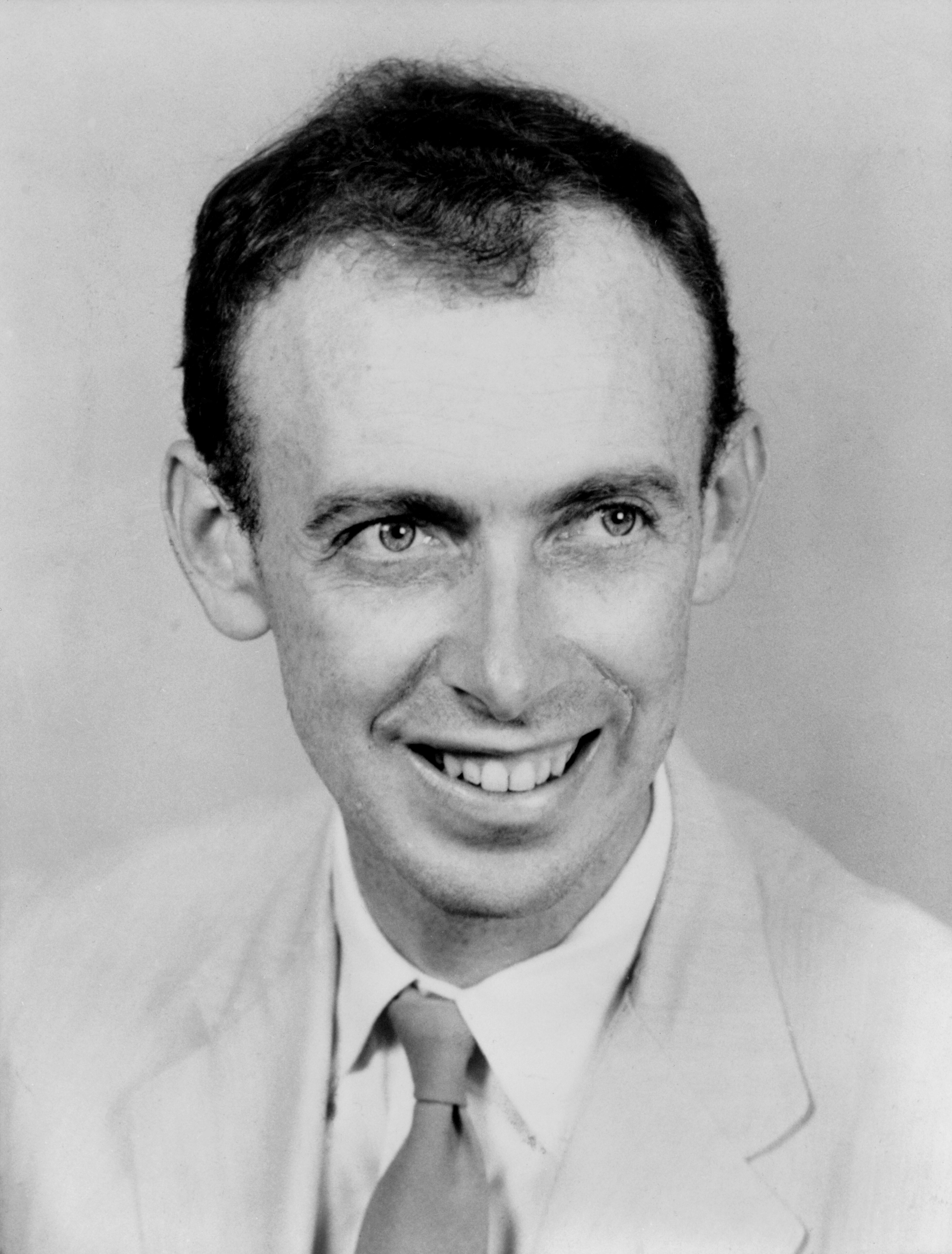
In this paper published on May 30, 1953 Watson and Crick proposed the method of replication of DNA. This discovery has been called as significant, or possibly even more significant, than their discovery of the double-…
1953 CE
#256.3
Molecular structure of nucleic acids. A structure for deoxyribose nucleic acid.
Watson and Crick shared the Nobel Prize with M. H. F. Wilkins (No. 256.4) "for their discoveries concerning the molecular structure of nucleic acids and its significance for information transfer in living material." L…
1955 CE
#13954
The structure of collagen.
Rich and Crick solved the structure of collagen, the main structural protein in the extracellular matrix found in the body's various connective tissues. As the main component of connective tissue, it is the most abund…
1957 CE
#13097
Nucleic acids.
This paper published in September 1957, based on Crick's famous "Central Dogma" lecture given the same month, presented his first published statement of The Central Dogma: “Information is transmitted from DNA an…
1958 CE
#6895
On protein synthesis.
This paper proposed two general principles: 1) The Sequence Hypothesis: “The order of bases in a portion of DNA represents a code for the amino acid sequence of a specific protein. Each ‘word’ in the…
1961 CE
#256.8
General nature of the genetic code for proteins.

The codons in DNA specifying amino acids in proteins.
1966 CE
#13967
Codon-anticodon pairing: The wobble hypothesis.
"In the genetic code, there are 43 = 64 possible codons (3 nucleotide sequences). For translation, each of these codons requires a tRNA molecule with an anticodon with which it can stably complement. If each tRNA mole…