
Zur Kenntniss der antifermentativen, lytischen und agglutinierenden Wirkungen des Blutserums und der Lymphe.
Publication Details
Zbl. Bakt., 27, 357-62. 1900 CE.
Also: Landsteiner, "Ueber Agglutinationsercheinungen normalen menschlichen Blutes," Wiener klinische Wochenschrift, 14, 1901, 1132-1134.
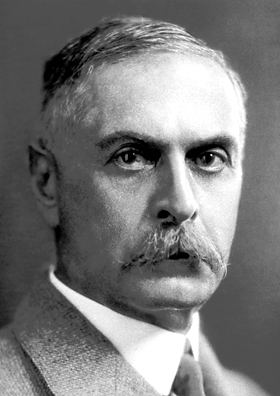
Landsteiner discovered that human blood contains iso-agglutinins capable of agglutinating other human red blood cells. He first mentioned this chance discovery in a footnote to the above paper published in 1900. In the following paper published in 1901 he proved that this agglutination was not the result of a disease process, but was demonstrable in the serum of healthy individuals. Furthermore, he was able to show that each serum can agglutinate the red cells only of certain other individuals. He found that the sera could be divided into three distinct groups: group A agglutinates the red cells of group B, but not those of group A; group B agglutinates the red cells of group A, but not those of group B; and group C agglutinates both and B red cells, but is not agglutinated by the sera of either group A or group B.
He divided human blood into three groups (A, B, and O, which he called A, B, C).
1930 Landsteiner was awarded the Nobel Prize for Physiology or Medicine "for his discovery of human blood groups."
(Thanks to Juan Weiss for the reference to Landsteiner's 1901 paper and its interpretation.)
Browse Tags
Thematic Classifications
| Catalog Metadata | Reference Information |
|---|---|
| Entry Number | #889 |
| Permanent Link | https://hom-sveltekit.fly.dev/entry/936 |
| Author Bio Link | Wikipedia ↗ |
| External URL | zur-kenntniss-der-antifermentativen-lytischen-und-agglutinierenden-wirkungen-des-blutserums-und-der-lymphe |