
Facets
Browse across eight MeSH (opens in new tab) facets — era, geography, science, specialty, technology, history, culture, and reference. Select one tag per group; counts update across the others.
Clear filtersFacet filters
Geography
Specialties & Disease
- Anatomy & Pathology 2
- Cardiology & Blood 0
- Neurology & Psychiatry 3
- Obstetrics & Reproductive 1
- Infectious Disease (General) 0
- Surgery & Anesthesia 0
- Public Health 19
- Immunology & Dermatology 3
- General Clinical Medicine 0
- Military Medicine 0
- Psychology 0
- Alternative & Fringe Medicine 1
- Pediatrics 1
- Ophthalmology & Vision 0
- ENT & Hearing 0
- Urology & Nephrology 0
- Gastroenterology & Hepatology 0
- Pulmonary & Respiratory 0
- Rheumatology, Rehab & Pain 0
- Internal, Emergency & Geriatric 0
- Veterinary Medicine 1
- Epidemiology & Demography 1
- Physiology & Embryology 0
- Dentistry 0
- Plagues & Epidemics 2
- Microbiology & Virology 0
Social & Historical Studies
Institutions & Culture
Reference & Scholarly Works
Drugs & Technology
63 entries match Europe & United Kingdom [Z01.542] · Social & Political History [K01.850]
2004 CE
#9875
The healing arts: Health, disease and society in Europe, 1500-1800. Edited by Peter Elmer
1964 CE
#10178
The hospitals, 1800-1948: A study in social administration in England and Wales.
The first comprehensive account of the development of hospitals in England and Wales from the early nineteenth century down to the establishment of the English National Health Service.
1833 CE
#10389
The manufacturing population of England, its moral, social, and physical conditions, and the changes which have arisen from the use of steam machinery; with an examination of infant labour.
Gaskell, a physician, addressed social, political and public health problems that resulted from the Industrial Revolution. Gaskell issued a revised edition of this work in 1836 under a different title: Artisans and Ma…
1979 CE
#8772
The Monro collection in the Medical Library of the University of Otago: A descriptive catalogue with annotations and introduction
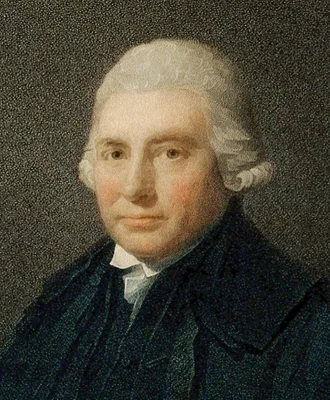
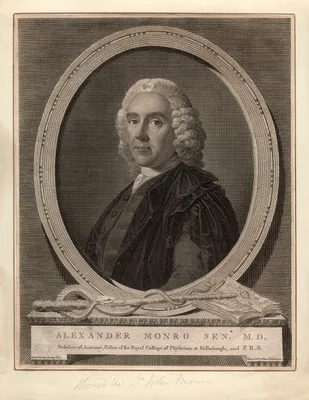
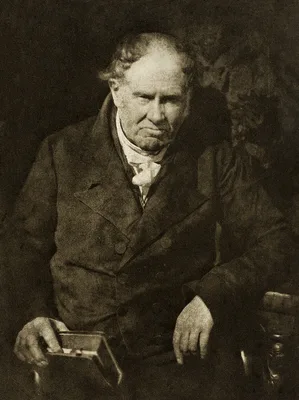
Scottish army surgeon John Monro (1670-1740) initiated a series of events that lead to the establishment of a dynasty which, beginning with his son Alexander Monro, changed the course of medical teaching and learning.…
1976 CE
#8055
The naturalist in Britain: A social history.
1999 CE
#10229
The Nazi war on cancer.
1967 CE
#10396
The origins of the National Health Service: The medical services of the New Poor Law, 1834-1871.
2009 CE
#10573
The plague files: Crisis management in sixteenth-century Seville.
2001 CE
#9816
The royal doctors, 1485-1714: Medical personnel at the Tudor and Stuart courts.
"... investigates the influential individuals who attended England's most important patients during a pivotal epoch in the evolution of the state and the medical profession. Over three hundred men [and a handful of wo…
2012 CE
#8105
The sick child in early modern England, 1580-1720.
The first book on children's health and illness in early modern England.
2009 CE
#9811
The theatre of the body: Staging death and embodying life in early-modern London.
"...The book takes as its specific focus seventeenth-century London, in a significant study encompassing the period from the incorporation of the Worshipful Company of Barber-Surgeons (1540) to the staging of Edward R…
1972 CE
#8805
The trade in lunacy: A study of private madhouses in England in the eighteenth and nineteenth centuries.
2007 CE
#13577
Vernacular bodies: The politics of reproduction in Early Modern England.
"Making babies was a mysterious process in 17th-century England. Fissell uses popular sources—songs, jokes, witchcraft pamphlets, prayerbooks, popular medical manuals—to recover how ordinary men and women …