
Facets
Browse across eight MeSH (opens in new tab) facets — era, geography, science, specialty, technology, history, culture, and reference. Select one tag per group; counts update across the others.
Clear filtersFacet filters
Geography
Specialties & Disease
- Anatomy & Pathology 12
- Cardiology & Blood 6
- Neurology & Psychiatry 5
- Obstetrics & Reproductive 4
- Infectious Disease (General) 12
- Surgery & Anesthesia 14
- Public Health 28
- Immunology & Dermatology 7
- General Clinical Medicine 6
- Military Medicine 21
- Psychology 0
- Alternative & Fringe Medicine 24
- Pediatrics 3
- Ophthalmology & Vision 13
- ENT & Hearing 0
- Urology & Nephrology 1
- Gastroenterology & Hepatology 1
- Pulmonary & Respiratory 1
- Rheumatology, Rehab & Pain 0
- Internal, Emergency & Geriatric 0
- Veterinary Medicine 8
- Epidemiology & Demography 16
- Physiology & Embryology 1
- Dentistry 6
- Plagues & Epidemics 69
- Microbiology & Virology 44
Social & Historical Studies
Institutions & Culture
Reference & Scholarly Works
Drugs & Technology
69 entries match Africa & Middle East [Z01.058.500] · Plagues & Epidemics [C01.252]
1817 CE
#8816
Results of an investigation, respecting epidemic and pestilential diseases; including researches in the Levant, concerning the plague. 2 vols.
"From 1815 to 1817 Maclean travelled in Spain, Turkey, and the Levant, and he studied the plague at the Greek Pest Hospital at Constantinople, in the service of the Levant Company. His experiences in the Levant and in…
1985 CE
#10789
Serological evidence for virus related to Simian T-Lymphotropic retrovirus III in residents of West Africa.
First report of the discovery of what became known as HIV-2 by the U.S. research group led by Kanki. This group published before the French group, but the French group had reported their data one day prior to the U.S.…
1902 CE
#5274
Some clinical notes on a European patient in whose blood a trypanosoma was observed.
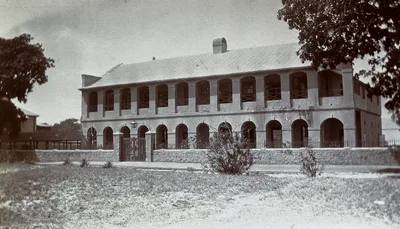
In 1901 Forde saw (but did not at first recognize as such) trypanosomes in the blood of a patient in Gambia. (See No. 5275.)
1829 CE
#5291
Sur la pyrophlyctide endémique, ou pustule d’Aleppo.
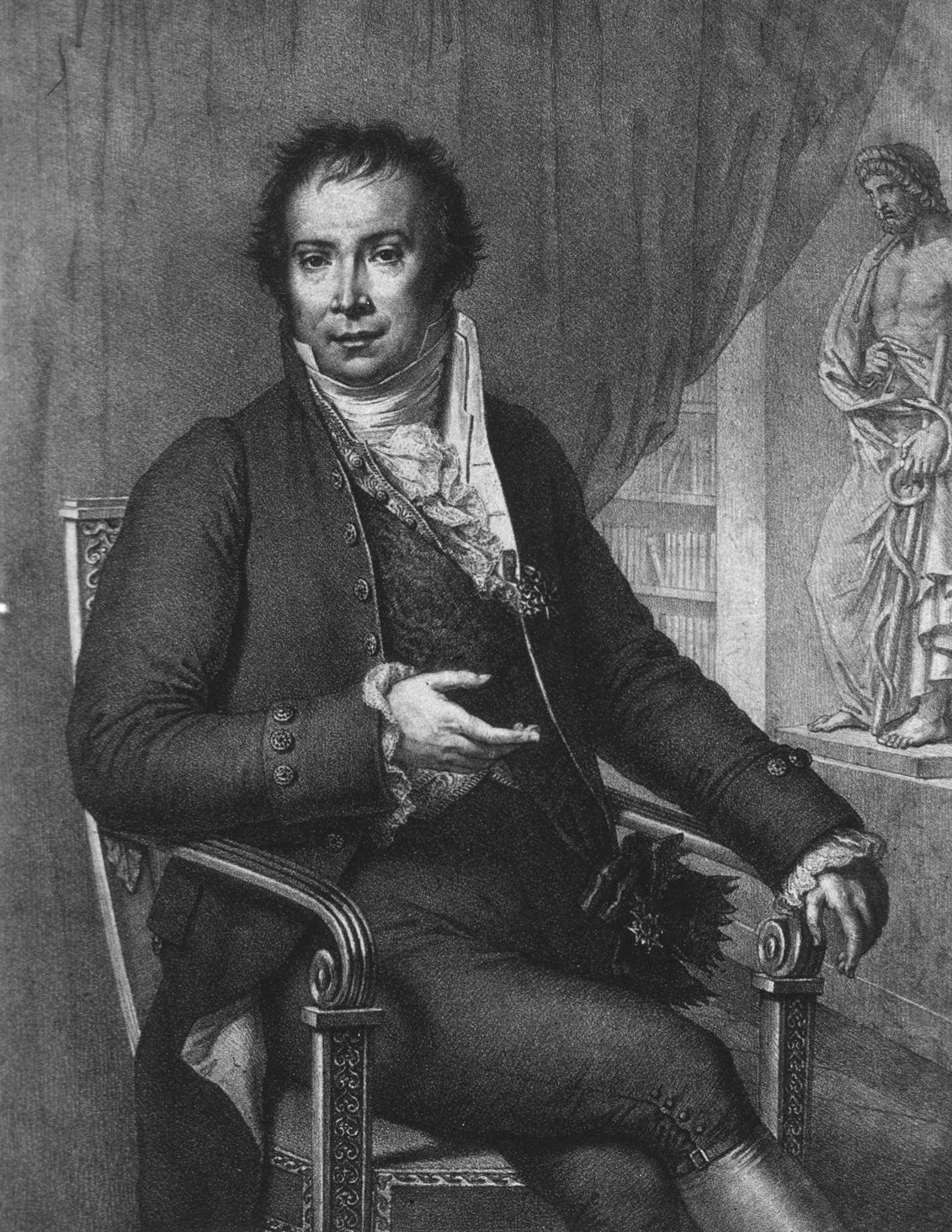
Important description of “Aleppo boil”, furunculosis orientalis.
1930 CE
#12459
The African Republic of Liberia and the Belgian Congo based on the observations made and material collected during the Harvard African Expedition, 1926-1927. Edited by Richard P. Strong. 2 vols.
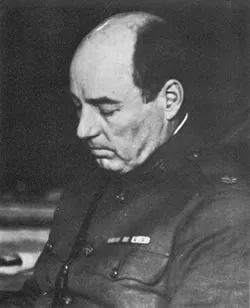
"The Harvard Medical African Expedition of 1926-1927 was an eight-man venture sent by Harvard University for the primary purpose of conducting a medical and biological survey of Liberia; the secondary purpose being to…
1977 CE
#5145.1
The black death in the Middle East.
1992 CE
#9264
The colonial disease: A social history of sleeping sickness in colonial Zaire, 1900-1940.
2014 CE
#10778
The early spread and epidemic ignition of HIV-1 in human populations.
Using the viral genome isolated from the archival serum of the "Kinshasa patient", Lemey, Faria and colleagues deduced that the prototype African viral strain first crossed from monkeys to humans about 1920 in the are…
2015 CE
#10800
The historical ecology of malaria in Ethiopia: Deposing the spirits.
1927 CE
#5350.8
The insect transmission of Onchocerca volvulus (Leuckart, 1893), the cause of worm nodules in man in Africa.
The fly Simulium damnosum shown to be the vector of onchocerciasis.
1905 CE
#5318
The nature of tick fever in the eastern part of the Congo Free State.
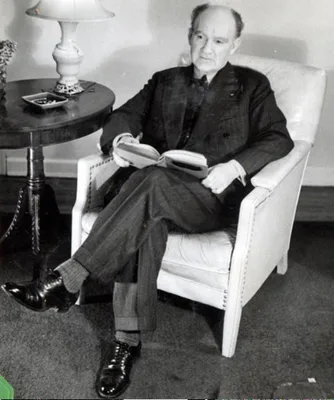
Independently of Ross and Milne, Dutton and Todd demonstrated relapsing fever in monkeys conveyed by infected ticks, Omithodorus moubata. The organism was named Sp. (now Borrelia) duttoni. Both Dutton and Todd contrac…
1971 CE
#10678
The role of the trypanosomiases in African ecology: A study of the Tsetse fly problem.
1967 CE
#10679
The sleeping sickness epidemic of Uganda 1900-1920: A study in historical geography.
1685 CE
#11128
Traité des maladies particulières aux pays orientaux, et dans la route, et de leurs Remèdes. Par M.C.D.D.E.M.
At the age of 17, Dellon, who is sometimes referred to as Gabriel Dellon, embarked as second surgeon aboard the ship La Force. He arrived at Darman, in the Portuguese Indies, in 1673, where he was doctor to Luis de Me…
1803 CE
#7367
Travels in Turkey, Asia-Minor, Syria, and across the desert into Egypt during the years 1799, 1800, and 1801, in company with the Turkish Army, and the British Military Mission.To which are annexed, observations on the plague, and on the diseases prevalent in Turkey, and a meteorological journal.
Wittman described the plague and other epidemics that afflicted both the Ottoman and British armies. In the Appendix he provided medical suggestions for treatment, together with a history of the plague. Digital facsim…
1906 CE
#5111.1
Über Cholera- und choleraähnliche Vibrionen unter den aus Mekka zurückkehrenden Pilgern.
Isolation of El Tor vibrio, a particular strain of the bacterium Vibrio cholerae. Gotschlich first identified this strain in 1905 at a quarantine camp on the Sinai Peninsula in El Tor, Egypt . The vibrios were found i…
1910 CE
#5383
Une fièvre éruptive observée en Tunisie.
First description of fievre boutonneuse, a form of tick-borne typhus found in Tunisia.
1952 CE
#7864
Zika virus (I). Isolations and serological specificity.

First description of Zika virus, an arbovirus native to Africa. The authors named the virus after the Zika forest in Uganda, where they were searching for Yellow Fever. Instead they isolated a new virus in samples tak…
1952 CE
#10939
Zika virus. (II). Pathogenicity and physical properties.
Dick's second paper on the Zika virus, immediately following his first paper in the same volume of the same journal (see no. 7864). First statement that the Aedes aegypti mosquito is the vector of transmission of the …