
Facets
Browse across eight MeSH (opens in new tab) facets — era, geography, science, specialty, technology, history, culture, and reference. Select one tag per group; counts update across the others.
Clear filtersFacet filters
Geography
Specialties & Disease
- Anatomy & Pathology 0
- Cardiology & Blood 0
- Neurology & Psychiatry 0
- Obstetrics & Reproductive 0
- Infectious Disease (General) 0
- Surgery & Anesthesia 0
- Public Health 2
- Immunology & Dermatology 0
- General Clinical Medicine 0
- Military Medicine 1
- Psychology 0
- Alternative & Fringe Medicine 0
- Pediatrics 0
- Ophthalmology & Vision 0
- ENT & Hearing 0
- Urology & Nephrology 0
- Gastroenterology & Hepatology 0
- Pulmonary & Respiratory 1
- Rheumatology, Rehab & Pain 0
- Internal, Emergency & Geriatric 0
- Veterinary Medicine 0
- Epidemiology & Demography 0
- Physiology & Embryology 0
- Dentistry 0
- Plagues & Epidemics 1
- Microbiology & Virology 0
Social & Historical Studies
Institutions & Culture
Reference & Scholarly Works
Drugs & Technology
41 entries match Africa & Middle East [Z01.058.500] · Natural History & Evolution [K01.900.500]
2001 CE
#7275
'Millennium Ancestor', a 6-million-year-old bipedal hominid from Kenya - Recent discoveries push back human origins by 1.5 million years.

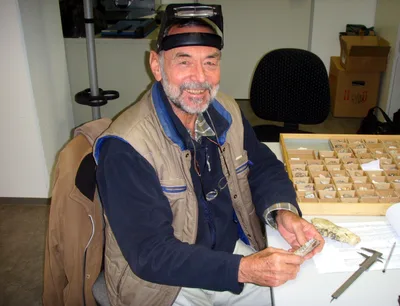
Living around 6 million years ago, in the Tugen hills region of central Kenya, this species, named Orrorin tugenensis, had small teeth with thick enamel similar to modern humans. It climbed trees, but also probably wa…
2002 CE
#7274
A new hominid from the Upper Miocene of Chad, central Africa.
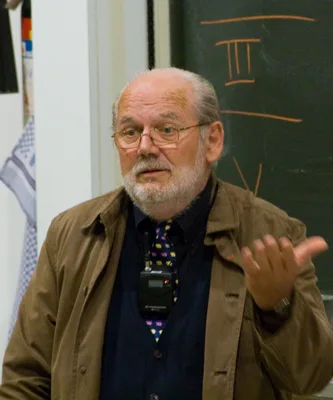
The first paper on Sahelanthropus tchadensis, dating from between 7 and 6 million years ago in West Central Africa (northern Chad). This species had a combination of ape-like and human-like features. Ape-like elements…
1921 CE
#7309
A new cave man from Rhodesia, South Africa.
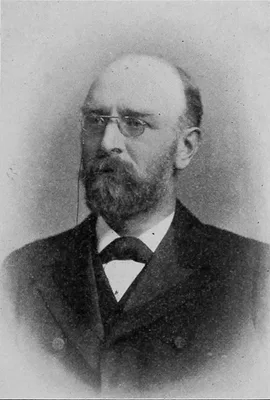
The first fossil human discovered in Africa: Homo rhodesiensis, commonly referred to as the Broken Hill Skull or the Kabwe Cranium.The skull, which most current experts classify as Homo heidelbergensis, was discovered…
1959 CE
#7288
A new fossil from Olduvai.
In 1959 Mary Leakey discovered the "Zinj" skull (OH 5) at Olduvai Gorge. This became the type specimen for Paranthropus boisei, arguably the most famous early human fossil from Olduvai in Northern Tanzania. The specie…
1978 CE
#7277
A new species of the genus Australopithecus (Primates: Hominidae) from the Pliocene of Eastern Africa.
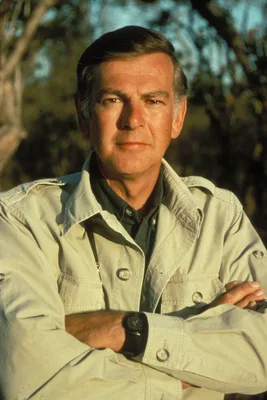
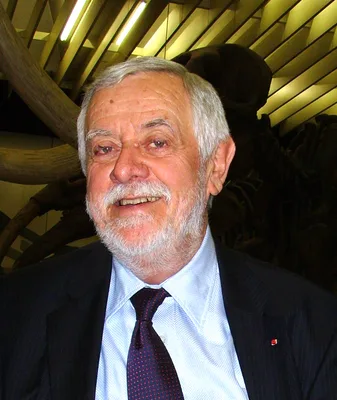
Johanson and colleagues formally named the species Afarensis of the genus Australopithecus in 1978.
1964 CE
#7270
A new species of the genus Homo from Olduvai Gorge.
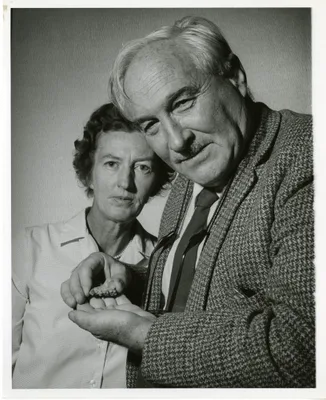
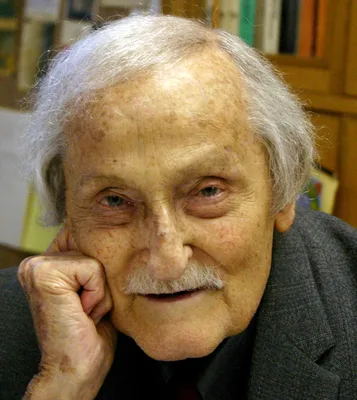
First report on Homo habilis.
2020 CE
#12596
A sensory appendage protein protects malaria vectors from pyrethroids.
Researching how the malarial mosquito A. gambiae developed resistance to common pyrethroid insecticides, the authors discovered how natural selection had enabled this insect population to develop resistance. They anal…
1735 CE
#8483
A voyage to Guinea, Brasil and the West Indies; in His Majesty's ships, the Swallow and Weymouth: Describing the several islands and Settlements, viz, Madeira, the Canaries, Cape de Verd, Sierraleon, Sesthos, Cape Apollonia, Cabo Corso, and others on the Guinea coast; Barbadoes, Jamaica, &c. in the West-Indies; the colour, diet, languages, habits, manners, customs, and religions of the respective natives, and inhabitants. With remarks on the gold, ivory, and slave-trade; and on the winds, tides and currents of the several coasts.
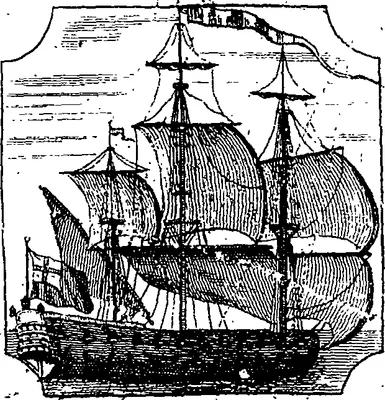
Atkins, surgeon on the voyage, included information about the slave trade and the natural history of the Gold Coast. "Atkins describes the manatee accurately, and tells much about fetish worship. He shows that there w…
1961 CE
#214.2
Age of Bed I, Olduvai Gorge, Tanganyika.
Introduction of the potassium-argon dating method to paleoanthropology, showing that lava at the base of the site of Olduvai Gorge was about 1.8 million years old, and proving that fossils, Australopithecus (Zinjanthr…
2010 CE
#8367
Arab painting: Text and image in illustrated Arabic manuscripts. Edited by Anna Contadini.
1925 CE
#211.1
Australopithecus africanus: The man-ape of South Africa.
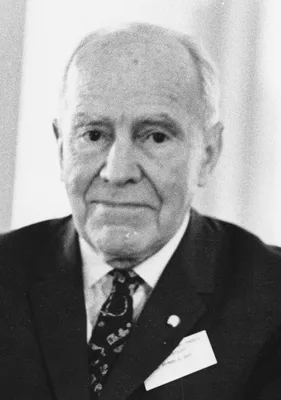
First report on Dart's discovery in 1924 of the first member of the genus Australopithecus, the first hominin found in Africa. In their 150th anniversary issue published on November 4, 2019 the editors of Nature inclu…
1994 CE
#7276
Australopithecus ramidus, a new species of early hominid from Aramis, Ethiopia.
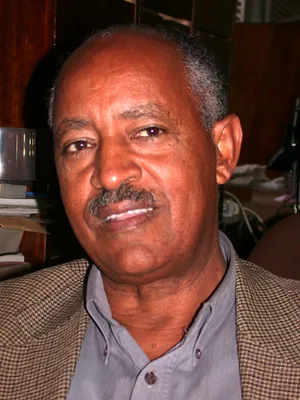
Between 1992 and 1994 White and his team discovered the first Ardipithecus ramidus fossils in the Middle Awash area of Ethiopia. They named their discovery Ardipithecus ramidus (‘ramid’ means ‘root&r…
2010 CE
#7280
Australopithecus sediba: A New Species of Homo-Like Australopith from South Africa.
Matthew Berger, the young son of Lee Berger, discovered the first specimen of Australopithecus sediba, the right clavicle of MH1, on the 15th of August in 2008. This species of Australopithecus dates to about 2 millio…
2008 CE
#8234
Biographical index of the Middle Ages. 2 vols.
Contains 130,000 very brief biographical notes compiled from nearly 200 references (which are cited) on roughly 95,000 people from Europe and the Middle East during the 1000 years of the Middle Ages. The text is searc…
1719 CE
#13538
Caput Bonae Spei hodiernum, das ist: vollständige Beschreibung des africanischen Vorgebürges der Guten Hofnung. Worinnen in dreyen Theilen abgehandelt wird, wie es heut zu Tage, nach seiner Situation und Eigenschaft aussiehet; ingleichen was ein Natgur-Forscher in den dreyen Reichen der Natur....
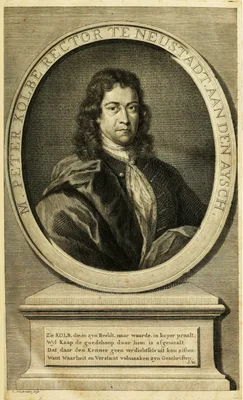
Includes the first study of the natural history of the Cape region of South Africa. Translated into English by "Mr. Medley" as The present state of the Cape of Good-Hope. 2 vols., London, 1738-31. Digital facsimile of…
1853 CE
#10235
Change of climate considered as a remedy in dyspetic, pulmonary, and other chronic affections; with an account of the most eligible places of residence for invalids in Spain, Portugal, Algeria, etc., at different seasons of the year; and an appendix on the mineral springs of the Pyrenees, Vichy, and Aix les Bains.
The author, a pulmonary specialist at Cavendish Square, London, provides a detailed manual for invalid travellers, seeking cures for tuberculosis, and indigestion and "nervous affections." It may be one of the first t…
2010 CE
#13456
Die Mineralien in Der Arabischen Pharmakognosie: Eine Konkordanz Zur Mineralischen Materia Medica Der Klassischen Arabischen Heilmittelkunde Nebst ... Kommission (Vok) der A).
1985 CE
#7284
Early Homo erectus skeleton from west Lake Turkana, Kenya.

The Turkana Boy, (KNM-WT 15000) now called Nariokotome Boy, a Homo erectus fossil which was in 2016 the most complete early human skeleton found. It is a nearly complete skeleton of a hominin youth believed to be 1.5 …
1883 CE
#14039
Essai de géographie médicale de l'Ille Nosi-Bé près la cote nord-ouest de Madagascar (avec cartes). Thèse pour le doctorat en médicine.
1901 CE
#12210
Étienne Geoffroy Saint-Hilaire. Lettres écrites d'Égypte à Cuvier, Jussieu, Lacépède, Monge, Desgenettes, Redouté le Jeune, Norry, etc., aux professeurs du muséum et à sa famille. Receuillies et publiées avec un préface et des notes par le Dr. E.-T. Hamy.
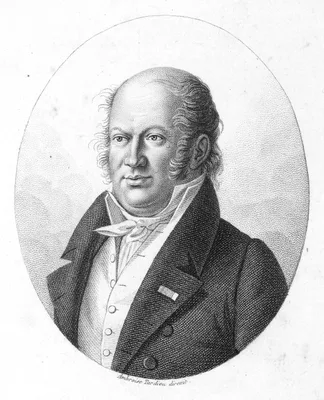
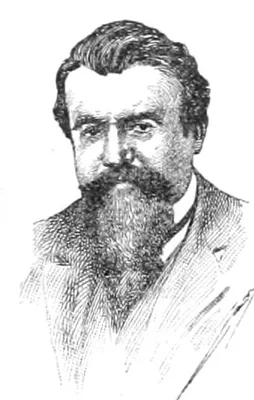
Digital facsimile from BnF Gallica at this link.
1840 CE
#6502
Geschichte der arabischen Aerzte und Naturforscher.
This has traditionally been considered the first major history of Arab medicine. It was written mostly in the form of a chronological series of bio-bibliographies, and should also be considered a pioneering bibliograp…
1971 CE
#6510.2
Geschichte des arabischen Schriftums. Band 3. Medizin-Pharmazie, Zoologie-Tierheilkunde bis ca. 430 H.
1800 CE
#1768
Historiae Aegypti compendium, Arabice et Latine. Partim ipse vertit, partim a Pocockio versum edendum curavit, notisque illustravit J. White.
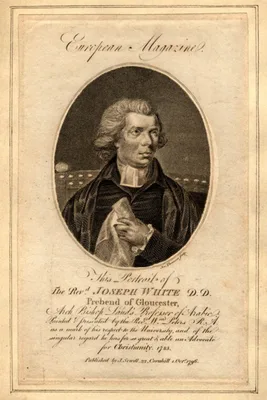
Arabic-Latin bilingual text, edited by White, incorporating a translation begun by Edward Pococke the Younger (1648-1727). Abd al-Latif gave a good description of the fauna and flora of Egypt, its inhabitants and some…
1735 CE
#9416
Historiae Aegypti naturalis qua continentur rerum Aegyptiarum libri quatuor. Opus posthumum nunc primum ex auctoris autographo, diligentissime recognito, editum; atque ex eodem tabellis aeneis XXV illustratum et uberimmo indice auctem. (2 vols.) Vol. 2: Pars secunda, sive, de Plantis Aegypti liber auctus & emendatus. Accedunt tabella aenae LXXVII plantis summo artificio incisis; ut & dissertatio eiusdem de laserpitio, & lotoaegyptia. Cum observationibus & notis Joannis Veslingii, equitis, In Patavino Gymnasio Anatomiae & Pharmaciae professoris primarii. Accedunt Eiusdem Joannis Veslingii paraeneses ad rem herbariam & vindiciae opobalsami cum indicibus necessariis.
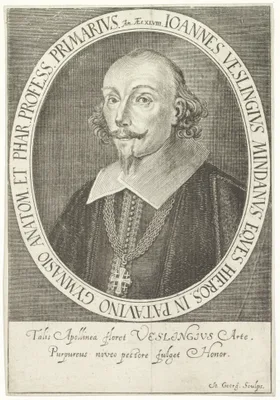
Posthumously published works of Alpini on the natural history and botany of Egypt, and Vesling on the botany of Egypt. The second volume, on botany by Alpini was edited by Johannes Vesling, with the addition of his ow…
1985 CE
#7273
History of physical anthropology in Southern Africa.
1976 CE
#8193
Islamic science: An Illustrated study.

Includes chapters on natural history, medicine and pharmacology, agriculture and irrigation, man and the natural environment.
1854 CE
#13649
L'Algérie médical: Topographie, climatologie, pathogénie, pathologie, prophylaxie, hygiène, acclimatement et colonisation.
Digital facsimile from BnF Gallica at this link.
1939 CE
#8527
Les manuscrits arabes de l'Escurial. Vol. 2, Fascicule 2: Médecine et histoire naturelle. Compiled by Hartwig Derenbourg, edited by Henri Paul Joseph Renaud.
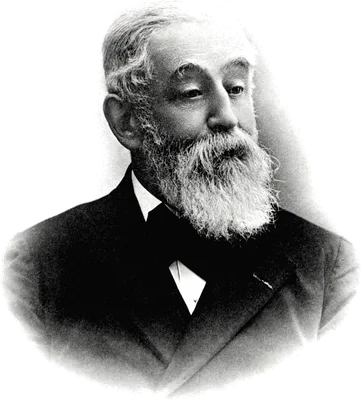
1553 CE
#8982
Les observations de plusieurs singularitez et choses memorables, trouuées en Grece, Asie, Iudée, Egypte, Arabie, & autres pays estranges, redigées en trois livres.
![BELON, Pierre [Pierre Belon du Mans; Petrus Bellonius Cenomanus] (1517 – 1564)](/media/portraits/9632)
Belon was first trained as an apothecary, and worked in that capacity for the bishop of Clermont, Guillaume Duprat. Around 1542 he studied medicine In Paris, and obtained a licentiate in medicine, though he never took…
1995 CE
#7278
New four-million-year-old hominid species from Kanapoi and Allia Bay, Kenya.
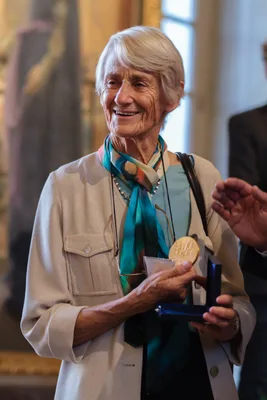
In 1965, a research team led by Bryan Patterson from Harvard University discovered a single arm bone (KNM-KP 271) of an early human at Kanapoi in northern Kenya, but without additional fossils Patterson could not conf…
2001 CE
#7279
New hominin genus from eastern Africa shows diverse middle Pliocene lineages.
In 1998 and 1999, working in the Lake Turkana region of northern Kenya, Meave Leakey and her team found a cranium and other fossil remains of a 3.5 million year old hominin with a mixture of features unseen in other e…
1976 CE
#214.3
Plio-Pleistocene hominid discoveries in Hadar, Ethiopia.
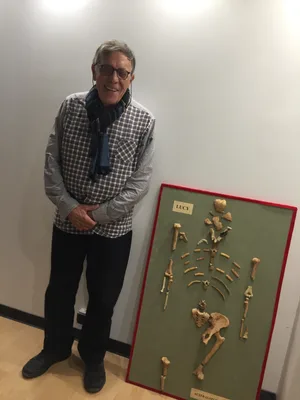
Report on the Afar fossils (formally classified and named Australopithiecus afaranesis in 1998) representing a minimum of 35 and a maximum of 65 individuals, all about 3,000,000 years old. The most famous of these, AL…
1946 CE
#214.1
Pretoria: The South African fossil ape-men. The Australopithecinae. Part I. The occurrence and general structure of the South African ape-men.
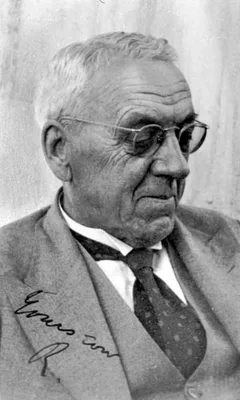
With this comprehensive report Broom presented his case to the scientific establishment that Australopithecus probably represented the stock from which mankind had evolved.
1890 CE
#8287
Reisebilder aus Liberia: Resultate geographischer, naturwissenschaftlicher und ethnographischer untersuchungen während der jahre 1879-1882 und 1886-1887. 2 vols.
The first comprehensive monograph on the Republic of Liberia, published 50 years after its colonization by freed American slaves and their descendents. Digital facsimile from the Internet Archive at this link. Transla…
1968 CE
#7282
Sur la decouverte dans le Pleistocene inferieur de la valle de l'Omo (Ethiopie) d'une mandibule d'Australopithecien.
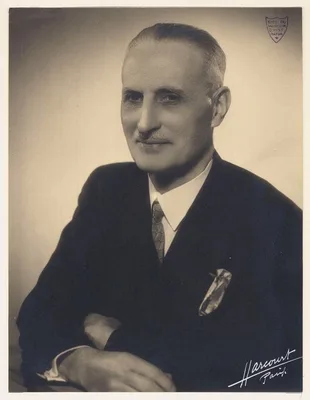
In 1967 Arambourg and Coppens discovered Omo 18, the first specimen of Paranthropus aethiopicus, also known as Paraustralopithecus aethiopicus; however it's classification as a new species was initially dismissed. In …
1890 CE
#11449
The antiquity of man in South Africa, and evolution.
The first separately published work on human origins published in the continent of Africa. Hillier's text was read on his behalf before the Eastern Province Literary and Scientific Society in Grahamstown, Eastern Cape…
1986 CE
#7283
The origin of the human race.
First publication in English by Alekseyev of Homo rudolfensis, primarily known from KNM-ER 1470, discovered in Koobi Fora in the Lake Turkana basin, Kenya. Alekseyev (Alexeev) first proposed the species in 1978, initi…
1938 CE
#7281
The Pleistocene anthropoid apes of South Africa.
Paranthropus robustus, discovered by Broom in Kromdraal, South Africa, in 1938. The species is generally dated from about 2 million to 1.2 million years before present.
1922 CE
#212
The Rhodesian skull.
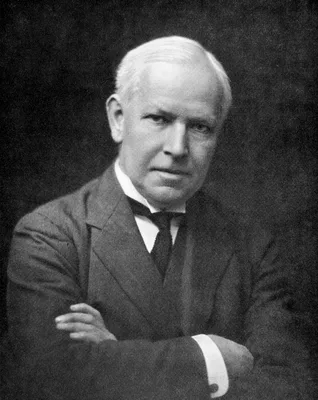
Description of the skull found at Broken Hill, Rhodesia, in 1921.
1937 CE–1939 CE
#7259
The stone age of Mount Carmel. Volume I: Excavations at the Wady el-Mughara. Volume II: The fossil remains from the Lavalloiso-Mousterian.
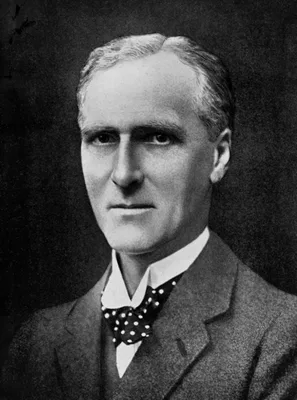
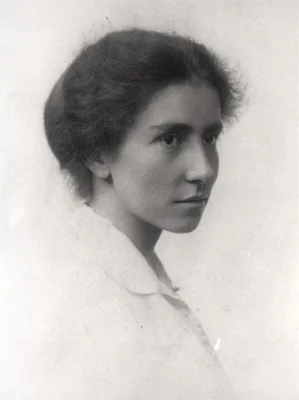
Garrod carried out her landmark excavations of the el-Wad, el-Tabun and es-Skhul caves on the hills of Mount Carmel, close to Wadi el-Mugharah (Valley of the Caves) between 1929 and 1934. Her monograph on the subject …
1928 CE
#8532