
Facets
Browse across eight MeSH (opens in new tab) facets — era, geography, science, specialty, technology, history, culture, and reference. Select one tag per group; counts update across the others.
Clear filtersFacet filters
Geography
Specialties & Disease
- Anatomy & Pathology 8
- Cardiology & Blood 23
- Neurology & Psychiatry 32
- Obstetrics & Reproductive 50
- Infectious Disease (General) 6
- Surgery & Anesthesia 15
- Public Health 64
- Immunology & Dermatology 57
- General Clinical Medicine 38
- Military Medicine 33
- Psychology 2
- Alternative & Fringe Medicine 14
- Pediatrics 20
- Ophthalmology & Vision 6
- ENT & Hearing 2
- Urology & Nephrology 2
- Gastroenterology & Hepatology 2
- Pulmonary & Respiratory 3
- Rheumatology, Rehab & Pain 4
- Internal, Emergency & Geriatric 3
- Veterinary Medicine 9
- Epidemiology & Demography 9
- Physiology & Embryology 33
- Dentistry 2
- Plagues & Epidemics 60
- Microbiology & Virology 70
Social & Historical Studies
Institutions & Culture
Reference & Scholarly Works
Drugs & Technology
57 entries match Immunology & Dermatology [C19 / C20 / C17] · Women & Gender [K01.700.500]
1937 CE
#2659
The carcinogenic action of oestrone: induction of mammary carcinoma in female mice of a strain refractory to the spontaneous development of mammary tumours.
With L. H. Stickland and K. I. Connal.
1957 CE
#2660.10
The induction of neoplasms with a substance released from mouse tumors by tissue culture.
Isolation of polymavirus (papovavirus). With B. E. Eddy, A. M. Gochenour, N. G. Borgese, and G E. Grubbs.
1924 CE
#5084
The significance of Streptococcus hemolyticus in scarlet fever and the preparation of a specific anti-scarlatinal serum by immunization of the horse to Streptococcus hemolyticus-scarlatinae.
Dochez and Sherman immunized a horse by repeated injections of scarlet fever toxin. A serum obtained from the horse blanched a scarlet fever rash and, when injected subcutaneously, caused marked amelioration of the ea…
1833 CE
#6028
Traité pratique des maladies de l’utérus et de ses annexes. 2 vols. and atlas.
Boivin and Dugès practiced amputation of the cervix for chronic ulceration. On page 648 of vol. 2 is the first recorded case of cancer of the female urethra. English translation, 1834.
1964 CE
#2660.18
Virus particles in cultured lymphoblasts from Burkitt’s lymphoma.
Order of authorship in the original publication: Epstein, Achong, Barr. Presence of herpes-like virus particles in Burkitt’s tumor cells reported. The Epstein-Barr virus was the first human cancer-causing virus …
1960 CE
#2660.13
Virus-cell interaction with a tumour-producing virus.
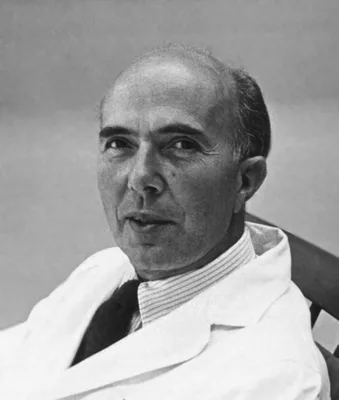
Polyomavirus (papovavirus) shown to be capable of transforming cells in culture. Full text from PubMedCentral at this link.
1911 CE
#2638
Zur Diagnose des Karzinoms.
A serum reaction, employed by Freund and Kaminer in 1910 for the diagnosis of cancer.