
Facets
Browse across eight MeSH (opens in new tab) facets — era, geography, science, specialty, technology, history, culture, and reference. Select one tag per group; counts update across the others.
Clear filtersFacet filters
Geography
Specialties & Disease
- Anatomy & Pathology 0
- Cardiology & Blood 3
- Neurology & Psychiatry 1
- Obstetrics & Reproductive 3
- Infectious Disease (General) 0
- Surgery & Anesthesia 3
- Public Health 7
- Immunology & Dermatology 3
- General Clinical Medicine 5
- Military Medicine 7
- Psychology 0
- Alternative & Fringe Medicine 7
- Pediatrics 2
- Ophthalmology & Vision 0
- ENT & Hearing 1
- Urology & Nephrology 0
- Gastroenterology & Hepatology 1
- Pulmonary & Respiratory 0
- Rheumatology, Rehab & Pain 0
- Internal, Emergency & Geriatric 0
- Veterinary Medicine 0
- Epidemiology & Demography 5
- Physiology & Embryology 1
- Dentistry 2
- Plagues & Epidemics 11
- Microbiology & Virology 0
Social & Historical Studies
Institutions & Culture
Reference & Scholarly Works
Drugs & Technology
113 entries match Zoology & Animal Sciences [K01.900.500.750] · Race, Ethnicity & Colonial Medicine [K01.900.850]
2006 CE
#8092
Medical apartheid: The dark history of medical experimentation on Black Americans from colonial times to the present.

1947 CE
#12814
Medical care and the plight of the Negro.
1977 CE
#10803
Medical history of a Civil War regiment: Disease in the sixty-fifth United States Colored Infantry.
2017 CE
#9907
Medicalizing blackness: Making racial difference in the Atlantic world, 1780-1840.
2021 CE
#14058
Medicine and healing in the age of slavery. Edited by Sean Morey Smith & Christopher D. E. Willoughby.

1978 CE
#7047
Medicine and slavery. The diseases and health care of blacks in antebellum Virginia.
1934 CE
#12990
Meharry Medical College: A history.
The first history of an African-American medical school written by an African-American. Meharry Medical College, founded in 1876 as the Medical Department of Central Tennessee College, was the first medical college fo…
2000 CE
#13883
NDA II. The story of America's second National Dental Association.
1958 CE
#9297
Negroes and medicine.
1672 CE
#1826.1
New-Englands rarities discovered: in birds, beasts, fishes, serpents, and plants of that country. Together with the physical and chyrurgical remedies wherewith the natives constantly use to cure their distempers, wounds, and sores…
The first detailed account of the natural history and botany of North America, including the first extensive study of native North American medicine.
1961 CE
#12015
No time for prejudice: A story of the integration of negroes in nursing in the United States.
Primarily a history of the National Association of Colored Graduate Nurses [NACGN], which existed for the express purpose of "promoting unity within the nursing profession and furthering the cause of democracy." Integ…
1785 CE
#13086
Observations générales sur les maladies des climats chauds, leurs causes, leur traitement, et les moyens de les prévenir.
Digital facsimile from BnF Gallica at this link.
1832 CE
#10812
Observations on the epidemic now prevailing in the city of New-York; called the Asiatic or spasmodic cholera; with advice to the planters of the South, for the medical treatment of their slaves.
Digital facsimile from the Internet Archive at this link.
1788 CE
#8216
Observations sur le tétanos; Ses différences, ses causes, ses symptômes, avec le traitement de cette maladie & les moyens de la prévenir. Précédées d'un discours sur les moyens de perfectionner la médecine-pratique sous la zone torride. Suivies d'observations sur la santé des femmes enceintes dans ces régions; leurs maladies aux différentes époques de la grossesse; l'accouchement & les suites; la conservation des nouveau-nés jusqu'à l'adolescence. Terminées par le rapprochement des vices & des abus des hôpitaux d'entre les tropiques, & les moyens d'y remédier. Par M. Dazille. Pour servir de développement & de suite à ce que cet auteur a écrit du tétanos dans ses ouvrages sur les maladies des nègrse [sic], & sur les maladies des climats chauds.
Primarily concerning the diseases of black slaves. Digital facsimile from the Internet Archive at this link.
1776 CE
#1601.1
Observations sur les maladies des nègres, leurs causes, leurs traitemens et les moyens de les prévenir.
Study of the health conditions and diseases of black slaves in the Americas. Digital facsimile of the 1776 edition from Google Books at this link. Second edition, expanded to two volumes. Paris: L'Auteur, 1792.
1896 CE
#13072
On the pigment of the negro's skin and hair.
"In the present state of our knowledge we can only say that it seems highly probable that the pigment of the negro's hair is not different from the dark pigment found in the hair of the white races, and we may infer t…
1929 CE
#13079
Pathfinders: A history of the progress of colored graduate nurses. With biographies of many prominent nurses.
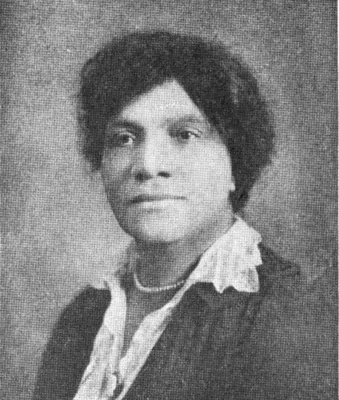
Digital facsimile from the Hathi Trust at this link.
1986 CE
#12376
Pioneering research in surgical shock and cardiovascular surgery: Vivien T. Thomas and his work with Alfred Blalock. An autobiography by Vivien T. Thomas
Later retitled, Partners of the Heart: Vivien Thomas and His Work with Alfred Blalock.
1803 CE
#8025
Practical rules for the management and medical treatment of negro slaves in the sugar colonies
Collins, a British doctor and planter, spent fourteen years in the Caribbean island of Saint Vincent. Written from the utilitarian perspective of a master, this handbook on slave medicine was intended to maximize the …
2010 CE
#7752
Practicing medicine in a black regiment: The Civil War diary of Burt G. Wilder, 55th Massachusetts, edited by Richard M. Reid.
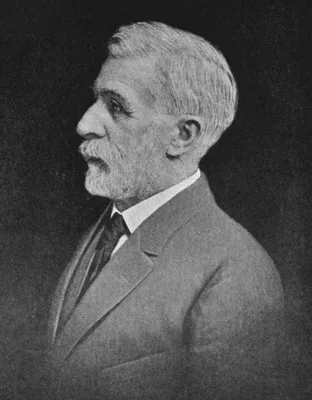

Wilder was a Harvard-trained white physician assigned to one of the first African American regiments in the American Civil War.
2007 CE
#10371
Race & medicine in nineteenth and early twentieth-century America.
1896 CE
#11823
Race traits and tendencies of the American Negro.
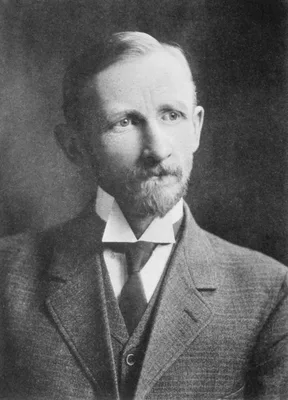
Hoffman was statistician for the Prudential Insurance Company of America. This work, "Hoffman's first, characterized African Americans as exceptionally disease-prone. The work was motivated by a concern about issues o…
1941 CE
#12823
Report of the Blood Transfusion Association concerning the Project for Supplying Blood Plasma to England, which has been carried on jointly with the American Red Cross from August, 1940, to January, 1941. Narrative account of work and medical report.
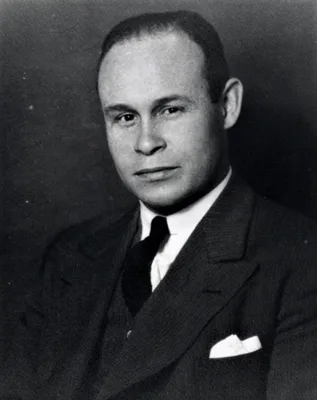
Drew discovered the method for long-term storage of blood plasma, and organized America's first large-scale blood bank. Drew's thesis for his medical degree at Columbia was entitled "Banked Blood: A Study in Blood Pre…
1934 CE
#6229
Roentgen visualization of the placenta.
Direct radiography of the placenta. "Clilan (C.B.) Powell, longtime owner of the Amsterdam News, was born in 1894 to former Virginia slaves. Very little is known about his childhood. He received his medical degree in …
2017 CE
#9862
Secret cures of slaves: People, plants, and medicine in the eighteenth-century Atlantic world.

"Massive mortality among enslaved Africans and European planters, soldiers, and sailors fueled the search for new healing techniques. Amerindian, African, and European knowledges competed to cure diseases emerging fro…
1994 CE
#10090
Secret doctors: Ethnomedicine of African Americans.
"Based on an ethnographic study of the traditional medicine of African Americans in the rural southern United States, this work concentrates on the original Louisiana Territory, with its Native and African American in…
2012 CE
#8206
Sex, sickness, and slavery: Illness in the antebellum South.
1995 CE
#8089
Sick and tired of being sick and tired: Black women's health activism in America, 1890-1950.
1949 CE
#3154.1
Sickle cell anemia, a molecular disease.
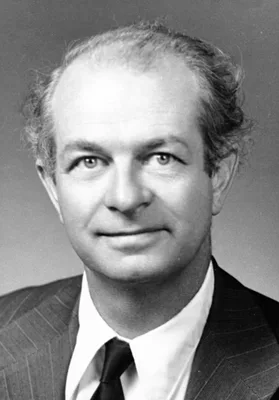
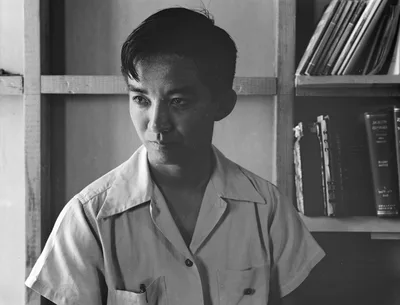
First recognition, by Pauling and colleagues, of a structural hemoglobin variant, and the beginning of the molecular approach to disease.
1998 CE
#8205
Slavery and medicine: Enslavement and medical practices in antebellum Louisiana.
1933 CE
#7065
Some notes on the history of the National Medical Association.
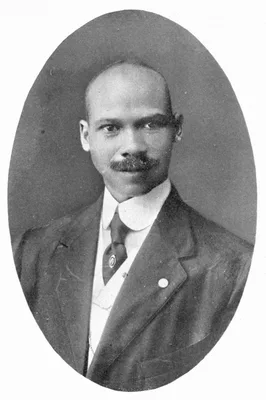
Digital facsimile available from PubMedCental (NLM) at this link.
1975 CE
#7054
Textbook of Black-related diseases. Edited by Richard A. Williams.
The first textbook on diseases of African Americans written by African American physicians. The book set the tone for recognizing the importance of race and ethnicity in the evalutation, diagnosis, and treatment of pa…
1861 CE
#3267
The breath of life; or mal-respiration, and its effects upon the enjoyments and life of man.
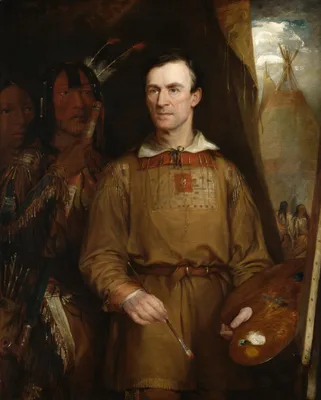
Catlin, the famous American artist, was the first in America to call attention to the bad effects of mouth-breathing. He based his book on observations of native American practices, and illustrated his book with humor…
1984 CE
#7053
The Caribbean slave: A biological history.
1854 CE
#8383
The claims of the Negro, ethnologically considered: An address before the literary societies of Western Reserve College, at commencement, July 12, 1854.
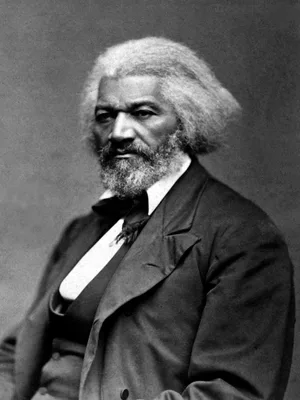
Digital facsimile from the Hathi Trust at this link.
1936 CE
#9304
The ethnobiology of the Chiricahua and Mescalero Apache: A. the use of plants for food, beverages and narcotics. Ethnobiological studies in the American Southwest, Vol. 3. Biological series (Vol. 4, No. 5); Bulletin, University of New Mexico, whole, (No. 297).
1935 CE
#9303
The ethnobiology of the Papago Indians. Ethnological Studies in the American Southwest II.
"The Tohono O’odham ... are a Native American people of the Sonoran Desert, residing primarily in the U.S. state of Arizona and the Mexican state of Sonora. Tohono O’odham means "Desert People." The federa…
1939 CE
#6594
The first Negro medical society. A history of the Medico-Chirurgical Society of the District of Columbia.
A detailed history of the “first American Negro medical society formed in America and probably in the world”. Cobb was the first black American medical historian of note.
2009 CE
#13038
The good doctors: The Medical Committee for Human Rights and the struggle for social justice in health care.
"... documents the history of the Medical Committee for Human Rights (MCHR), a group of health professionals who delivered health care to wounded protesters and victims of police violence during the Civil Rights Movem…
1906 CE
#7051
The health and physique of the Negro American: report of a social study made under the direction of Atlanta University: together with the Proceedings of the Eleventh Conference for the Study of the Negro Problems, held at Atlanta University, on May the 29th, 1906.
Probably the earliest sociological study of the medical problems of blacks written by a black. Digital facsimile from the Internet Archive at this link.
1951 CE
#6596.1
The health of slaves on southern plantations.
Chiefly from contemporary MS records.
1967 CE
#7048
The history of the Negro in medicine.
International Library of Negro Life and History. Revised edition, 1968.
1912 CE
#7050
The Negro in medicine.
An early publication on the medical problems of blacks written by a black physician. Kenney served as school physician at Tuskegee University, was the first director of the John A. Andrew Memorial Hospital at Tuskegee…
1955 CE
#14343
The Negro in science.
In the forward Martin D. Jenkins pointed out that while African Americans made important contributions to the natural sciences the awareness of the public and even other scientists was rather low. In the first chapter…
1949 CE
#8084
The Negro in the medical profession.
Publications of the University of Virginia, Phelps-Stokes fellowship papers, no. 18.
1934 CE
#11663
The negro professional man and the community with special emphasis on the physician and lawyer.
An in-depth social statistical and geographical analysis of America's black doctors including their distribution, economic links, and social activism that varied throughout the South, as well as the North and West.
2012 CE
#9977
The New Encyclopedia of Southern Culture: Volume 22: Science and medicine. Edited by James G. Thomas, Jr. & Charles Reagan Wilson.
1986 CE
#8088
The path we tread: Blacks in nursing, 1854-1984.
1807 CE
#7049
The planter's and mariner's medical companion: treating, according to the most successful practice, I. The diseases common to warm climates and on ship board. II. Common cases in surgery, as fractures, dislocations, &c. &c. III. The complaints peculiar to women and children. To which are subjoined a dispensatory, shewing how to prepare and administer family medicines, and a glossary giving an explanation of technical terms.
Ewell, then practicing in Savannah, Georgia, wrote this self-help book for southern residents, directing his book toward plantation owners. It was "the constant friend of a large number of slave-masters. In emergencie…
2017 CE
#13215
The price for their pound of flesh: The value of the enslaved, from womb to grave, in the building of a nation.
"Berry studies the economic history of slavery in the United States, examining how a price was assigned to the bodies of enslaved people in America from before they were born until after they died.[5] Berry proposes f…