
Facets
Browse across eight MeSH (opens in new tab) facets — era, geography, science, specialty, technology, history, culture, and reference. Select one tag per group; counts update across the others.
Clear filtersFacet filters
Geography
Specialties & Disease
- Anatomy & Pathology 18
- Cardiology & Blood 20
- Neurology & Psychiatry 8
- Obstetrics & Reproductive 0
- Infectious Disease (General) 0
- Surgery & Anesthesia 2
- Public Health 19
- Immunology & Dermatology 28
- General Clinical Medicine 8
- Military Medicine 4
- Psychology 0
- Alternative & Fringe Medicine 2
- Pediatrics 1
- Ophthalmology & Vision 5
- ENT & Hearing 1
- Urology & Nephrology 4
- Gastroenterology & Hepatology 10
- Pulmonary & Respiratory 19
- Rheumatology, Rehab & Pain 2
- Internal, Emergency & Geriatric 0
- Veterinary Medicine 0
- Epidemiology & Demography 0
- Physiology & Embryology 53
- Dentistry 1
- Plagues & Epidemics 14
- Microbiology & Virology 13
Social & Historical Studies
Institutions & Culture
Reference & Scholarly Works
Drugs & Technology
19 entries match Public Health [N02.500] · Chemistry & Biochemistry [K01.900.200]
1839 CE
#992
Analyses comparées des alimens consommés et des produits rendus par une vache laitière.
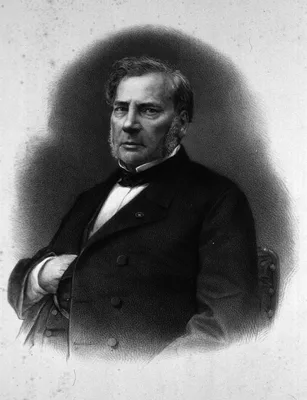
The first analysis of foodstuffs and fertilizers. Boussingault made a balance of intake and outgo of nutrients in food and excreta.
1912 CE
#2131
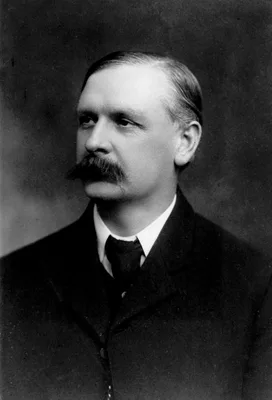
Caisson sickness, and the physiology of work in compressed air.
1991 CE
#14208
Chicxulub Crater: A possible Cretaceous/Tertiary boundary impact crater on the Yucatán Peninsula, Mexico.
Eleven years after publication of No. 14207, Alan Hildebrand, working with Luis and Walter Alvarez, proposed that the Chicxulub Crater, discovered by Antonio-Camargo-Zanoguera and Glen T. Penfield during the 1970s, wa…
2005 CE
#13769
Essentials of medical geology: Impacts of the natural environment on public health. Editor-in-chief: Olle Selinus.
"... emphasizes the importance and interrelationships of geological processes to the health and diseases of humans and animals. Its accessible format fosters better communication between the health and geoscience comm…
1979 CE
#14206
Experimental evidence in support of an extra-terrestrial trigger for the Cretaceous-Tertiary extinctions. (Abstract).
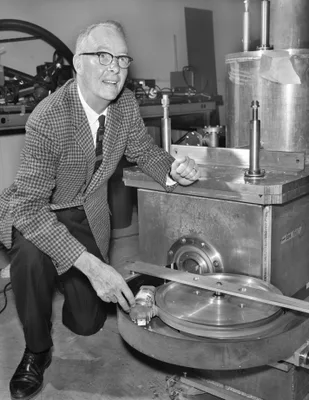
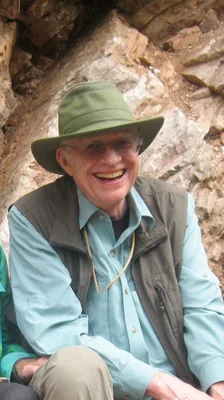
Iridium is a very rare element in the Earth's crust, but is found in anomalously high concentrations (around 1000 times greater than normal) in a thin worldwide layer of clay marking the boundary between the Cretaceou…
1980 CE
#14207
Extraterrestrial cause for the Cretaceous-Tertiary extinction.
Following up on No. 14206, the authors stated that the same excess iridium areas were found in two different areas of W. Europe and in New Zealand, and posited that “the anomalous iridium concentrations at the C…
1889 CE
#714
Fixation de l’azote par la terre végétale nue ou avec le concours des légumineuses.
Berthelot showed that bacteria acting in clay soils are able to fix nitrogen.
1854 CE
#2124
Mémoire sur les effets de la compression de l’air.

An early paper on “caisson sickness”.
1772 CE
#920
Observations on the different kinds of air.
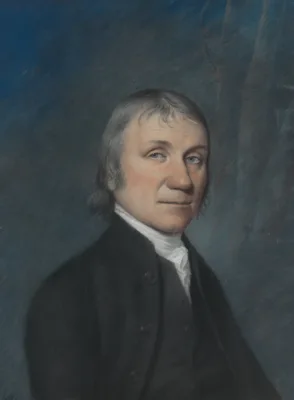
The isolation of oxygen was first achieved by Priestley. He also demonstrated that plants immersed in water give off oxygen and that this gas is essential for animal life.
1871 CE
#10483
Physical effects of compressed air, and of the causes of pathological symptoms produced on man, by increased atmospheric pressure employed for the sinking of piers, in the construction of the Illinois and St. Louis Bridge over the Mississippi River at St. Louis, Missouri.
Study of caisson disease and its treatement resulting from experience in treating workmen constructing the Eads Bridge, which opened in 1874. Digital facsimile from the Internet Archive at this link.
1804 CE
#145.54
Recherches chimiques sur la végétation.
In this foundation work on phytochemistry, Saussure analysed the chief active components of plants, their synthesis and decomposition. He specified the relationships between vegetation and the environment. He showed t…
1985 CE
#11060
Structure of the protein subunit in the photosynthetic reaction centre of Rhodopseudomonas viridis at 3 Å resolution.
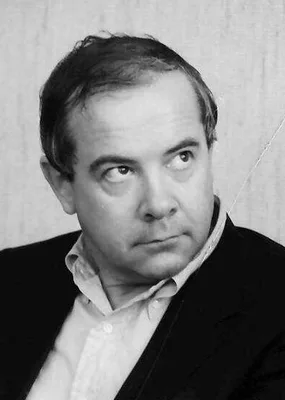

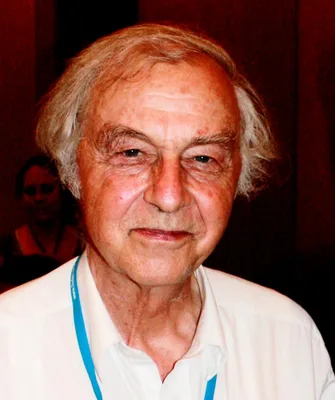
Discovery of the three-dimensional structure of a protein complex found in certain photosynthetic bacteria, called the photosynthetic reaction center. This was the first elucidation of the 3D crystal structure of any …
1933 CE
#14280
Synthesis of ascorbic acid.
Haworth and Hirst successfully synthesized vitamin C in the laboratory. This was the first vitamin to be artificially produced. Their breakthrough made it possible for vitamin C, or ascorbic acid as Haworth called it,…
1955 CE
#6928
The crystal structure of the hexacarboxylic acid derived from B12 and the molecular structure of the vitamin.
The final structure of vitamin B12. With J. Pickworth, J.H. Robertson, K.N. Trueblood, R.J. Prosen, J. G. White. In 1964 Hodgkin was awarded the Nobel Prize in Chemistry "for her determinations by X-ray techniques of …
1873 CE
#10482
The effects of high atmospheric pressure, including the caisson disease.
Classic study of caisson disease. Smith was "Late Surgeon to the New York Bridge Co. (Caisson Work)", treating workmen who built the Brooklyn Bridge. The Eads Bridge (St. Louis) and the Brooklyn Bridge (New York City)…
1906 CE
#1045
The elements of the science of nutrition.
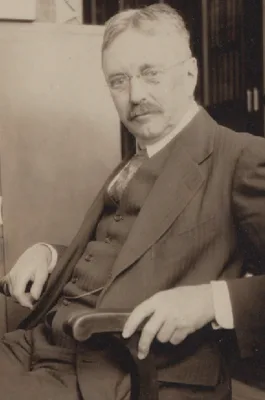
A classic exposition of respiratory and intermediary metabolism. Fourth edition, 1928. Reprint of Lusk’s personal annotated copy of the fourth edition, with biography and bibliography of his writings, New York, …
1957 CE
#7386
The path of carbon in photosynthesis.
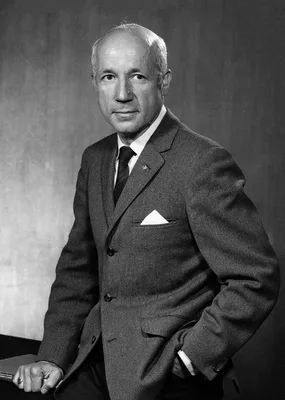
Discovery of the Calvin cycle, also known as the Calvin–Benson–Bassham (CBB) cycle, or reductive pentose phosphate cycle or C3 cycle — a series of biochemical redox reactions that take place in the s…
1896 CE
#13046
Ueber den Einfluss des atmosphärischen Kohlensäuregehalts auf die Temperatur der Erdoberfläche.
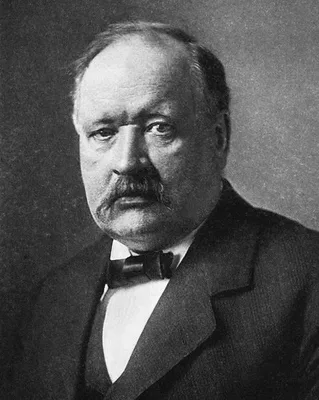
Arrhenius used basic principles of physical chemistry to estimate the extent to which increases in atmospheric carbon dioxide are responsible for the Earth's increasing surface temperature, the "greenhouse effect."
1931 CE
#14238
Zur Kenntnis des Vitamins-A aus Fischtranen.
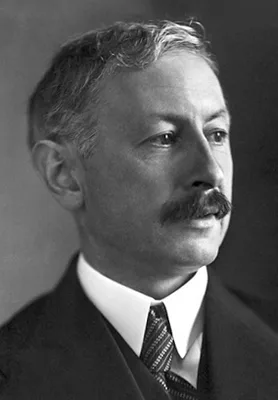
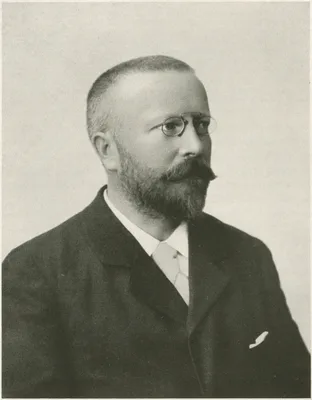
In 1930 Karrer established the correct formula for carotene (the chief precursor of vitamin A), the first demonstration of the chemical structure of a vitamin. Shortly thereafter, he was able to determine the formula …