
Facets
Browse across eight MeSH (opens in new tab) facets — era, geography, science, specialty, technology, history, culture, and reference. Select one tag per group; counts update across the others.
Clear filtersFacet filters
Geography
Specialties & Disease
- Anatomy & Pathology 7
- Cardiology & Blood 94
- Neurology & Psychiatry 27
- Obstetrics & Reproductive 5
- Infectious Disease (General) 1
- Surgery & Anesthesia 76
- Public Health 8
- Immunology & Dermatology 50
- General Clinical Medicine 1
- Military Medicine 0
- Psychology 3
- Alternative & Fringe Medicine 0
- Pediatrics 44
- Ophthalmology & Vision 12
- ENT & Hearing 5
- Urology & Nephrology 0
- Gastroenterology & Hepatology 9
- Pulmonary & Respiratory 5
- Rheumatology, Rehab & Pain 4
- Internal, Emergency & Geriatric 0
- Veterinary Medicine 2
- Epidemiology & Demography 4
- Physiology & Embryology 23
- Dentistry 3
- Plagues & Epidemics 27
- Microbiology & Virology 22
Social & Historical Studies
Institutions & Culture
Reference & Scholarly Works
Drugs & Technology
44 entries match Pediatrics [G03] · Genetics & Heredity [K01.900.300]
1969 CE
#3047.22
A new approach to “anatomic” repair of transposition of the great arteries.
The Rastelli procedure. “Intraventricular rerouting of left ventricular output through the ventricular septal defect to the aorta and establishing of a new right ventricular outflow through the ventriculotomy an…
1860 CE
#3459.1
A practical treatise on the aetiology, pathology, and treatment of the congenital malformations of the rectum and anus.
The first systematic treatise on the subject, and a landmark in pediatric surgery. Includes an early account of colostomy and one of the earliest histories of that procedure. Digital facsimile from the Hathi Trust at …
1963 CE
#3924.4
A simple phenylalanine method for detecting phenylketonuria in large populations of newborn infants.
Bacterial inhibition test for phenylketonuria.
1784 CE
#2734.4
A treatise on the diseases of children.
Underwood laid the foundation of modern pediatrics. His work was superior to anything that had previously appeared and remained the most important book on the subject for sixty years, passing through many editions. Th…
1777 CE
#3425
An account of the diseases most incident to children, from their birth till the age of puberty.
This is an enlarged and more important (third) edition of his An essay on the diseases most fatal to infants (1767) No. 6324. Page 49: Important description of congenital hypertrophic pyloric stenosis.
1717 CE
#3419
An account of the dissection of a child.
First description of congenital hypertrophic pyloric stenosis. Reprinted in Mark M. Ravitch, "The story of pyloric stenosis," Surgery, 48 (1960) 1117-1143.
1927 CE
#3141
Anemia in children, with splenomegaly and peculiar changes in the bones.
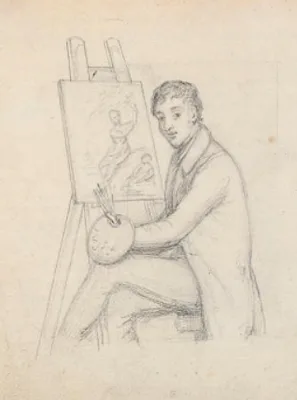
“Cooley’s erythroblastic anemia”, thalassemia. With E. R. Witwer and O. P. Lee. An earlier brief account by Cooley and Lee appeared in Trans. Amer. Pediat. Soc.,1925, 37, 29.
1788 CE
#3426
Case of a scirrhus in the pylorus of an infant.

First American case report on congenital hypertrophic pyloric stenosis. Cases and observations by the Medical Society of New-Haven County…was the first American medical periodical. Only one volume was published…
1886 CE
#3790
Congenital absence of hair and mammary glands with atrophic condition of the skin and its appendages in a boy whose mother had been almost wholly bald from alopecia areata from the age of six.
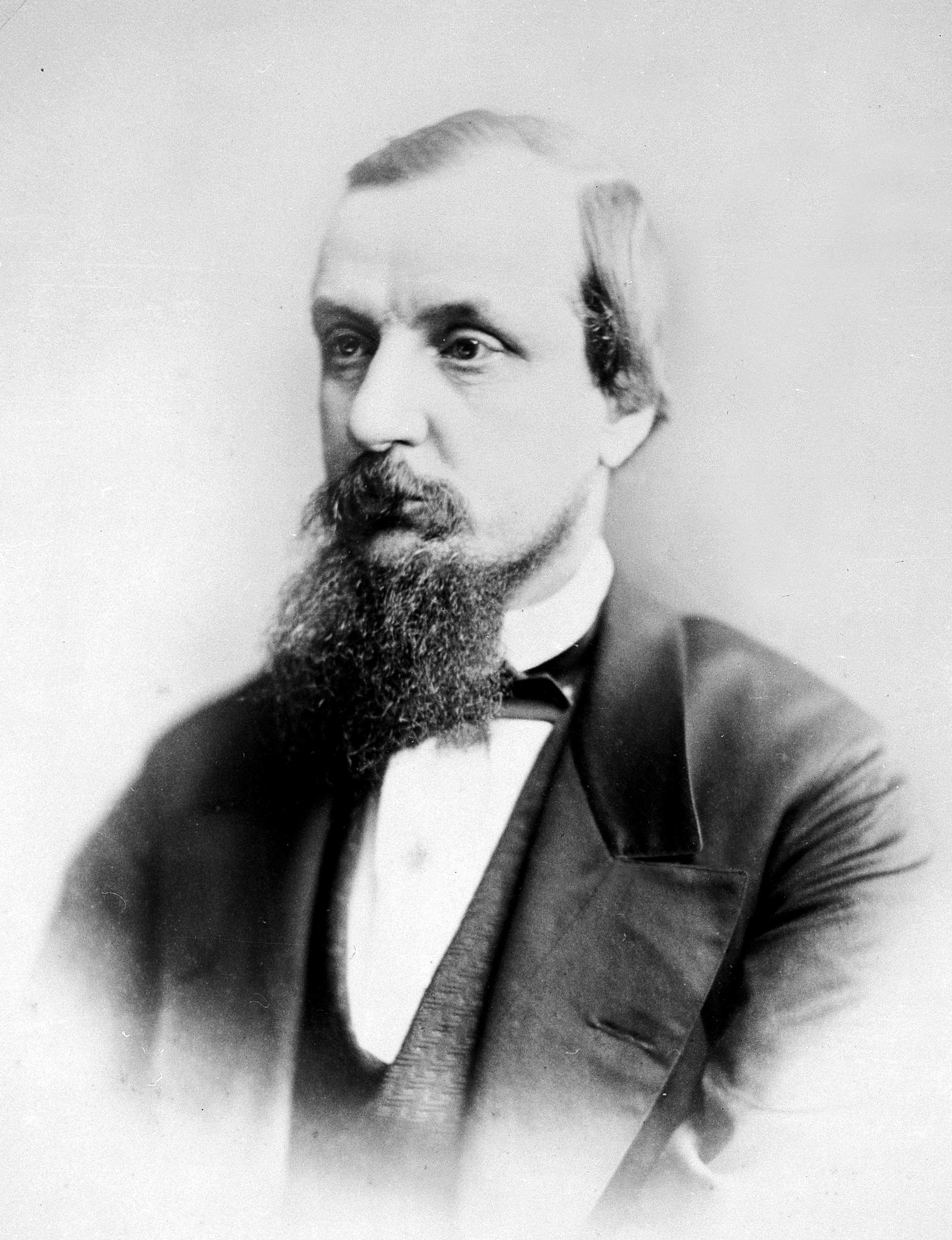
First description of progeria.
1948 CE
#11766
Congenital anaomies of the heart and great vessels. Clinicopathologic study of 132 ases.


An extensively illustrated pathological-anatomical and physiological presentation with an historical approach.
1943 CE
#6357.58
Congenital atresia of the esophagus with tracheo-esophageal fistula. Extrapleural ligation of fistula and end-to-end anastomosis of esophageal segments.
Ablation of the tracheo-oesophageal fistula and primary end-to-end oesophageal anastomosis, first achieved in 1941.
1943 CE
#5509
Congenital defects in infants following infectious diseases during pregnancy.
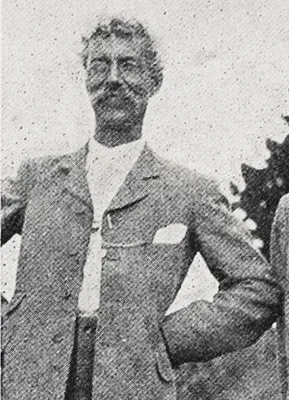
Figures demonstrating that rubella in the first or second month of pregnancy always results in an abnormal infant. With A. L. Tostevin, B. Moore, H. Mayo, and G. H. B. Black.
1982 CE
#12368
Congenital heart disease: Benchmark papers in human physiology.
1947 CE
#2878
Congenital malformations of the heart.
This 618-page work, which required ten years to write, was the first "definitive textbook" of congenital heart defects, a subspecialty of pediatrics that Taussig created. The second edition, published in 1960, was ess…
1966 CE
#12369
Creation of an atrial septal defect without thoracotomy. A palliative approach to complete transposition of the great arteries.
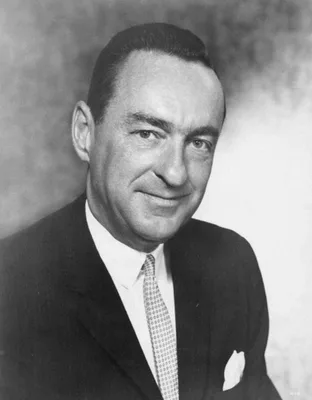
Rashkind balloon atrial septostomy to treat transposition of the great vessels.
1974 CE
#12245
Diagnosis of cyanotic congenital heart malformations in infants by real-time, two-dimensional echocardiography.
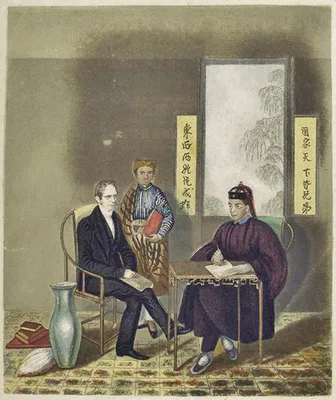
Two-dimensional (cross-sectional) echocardiography.
1932 CE
#14087
Erythroblastosis fetalis and its association with universal edema of the fetus, icterus gravis neonatorum and anemia of the newborn.
The authors described and named this syndrome/illness of newborns for the first time, including pathological findings, clinical data, lab abnormalities, presentation and course of illness. Order of authorship in the o…
1888 CE
#3489.1
Fälle von angeborener Pylorusstenose, beobachtet bei Säuglingen.
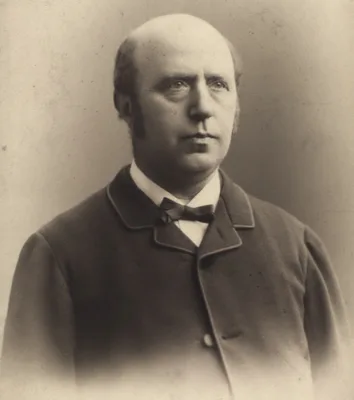
Hirschsprung first made the medical world aware of congenital hypertrophic pyloric stenosis as a distinct clinical entity. In this paper he made no suggestions concerning therapy.
1927 CE
#3142
Familiäre infantile perniziösaartige Anämie (perniziöses Blutbild und Konstitution).
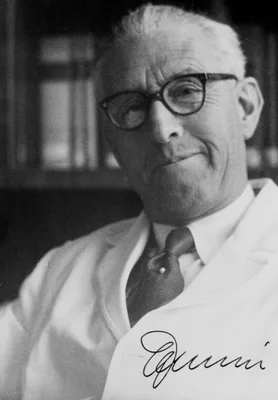
“Fanconi’s syndrome”, congenital hypoplasia of bone marrow with multiple congenital defects occurring as a familial disease.
1652 CE
#3050
Iatrologismorum seu medicinalium observationum pentecostae quinque utilibus praeceptis.
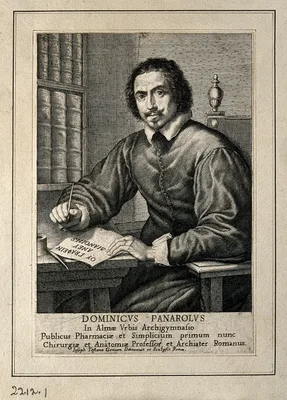
Panaroli described hemolytic jaundice of the newborn.
1938 CE
#14088
Icterus gravis (erythroblastosis) neonatorum.
Darrow was the first to identify the cause of hemolytic disease of the newborn (HDN). Three years prior to the discovery of antibodies against the Rh antigen, Darrow correctly hypothesized that the disease was caused …
1958 CE
#12971
Influence of light on the hyperbilirubinaemia of infants.


In 1956 Sister Jean Ward of the Premature Unit of the Rochford General Hospital in Essex, England noted the benefit of phototherapy when she took infants outside because she assumed that fresh air had healing benefits…
1798 CE
#3429
Observation sur un enfant né sans anus, et auquel il a été fait une ouverture pour y suppléer.
First successful construction of artificial anus, for congenital atresia, Oct. 20, 1793.
1866 CE
#4936
Observations on an ethnic classification of idiots.
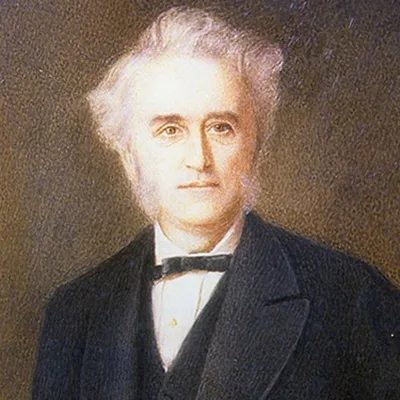
Langdon Down suggested that the physiognomical features of certain defectives enabled them to be arranged in ethnic groups; of these he differentiated Mongolian, Ethiopian, Caucasian, and American Indian. Such an ethn…
1614 CE
#3789
Observationum in hominis affectibus plerisque, corpori & animo, functionum laesione, dolore, aliave molestia & vitio incommodantibus, libri tres.
First known report of a case of death from hypertrophy of the thymus, in an infant, is reported on p. 172; it is reproduced on p. 239 of J. Ruhräh’s Pediatrics of the past, New York, 1925. Platter first des…
1897 CE
#3792
On a condition of mixed premature and immature development.
Hastings Gilford gave progeria its name; it was first fully reported by him in Practitioner, 1904, 73, 188-217. Digital facsimile of the 1897 paper from PubMedCentral at this link.
1922 CE
#6348.1
Premature and congenitally diseased infants.
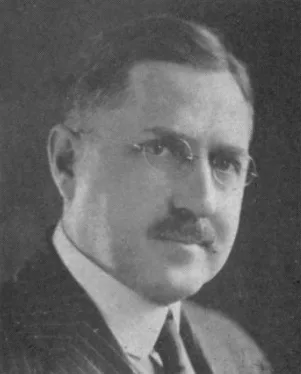
“The first book ever written dealing solely with premature and congenitally diseased infants” (Cone). Hess founded the first premature infant center in the United States at Michael Reese Hospital in Chicago.
1938 CE
#3148.2
Recherches sur l’anémie érythroblastique infantile des peuples de la Méditerranée orientale. Étude anthropologique, étiologique et pathogénique. La transmission héréditaire de la maladie.
First evidence that thalassemia is genetically determined. Earlier report in Kliniki, Athens, 1936, 12, No. 5.
1948 CE
#3107.1
Replacement transfusion as a treatment for erythroblastosis fetalis.
Exchange transfusion.
1973 CE
#14089
Rh: The intimate history of a disease and its conquest.

1887 CE–1888 CE
#3489
Stuhlträgheit Neuegeborener in Folge von Dilatation und Hypertrophie des Colons.
Hirschsprung’s diseases (congenital megacolon).
1766 CE
#4302.2
Sur un enfant auquel il manquoit les deux clavicules, le sternum et les cartilages, qui dans l’état naturel l’attachent aux côtes.
First description of cleido-cranial dysostosis.
1929 CE
#4397
Sur une forme de dystrophie osseuse familiale.
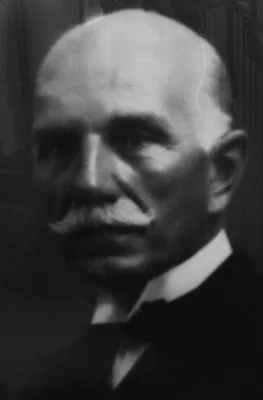
“Morquio’s disease”, eccentro-osteochondrodysplasia.
1939 CE
#3039
Surgical ligation of a patent ductus arteriosus: Report of first successful case.
One of the earliest successful surgical repairs for congenital heart disease. See also later paper in Ann. Surg.,1939, 110, 321-56.
1880 CE–1881 CE
#5918
Symmetrical changes in the region of the yellow spot in each eye of an infant.
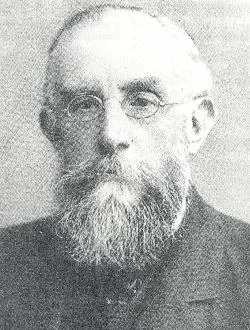
Tay was the first to describe amaurotic familial idiocy, his paper dealing mainly with the ocular manifestations. The condition later became known as “Tay-Sachs’s disease” (see also No. 4705).
1995 CE
#12364
The developing heart: A "history" of pediatric cardiology.
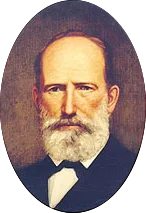
A memoir, largely from personal experience, of the developments in embryology, pathology, clinical features, treatment of congenital heart disease.
1945 CE
#3043
The surgical treatment of malformations of the heart in which there is pulmonary stenosis or pulmonary atresia.
The “Blalock-Taussig operation” for the relief of congenital defects of the pulmonary artery, Tetralogy of Fallot ("blue baby syndrome"). "The first surgical repair was carried out in 1944 at Johns Hopkins…
1810 CE
#2378.1
Traité de la maladie vénérienne chez les enfans nouveau-nés, les femmes enceintes et les nourrices.
The first systematic work on congenital syphilis.
1854 CE
#2383
Traité de la syphilis des nouveau-nés et des enfants à la mamelle.
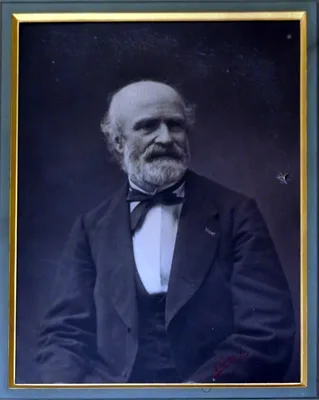
An important work on congenital syphilis. English translation, 1859.
1898 CE
#10269
Traité des maladies chirurgicales d'origine congénitale.
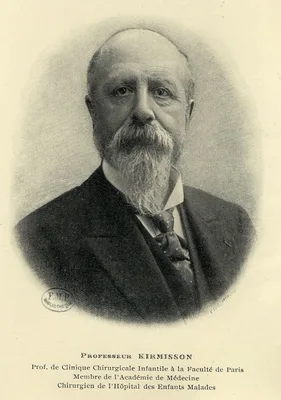
The first book entirely devoted to the surgical treatment of congenital abnormalities. The work also contains pp. 593-698 an exposition of Kirmisson's staged reduction of congenital dislocations of the hip, and discus…
1733 CE
#3422
Two examples of children born with preternatural conformations of the guts.

First description of congenital atresia of the ileum.
1908 CE
#3080.1
Ueber den habituellen Ikterus de Neugeborenen.
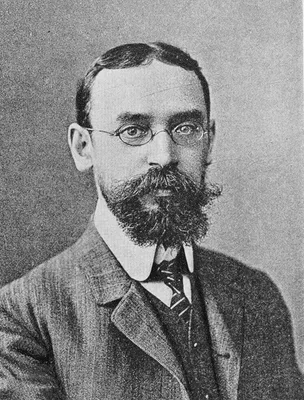
First detailed description of familial icterus gravis neonatorum.
1995 CE
#11343
Whole-genome random sequencing and assembly of Haemophilus influenzae Rd.


First sequence of the complete genome of a free-living non-viral organism—Haemophilus influenzae—the bacterium that causes lower respiratory tract infections and meningitis in infants and young children. T…
1912 CE
#3539
Zur Operation der angeborenen Pylorusstenose.
The first pyloromyotomy for pyloric stenosis, incising the pyloric muscle while leaving the mucosa intact and leaving the muscle to heal: “Rammstedt’s operation.” In 1920 Rammstedt discovered that th…