
Facets
Browse across eight MeSH (opens in new tab) facets — era, geography, science, specialty, technology, history, culture, and reference. Select one tag per group; counts update across the others.
Clear filtersFacet filters
Geography
Specialties & Disease
- Anatomy & Pathology 7
- Cardiology & Blood 94
- Neurology & Psychiatry 27
- Obstetrics & Reproductive 5
- Infectious Disease (General) 1
- Surgery & Anesthesia 76
- Public Health 8
- Immunology & Dermatology 50
- General Clinical Medicine 1
- Military Medicine 0
- Psychology 3
- Alternative & Fringe Medicine 0
- Pediatrics 44
- Ophthalmology & Vision 12
- ENT & Hearing 5
- Urology & Nephrology 0
- Gastroenterology & Hepatology 9
- Pulmonary & Respiratory 5
- Rheumatology, Rehab & Pain 4
- Internal, Emergency & Geriatric 0
- Veterinary Medicine 2
- Epidemiology & Demography 4
- Physiology & Embryology 23
- Dentistry 3
- Plagues & Epidemics 27
- Microbiology & Virology 22
Social & Historical Studies
Institutions & Culture
Reference & Scholarly Works
Drugs & Technology
12 entries match Ophthalmology & Vision [C11] · Genetics & Heredity [K01.900.300]
1777 CE
#5832
An account of persons who could not distinguish colours.
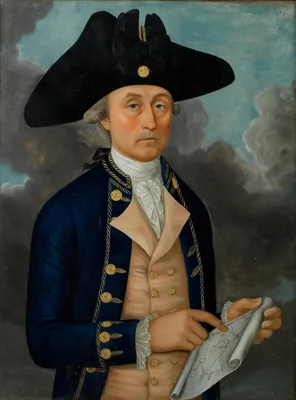
First reliable record of color blindness. Written in the form of a letter to Joseph Priestley, who communicated it to the Royal Society. Huddart was a British hydrographer, engineer and inventor.
1891 CE
#5937
Colour-blindness and colour-perception.
Includes (p. 262 et seq.) description of Edridge-Green’s lantern test for color-blindness. This was officially adopted in Great Britain in 1915 in place of the Holmgren test.
1941 CE
#5507
Congenital cataract following German measles in the mother.
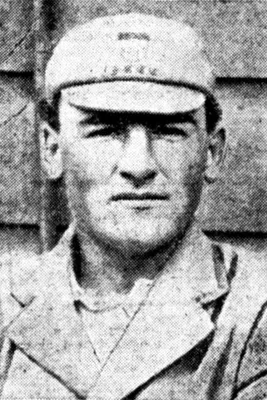
Gregg drew attention to congenital defects in infants following rubella in the mother during the early part of pregnancy.
1798 CE
#5834
Extraordinary facts relating to the vision of colours.
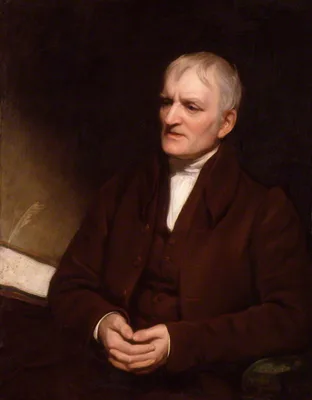
First scientific description of color-blindness, or “Daltonism”. Dalton himself suffered from red–green blindness. His paper was read to the Society in 1794.
1958 CE
#7401
L’Hérédité en ophtalmologie.
English translation St. Louis: C.V. Mosby, 1961.
1959 CE
#7402
Les cataractes congénitales.
1874 CE
#5911
Om den medfödda, färgblindhetens diagnostic och teori.
Holmgren introduced the wool-skein test for the diagnosis of color-blindness.
1876 CE–1877 CE
#5916
Om färgblindheten i dess förhallande till jernvägstrafiken och sjöväsendet.
A serious railway accident in Sweden in 1875 was believed by Holmgren to be due to color-blindness, and resulted in the above important paper dealing with the condition and its relation to railway and maritime traffic…
1879 CE
#5917
On astigmatism as a cause for persistent headache and other nervous symptoms.
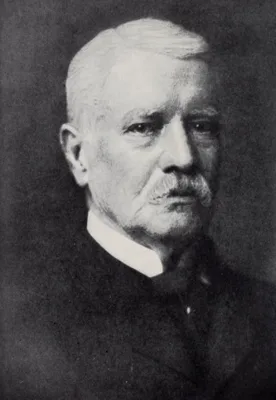
Thomson was a pioneer in the study of refraction. He was much interested in color-blindness and modified Holmgren’s wool-skein test. Himself affected with hypermetropia, he made important investigations on this …
1880 CE–1881 CE
#5918
Symmetrical changes in the region of the yellow spot in each eye of an infant.
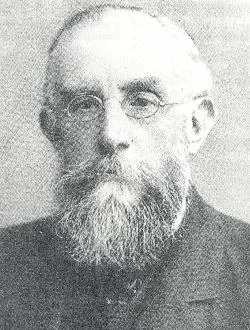
Tay was the first to describe amaurotic familial idiocy, his paper dealing mainly with the ocular manifestations. The condition later became known as “Tay-Sachs’s disease” (see also No. 4705).
1868 CE
#4056.1
Ueber Cataracten in Verbindung mit einer eigenthümlichen Haut-de-generation.
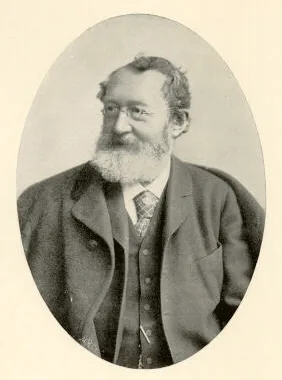
Poikiloderma congenitale (Rothmund).
1871 CE
#5906
Ueber hereditäre und congenital-angelegte Sehnervenleiden.
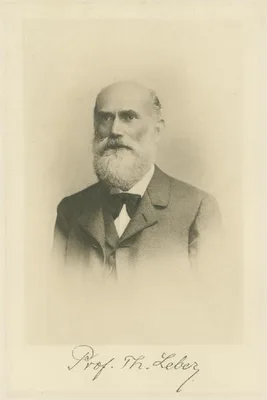
First description of hereditary optic atrophy, “Leber’s optic atrophy”.