

LANCISI, Giovanni Maria (1654 – 1720)
1654 – 1720
7 entries in the GMN corpus.
Image source Unknown author Unknown author · [1] · CC BY 4.0
1691 CE
#386
Anatomia per uso et intelligenza del disegno ricercata non solo su gl’ossi, e muscoli del corpo humano.
Contains 56 copper-plates, excellent anatomically and artistically, with commentary by Giovanni Maria Lancisi. This is one of the finest of all books on anatomy for artists. English translation with plates re-engraved…
1707 CE
#2731
De subitaneis mortibus libri duo.
In the above work Lancisi noted cardiac hypertrophy and dilatation as causes of sudden death. He was the first to describe valvular vegetation, and his book gives a classification of the cardiac diseases then recogniz…
1717 CE
#5232
De noxiis paludum effluviis, eorumque remediis.
Lancisi suggested that since malaria disappears after drainage it was due to some sort of poison emanating from marshes and possibly transmitted by mosquitoes. He planned a drainage scheme for marshy regions. His work…
1717 CE
#11515
Metallotheca opus posthumum, auctoritate, & munificentia Clementis undecimi pontificis maximi e tenebris in lucem eductum; opera autem, & studio Ioannis Mariae Lancisii archiatri pontificii illustratum.
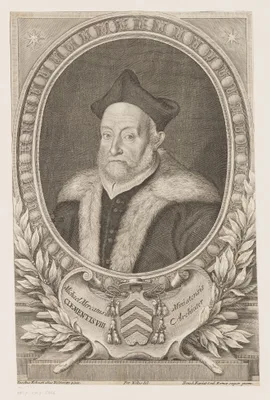
In 1717 papal physician Giovanni Maria Lancisi published the catalogue of the Vatican "armaria" series housing the natural history museum collected by one of his predecessors at the Vatican, the 16th century papal phy…
1718 CE
#71
Jo. Mariae Lancisii archiatri pontificii. Opera quae hactenus prodierunt omnia; dissertationibus nonnullis adhuc dum ineditis locupletata, & ab ipso auctore, recognita atque emendata. Collegit, ac in ordinem digessit Petrus Assaltus. 2 vols.
Lancisi's collected works edited by Pietro Assalti. Lancisi was the first to describe cardiac syphilis; he was also notable as an epidemiologist, with a clear insight into the theory of contagion. He was physician to …
1728 CE
#2973
De motu cordis et aneurysmatibus.
Lancisi noted the frequency of cardiac aneurysm and showed the importance of syphilis, asthma, palpitation, violent emotions, and excess as causes of aneurysms. He was the first to describe cardiovascular syphilis. La…
2014 CE
#9845
Sudden death: Medicine and religion in eighteenth-century Rome.

"In 1705-1706, during the War of the Spanish Succession and two years after a devastating earthquake, an ’epidemic’ of mysterious sudden deaths terrorized Rome. In early modern society, a sudden death was …