
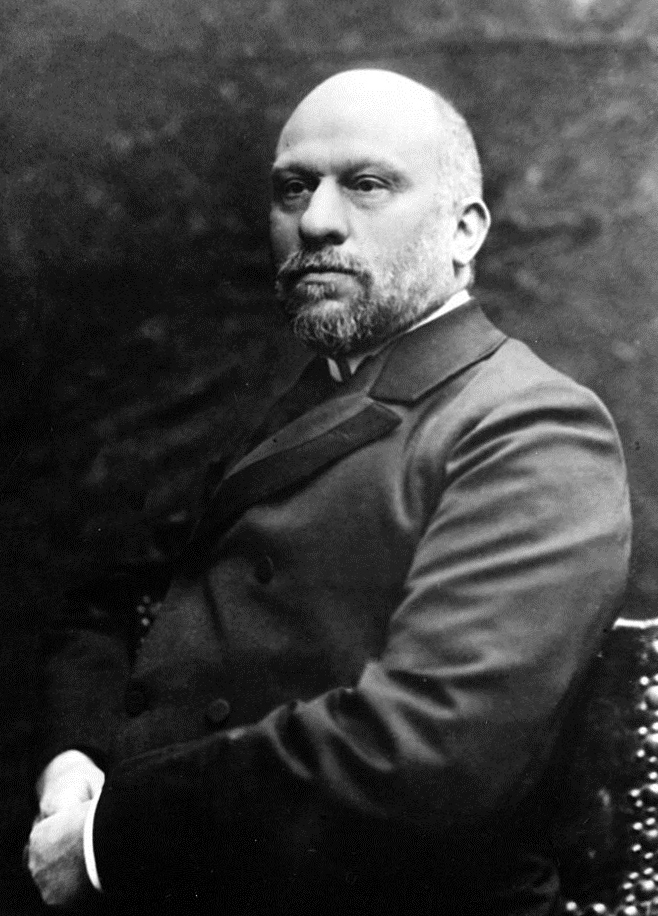
MOSSO, Angelo (1846 – 1910)
1846 – 1910
8 entries in the GMN corpus.
Image source Unknown author Unknown author · Images from the History of Medicine (NLM) [1] · Public domain
1879 CE
#12274
Die Diagnostik des Pulses in Bezug auf die localen Veränderungen desselben.
Bedford 56: "Pulse reporting by hydrosphygmograph by Italian physiologist Angelo Mosso (1846-1910), who was professor of pharmacology at Turin University." Digital facsimile from the Internet Archive at this link.
1880 CE
#6838
Sulla circolazione del sangue nel cervello dell’uomo. Ricerche sfigmografiche.
In this work Angelo Mosso reported his discovery that blood circulation in the brain increases in certain discrete areas during mental activity, and published the records of this activity produced by the machine he in…
1884 CE
#10113
La paura.
Mosso conducted experiments with special equipment, which he devised to suit the requirements of the studies. He pursued two main lines of research: the analysis of motor functions and the relationship between physiol…
1890 CE
#636
Les lois de la fatigue étudiées dans les muscles de l’homme.
Mosso invented the ergograph from the study of voluntary contraction. The description of the instrument is on pages 124-41 of the above article.
1891 CE
#639
La fatica.
Mosso investigated muscular fatigue with the ergograph of his invention. He showed fatigue to be due to a toxin produced by muscular contraction. English translation, 1906.
1895 CE
#2801
Sphygmomanomètre pour mésurer la pression du sang chez l’homme.
A sphygmomanometer for registering the blood-pressure in the finger was invented by Mosso.
1897 CE
#950
Fisiologia dell’uomo sulle Alpi. Studii fatti sul Monte Rosa.
Mosso made important investigations on respiration at high altitudes. He considered that the respiratory symptoms produced at high altitudes were due to lack of carbon dioxide. English translation, London, 1898.
1903 CE–1904 CE
#952
La physiologie de l’apnée étudiée chez l’homme.
First studies of the physiology of apnea in man.