Facets
Browse across eight MeSH (opens in new tab) facets — era, geography, science, specialty, technology, history, culture, and reference. Select one tag per group; counts update across the others.
Clear filtersFacet filters
Geography
Specialties & Disease
- Anatomy & Pathology 49
- Cardiology & Blood 10
- Neurology & Psychiatry 26
- Obstetrics & Reproductive 24
- Infectious Disease (General) 8
- Surgery & Anesthesia 67
- Public Health 94
- Immunology & Dermatology 22
- General Clinical Medicine 33
- Military Medicine 38
- Psychology 10
- Alternative & Fringe Medicine 49
- Pediatrics 10
- Ophthalmology & Vision 8
- ENT & Hearing 2
- Urology & Nephrology 8
- Gastroenterology & Hepatology 4
- Pulmonary & Respiratory 3
- Rheumatology, Rehab & Pain 6
- Internal, Emergency & Geriatric 9
- Veterinary Medicine 8
- Epidemiology & Demography 28
- Physiology & Embryology 13
- Dentistry 15
- Plagues & Epidemics 60
- Microbiology & Virology 24
Social & Historical Studies
Institutions & Culture
Reference & Scholarly Works
1,041 entries match Europe & United Kingdom [Z01.542]
1577 CE
#6836
A profitable treatise of the anatomie of mans body.
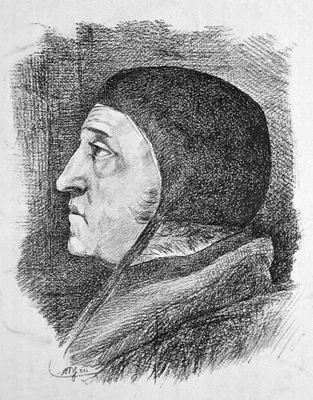
A small book, of which only two copies survived, at the British Library and Cambridge University. As first shown by J F Payne in 1896, this work is very similar to a manuscript (MS 564) in the Wellcome Library. This m…
1773 CE
#2028.52
A short account of a society at Amsterdam instituted in the year 1767 for the recovery of drowned persons…
An English summary of No. 2028.51, and the first detailed report on the society’s work published in England. Johnson proposed the formation of a similar society in England. The Royal Humane Society was formed by…
1821 CE–1824 CE
#13911
A sketch of the botany of South-Carolina and Georgia. 2 vols.
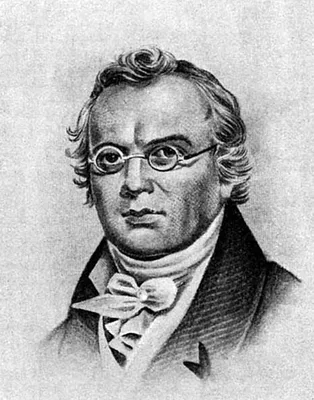
A founding work of botany of the American South, containing first botanical descriptions of many species. Initially published in parts from 1816 to 1824. Digital facsimile from Biodiversity Heritage Library at this link.
1983 CE
#9997
A study of the English apothecary from 1660 to 1760, with special reference to the provinces.
Medical History Supplement No. 3. Digital facsimile from discovery.ucl.ac.uk at this link.
1862 CE
#2220
A treatise on the continued fevers of Great Britain.
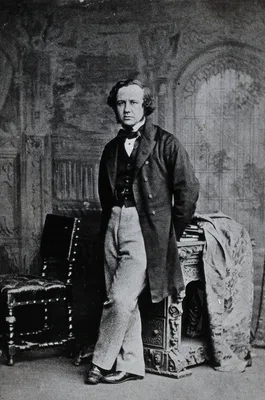
Murchison was one of the greatest clinical teachers London has ever known; of his many writings his book on continued fever is probably the most important. Digital facsimile from the Internet Archive at this link.
1779 CE
#12494
A view of society and manners in France, Switzerland and Germany: with anecdotes relating to some eminent characters
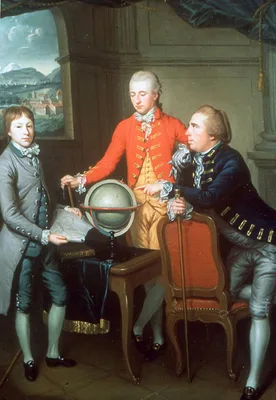
Digitial facsimile from Google Books at this link.
1781 CE
#12495
A view of society and manners in Italy, with anecdotes related to some eminent characters. 2 vols.
Digital facsimile from the Hathi Trust at this link.
1894 CE
#4226
A vizelet fagypontjának diagnostikus érteke. [The diagnostic value of the freezing point of urine.]
Korányi established cryoscopy of the urine as a kidney function test. See also his later papers in Z. klin. Med., 1897, 33, 1-54; 1898, 34, 1-52. Previously H. Dreser had made experiments on this subject; for t…
1791 CE
#6161
Abhandlung über die Entbindungskunst.
This work was edited by order of Catherine II of Russia, to whom von Mohrenheim was accoucheur. Its importance lies mainly in its splendid engravings, some of which were taken from Smellie (see No. 6154.1). It include…
1801 CE–1802 CE
#8579
Abstract of the answers and returns made pursuant to an act, passed in the forty-first year of His Majesty King George III. Intituled, “An act for taking an account of the population of Great Britain, and the increase or diminution thereof.” 2 vols. in 3.
The first census of England, Scotland and Wales. The study of population was one of the major concerns of political economy at this time and the first census came at a crucial point in the debate. When Malthus publish…
1800 CE
#7291
Account of flint weapons discovered at Hoxne in Suffolk.
Frere described the discovery of several flint artifacts, which he believed to be “weapons of war,” associated with “some extraordinary bones, particularly a jaw-bone of enormous size of some unknown…
1456 CE
#6818
Aderlasskalender.
The Aderlasskalender for the year 1457, also known as the Laxierkalender, was issued in Mainz, printed in the type of the 36-line Bible, presumably in 1456. It survives in only one incomplete copy in the Biblioth&egra…
1909 CE
#6478
Aerztliches aus griechischen Papyrus-Urkunden.
Digital facsimile from the Internet Archive at this link.
2003 CE
#13646
Against the spirit of system: The French impulse in nineteenth-century American medicine.
"... the first in-depth study of a powerful intellectual and social influence: the radical empiricism of the Paris Clinical School. After the French Revolution, Paris emerged as the most vibrant center of Western medi…
2018 CE
#12103
Age-specific excess mortality patterns during the 1918–1920 influenza pandemic in Madrid, Spain.
Abstract "Although much progress has been made to uncover age-specific mortality patterns of the 1918 influenza pandemic in populations around the world, more studies in different populations are needed to make sense …
1475 CE
#6789
Aggregator, sive de medicinis simplicibus.
First printed edition of an encyclopedic dictionary of medicine, containing a large number of medical recipes based upon Greek and Arabic sources. Dondi completed the work in 1355. Manuscripts of his text are preserve…
1582 CE
#7327
Aigentlich Beschreibung der Raiss, so er vor diser Zeit gegen Auffgang inn die Morgenländer, fürnemlich Syriam, Iudaeam, Arabiam, Mesopotamiam, Babyloniam, Assyriam, Armeniam etc....
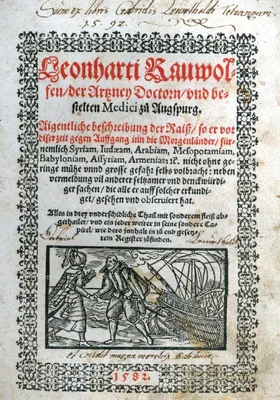
Rauwolf provided the first modern descriptions of the flora of the area east of the Levantine coast. He was also the first to describe the riparian flora of the Euphrates, and the first European to publish an account …
1771 CE
#13011
Aldrovandus Lotharingiae, ou catalogue des animaux, quardupedes, reptiles, oseaux, poissons, insectes, vermisseaux et coquillages qui habitent la Lorraine et les Trois-Évechés.
A catalogue of "over 1100 quadrupeds, birds, reptiles, amphibians, fish, insects, worms and mollusks native to Lorraine. Buc’hoz follows the classification schemes of Argenville, Brisson, Buffon, Daubenton and G…
2007 CE
#8557
Alphita: Edición crítica y comentario de Alejandro García González. Edizione Nazionale La Scuola Medica Salernitana, 02.
Alphita, farina ordei idem, an anonymous collection of glosses, documents the linguistic renewal of the medical and botanical technical lexicon, derived from Greco-Latin as well as Arabic sources, at the School of Sal…
2021 CE
#13273
American men and women in medicine, applied sciences and engineering with roots in Czechoslovakia.
2009 CE
#9809
An Old French herbal (Ms Princeton U.L. Garrett 131). Edited by Tony Hunt.
First edition of the earliest Old French herbal in verse— "a surprisingly comprehensive work (3188 octosyllables), based on an eleventh-century Latin treatise 'De viribus herbarum' attributed to a certain 'Macer…
1931 CE
#6522
An old Icelandic medical miscellany. MS. Royal Irish Academy 23 D 43, with supplement from MS. Trinity College (Dublin) L.2.27. Edited by Henning Larsen.
1841 CE–1846 CE
#6575
Anales históricos de la medicina en general, y biografico-bibliográficos de la española en particular. 8 vols.
Includes No. 6576, together with Historia particular de las operaciones quirúrgicas, 1841; Historia general de la medicina, 2 vols. 1841-43; and Vade mecum histórico y bibliográfico, etc., 1844. F…
1852 CE–1859 CE
#416
Anatome topographica sectionibus per corpus humanum congelatum triplici directione ductis illustrata. 8 pts.
Pirogov was the greatest of Russian surgeons. He introduced the teaching of applied topographical anatomy in Russia. His atlas of 220 plates represents the first use on a grand scale of frozen sections in anatomical i…
1739 CE
#13152
Anatomia do corpo humano, recopilada com doutrinas medicas, chimicas, filosoficas, mathematicas, com indices, e estampas, representantes todas as partes do corpo humano.
The first textbook of anatomy published by a Portuguese author in Portuguese. Digital facsimile from Google Books at this link.
1478 CE
#361
Anatomia.
First dated printed edition of the first medieval book devoted solely to anatomy, written by Mondino for his students in 1316. An earlier, but undated edition, of which only 3 copies are recorded, appeared in Padua ab…
1839 CE
#12011
Anatomical, pathological and therapeutic researches on the yellow fever of Gibraltar of 1828, by P. Ch. A. Louis. From observations taken by himself and M. Trousseau as memebers of the French Commission at Gibraltar. Translated from the manuscript by G. C. Shattuck.
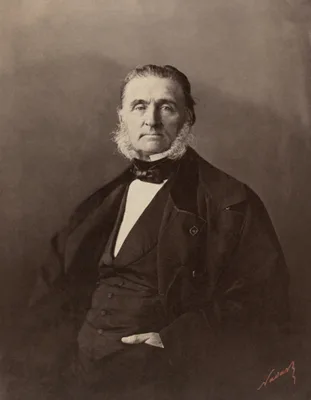
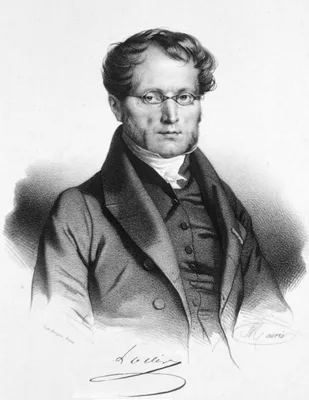
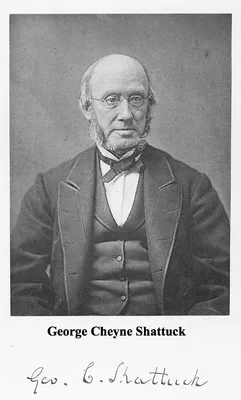
The Translator's Introduction begins as follows: "The work now presented to the public has heretofore existed in manuscript only. Circumstances have delayed its publication in France, and some years may yet elapse bef…
1926 CE
#8362
Anatomies de Mondino dei Luzzi et de Guido de Vigevano. Par Ernest Wickersheimer.
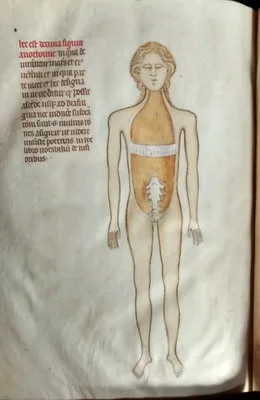
Facsimile of the 1478 edition of Mondino's Anothomia along with the text and 18 plates from Guido de Vigevano's (fl. 14th century) Anathomia. Vigevano's manuscript, completed in 1345, is MS. 569 in the Musée Co…
2015 CE
#7203
Anatomy and anatomists in early modern Spain.
1831 CE
#9995
Anatomy. Copy of a letter from the council of the Royal College of Surgeons in London, to Viscount Melbourne.
On December 5, 1831, the notorious London "resurrection men" John Bishop and Thomas Williams were executed for the murder of an itinerant fourteen-year-old (known only as the "Italian Boy"), whose corpse they had then…
1832 CE
#9993
Anatomy. Proceedings at the National Political Union, respecting legislative interference in the study of anatomy, and the supply of bodies for anatomical research.
Digital facsimile from the Internet Archive at this link.
1999 CE
#8284
Ancient histories of medicine: Essays in medical doxography and historiography in classical antiquity, edited by Philip J. van der Eijk.
"...focuses on the ways in which Greek and Latin authors viewed and wrote about the history of medicine in the ancient world. Special attention is given to medical doxography, i.e. the description of the characteristi…
2012 CE
#7140
Anglicus ortus. A verse herbal of the twelfth century. Edited and translated by Winston Black.
Written in Latin verse, the Anglicus ortus describes in considerable detail the medicinal uses of 160 plants. Edition based on collation of the five extant manuscripts of the text, plus parallel Latin text and English…
1999 CE
#12992
Anglo-Norman literature: A guide to texts and manuscripts.
This standard work catalogued nearly 1000 manuscripts, including medical texts.
1994 CE–1997 CE
#8578
Anglo-Norman Medicine I: Roger Frugard's Chirurgia and the Practica Brevis of [Johannes] Platearius. II: Shorter treatises. Edited by Tony Hunt. 2 vols.
Vol. 1: First published edition of two 13th century Anglo-Norman medical treatises translated from Latin. Matthaeus Platearius and his brother Johannes were the sons of a female physician from the Salerno school who w…
1981 CE
#8335
Anglo-Saxon amulets and curing stones.
1952 CE
#6546
Anglo-Saxon magic and medicine: Illustrated specially from the semi-pagan text "Lacnunga,"
1993 CE
#8334
Anglo-Saxon medicine.
1979 CE
#8559
Anglo-Saxon plant remedies and the Anglo-Saxons.
1975 CE
#8448
Anglo-Saxon prose.
Includes translations of medical material. Third revised and enlarged edition (Gloucester, England: Choir Press, 2017).
2001 CE
#8357
Anglo-Saxon remedies, charms, and prayers from British Library MS Harley 585: The ‘Lacnunga’. Edited and translated with introduction, appendices and commentary and bibliography by Edward Pettit. 2 vols.
Digital facsimile of British Library MS Harley 585 from the British Library at this link.
1893 CE
#25
Anonymi Londinensis ex Aristotelis iatricis Menoniis et aliis medicis eclogae editit Hermannus Diels.
Written about 100 CE, On Medicine (Ιατρικα) is partially preserved in a papyrus in the British Library (PBrLibr inv. 137 = P.Lit.Lond. 165). It is the most important surviving ancie…
1471 CE
#1789
Antidotarium. Add: Quid pro quo; Synonyma.
This work, which first circulated in manuscript in 1140, was the first formulary to be printed. It consists of 139 prescriptions and includes the original formula for the “anesthetic sponge” (spongia somni…
1963 CE
#6485.1
Antike Medizin. Die naturphilosophischen Grundlagen der Medizin in der griechischen Antike. 2nd ed.
1835 CE
#439
Antiquitates anatomicae rariores, quibus origo, incrementa et status anatomes, apud antiquissimae memoriae gentes, historica fide illustrantur.
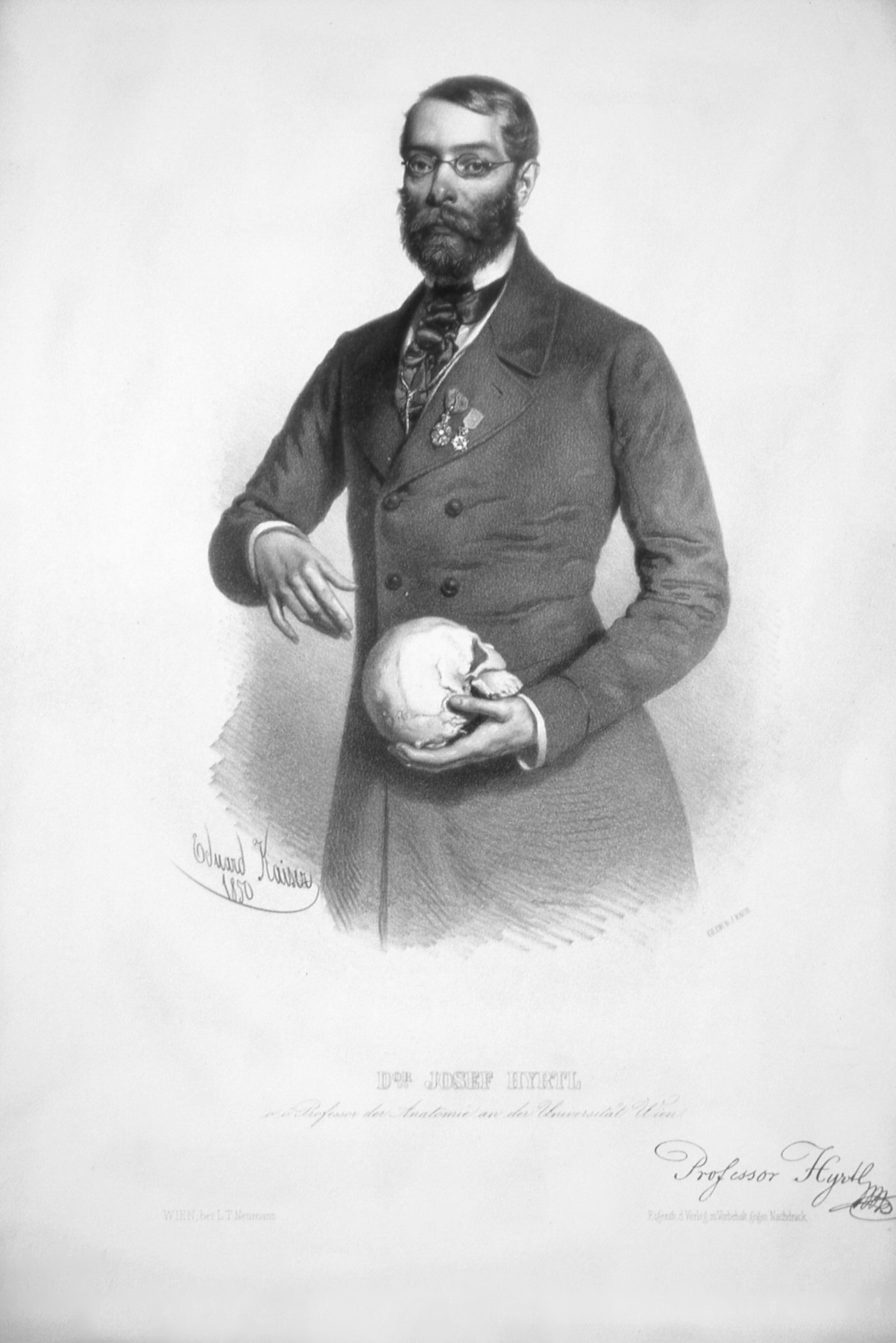
Anatomical terms used in antiquity, representing to a certain, extent a survey of the literature of ancient medicine available to Hyrtl. Digital facsimile from The Medical Heritage Library, Internet Archive, at this l…
1847 CE–1864 CE
#203.9
Antiquités celtiques et antédiluviennes. Mémoire sur l'industrie primitive et les arts à leur origine. 3 vols.
Customs inspector at Abbéville and a prolific writer on diverse subjects, Boucher de Perthes found extensive deposits of flint implements in association with the bones of mammoths and other fossil animals. His …
1927 CE
#4203.9
Aphorisms, Section VII, number 34. In his Works. Ed. W. H. S. JONES and E. T. WITHINGTON
![HIPPOCRATES, [Ἱπποκράτης; Hippocrates of Kos] (-460 – -370)](/media/portraits/50)
The first description of the association of proteinuria and chronic renal disease.
2014 CE
#10422
Aphrodisiacs, fertility and medicine in early modern England.
This work "... in its extensive study of gynecological treatises from the seventeenth and eighteenth centuries, provides an important intervention into assumptions about the subversive quality of aphrodisiacs and abor…
1726 CE
#9073
Aquilegio medicinal em que se dá noticia das agoas de caldas, de fontes, rios, poços, lagoas, e cisternas, do Reyno de Portugal, e dos Algarves, que ou pelas virtudes medicinaes, que tem, ou por outra alguma singularidade, são dignas de particular memoria.
The first inventory of Portuguese hot springs, fountains, rivers, wells, lakes and reservoirs reputed to have medicinal properties, including some with allegedly supernatural powers of healing. For the 337 entries, Fo…
2016 CE
#11049