
Facets
Browse across eight MeSH (opens in new tab) facets — era, geography, science, specialty, technology, history, culture, and reference. Select one tag per group; counts update across the others.
Clear filtersFacet filters
Geography
Specialties & Disease
- Anatomy & Pathology 4
- Cardiology & Blood 2
- Neurology & Psychiatry 16
- Obstetrics & Reproductive 9
- Infectious Disease (General) 4
- Surgery & Anesthesia 6
- Public Health 92
- Immunology & Dermatology 6
- General Clinical Medicine 6
- Military Medicine 21
- Psychology 1
- Alternative & Fringe Medicine 11
- Pediatrics 6
- Ophthalmology & Vision 0
- ENT & Hearing 0
- Urology & Nephrology 1
- Gastroenterology & Hepatology 0
- Pulmonary & Respiratory 0
- Rheumatology, Rehab & Pain 1
- Internal, Emergency & Geriatric 0
- Veterinary Medicine 1
- Epidemiology & Demography 17
- Physiology & Embryology 1
- Dentistry 0
- Plagues & Epidemics 26
- Microbiology & Virology 1
Social & Historical Studies
Institutions & Culture
Reference & Scholarly Works
Drugs & Technology
17 entries match Epidemiology & Demography [N02.350 / K01.400.680] · Social & Political History [K01.850]
1723 CE
#1689
A letter … containing, a comparison between the mortality of the natural small pox, and that given by inoculation.

Jurin was an enthusiastic supporter of inoculation against smallpox, and proved statistically that the fatality of inoculated smallpox is very much less than the fatality of natural smallpox. This is one of the earlie…
2003 CE
#10183
A pest in the land: New World epidemics in a global perspective.
1995 CE
#10083
Aboriginal health in Canada: Historical, cultural, and epidemiological perspectives.
Revised second edition, same publisher, 2006.
2008 CE
#10509
Cholera and nation: Doctoring the Victorian social body.
1992 CE
#8005
Enfermedad y sociedad en la crisis colonial del antiguo régimen: Nueva Granada en el tránsito del siglo XVIII al XIX, las epidemias de viruelas.
1965 CE
#7933
Epidemic disease in Mexico City 1761-1813: An administrative, social, and medical study.

2000 CE
#8061
Epidemics and genocide in Eastern Europe, 1890-1945.
1999 CE
#9761
Epidemics and history: Disease, power and imperialism.
1879 CE
#12084
Gesammelte Abhandlungen aus dem Gebiete der öffentlichen Medicin und der Seuchenlehre. 2 vols.
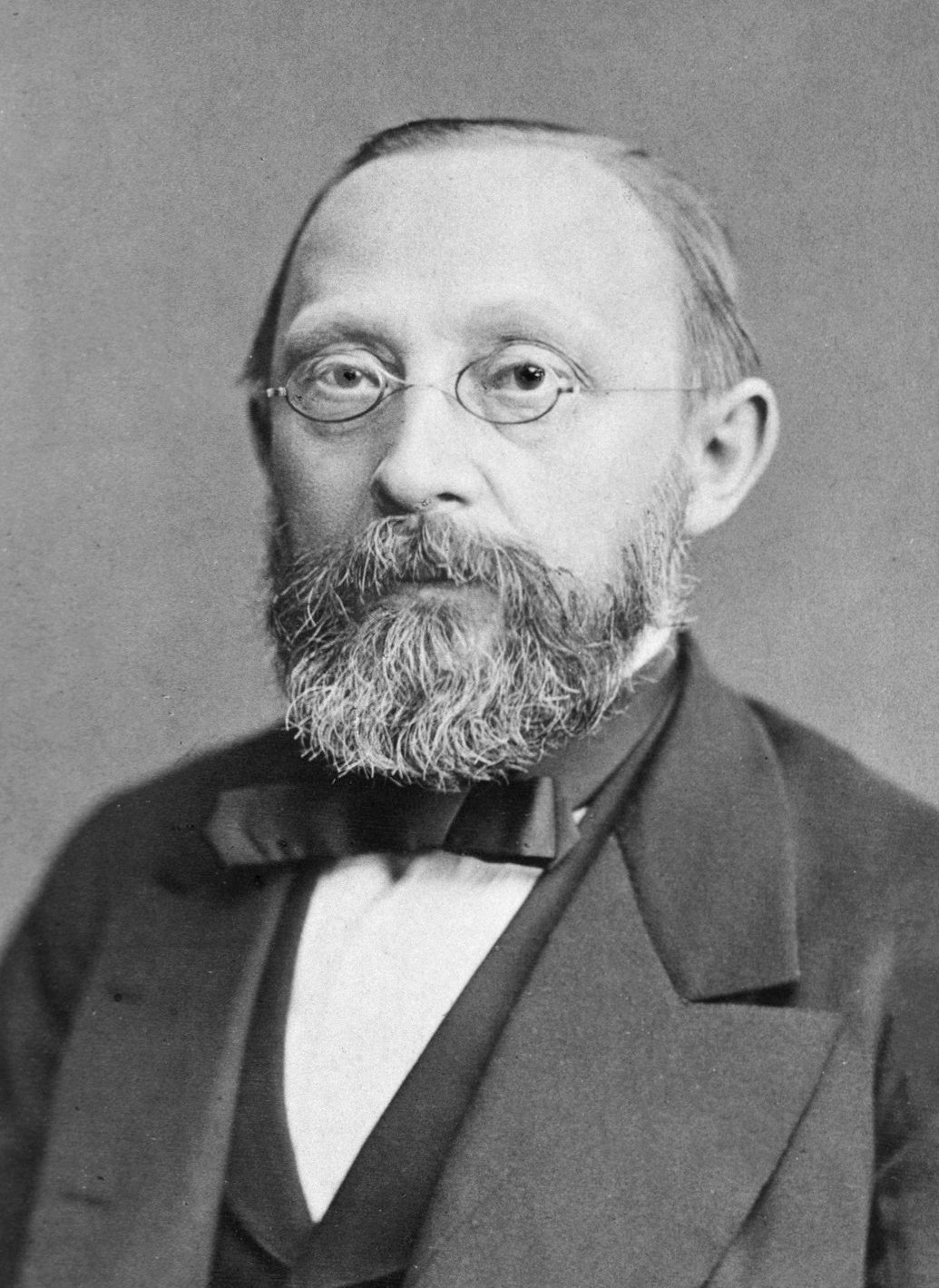
Virchow "articulated that the moral goal of the political role of medicine was to become an active agent in eliminating social inequality" (Dorothy Porter, Doctors, the state and the ethics of political medical practi…
1837 CE
#11813
Histoire statistique et morale des enfants trouvés.
A thorough analysis of the problem of foundling children from a social, medical, legal and historical standpoint. The work begins with a history of the treatment of abandoned children from antiquity to the time of wri…
1911 CE
#1710
La dépopulation de la France: Ses conséquences, ses causes, mésures à prendre pour la combattre.
Digital facsimile from the Internet Archive at this link.
2004 CE
#10508
Mapping the Victorian social body.
"The cholera epidemics that plagued London in the nineteenth century were a turning point in the science of epidemiology and public health, and the use of maps to pinpoint the source of the disease initiated an explos…
1986 CE
#11323
Medicine and American growth, 1800-1860.
"The interconnections between population increase, migration and immigration on the one hand, and disease and the development of medicine on the other in antebellum America are brilliantly presented" (publisher)
1848 CE
#12083
Mittheilungen über die in Oberschlesien herrschende Typhus-Epidemie.
Virchow was one of the first to identify medicine as a social science. He developed a theory of epidemics that emphasized the social circumstances permitting spread of illness. This approach has been called sociologic…
1976 CE
#9689
Plagues and peoples.
2010 CE
#10342
Shadows in the valley: A cultural history of illness, death, and loss in New England, 1840-1916.
"...The study is organized for the most part around disease categories and the life cycle, so that the cultural framework of people's habits and values often seems secondary. Most of what we learn about illness and de…
1868 CE
#5376
Ueber den Hungertyphus und einige verwandte Krankheitsformen.
Virchow was instrumental in introducing into Germany an epidemiology based on the study of multiple factors – sociological as well as bacteriological. In the above report on the reappearance of typhus in Berlin …