
Entry Nos. 9100–9199
100 Garrison-Morton entries in this range.
1830 CE
#9150
Gunn’s domestic medicine, or poor man’s friend in the hours of affliction, pain, and sickness. This book points out, in plain language, free from doctor's terms the diseases of men, women, and children, and the latest and most approved means used in their cure, and is expressly written for the benefit of families in the western and southern states. It also contains descriptions of the medicinal roots and herbs of the western and southern country, and how they are to be used in the cure of diseases: arranged on a new and simple plan, by which the practice of medicine reduced to the principles of common sense.
Gunn intended his book to serve as a guide for frontier and rural families who lived far away from any sort of medical care so it contained instructions on how to treat a wide variety of illnesses. While the first edi…
1977 CE
#9151
Medicine without doctors: Home health care in American history. Edited by Guenter B. Risse, Ronald L. Numbers, and Judith Walzer Leavitt.


2003 CE
#9152
Right living: An Anglo-American tradition of self-help medicine and hygiene. Edited by Charles Rosenberg.
1973 CE
#9153
Mental institutions in America: Social policy to 1873.
1991 CE
#9154
From asylum to community: Mental health policy in modern America.
2006 CE
#9155
The dilemma of federal mental health policy: Radical reform or incremental change?
1983 CE
#9156
Mental illness and American society, 1875-1940.
1968 CE
#9157
The formation of the American medical profession: The role of institutions, 1780-1860.
1979 CE
#9158
Female complaints: Lydia Pinkham and the business of women's medicine.

"The original 1875 recipe called for unicorn root, life root, blach cohosh, pleurisy root, and fenugreek seed, but alcohol (18-20 percent) gave it a longer shelf life, and shrewd advertising assured its staying power.…
1885 CE
#9159
Women, plumbers, and doctors: or, household sanitation
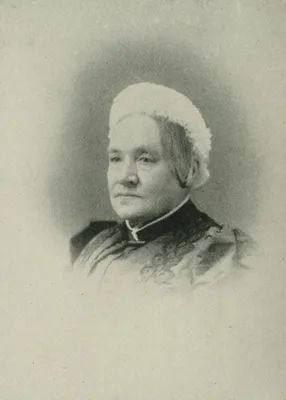
Dedicated "To Dr. Henry I. Bowditch, whose early, persistent, and enthusiastic labors make him the apostle of sanitation in America." Digital facsimile from the Hathi Trust at this link.
1877 CE
#9160
Public hygiene in America: Being the centennial discourse delivered before the International Medical Congress, Philadelphia, September, 1876 by Henry I. Bowditch. With extracts from correspondence from the various states. Together with a digest of American sanitary law by Henry G. Pickering.
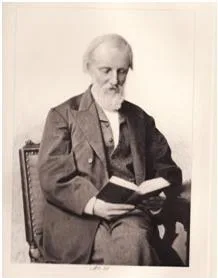
Digital facsimile from the Internet Archive at this link.
1863 CE
#9161
A brief plea for an ambulance system for the army of the United States, as drawn from the extra sufferings of the late Lieut. Bowditch and a wounded comrade.
Digital facsimile from the Internet Archive at this link.
1996 CE
#9162
Chasing dirt: The American pursuit of cleanliness.
"Americans in the early 19th century were, as one foreign traveller bluntly put it, "filthy, bordering on the beastly"--perfectly at home in dirty, bug-infested, malodorous surroundings. Many a home swarmed with flies…
1980 CE
#9163
Invention of the modern hospital: Boston, 1870-1930.
1989 CE
#9164
The hospital in history. Edited by Lindsay Granshaw and Roy Porter.
1857 CE
#9165
The seaman's medical friend, a companion to the government medicine chest, intended for use in ships not carrying surgeons. Containing directions for the preservation of health and the cure of diseases, wounds, fractures, dislocations, and other accidents likely to occur at sea. Comprising also the Admiralty scale of medicines. Second edition.
"The present edition of The Seaman's Medical Friend is a new book rather than a mere revision of an old one; since the whole of that portion which relates to the Preservation of health, and the symptoms and treatment …
1851 CE
#9166
The scale of medicines with which merchant vessels are to be furnished ... with observations on the means of preserving the health and increasing the comforts of merchant seamen.
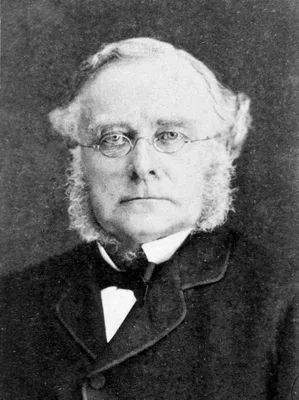
Digital facsimile of the second edition (1861) from Google Books at this link.
1843 CE–1844 CE
#9167
The zoology of the voyage of the H.M.S. Sulphur, under the command of Captain Sir Edward Belcher during the years 1836-42. Edited and superintended by Richard Brinsley Hinds. Vol. 1: Mammalia by J.E. Gray; Birds by J. Gould; Fish by J. Richardson. Vol. 2.: Mollusca by R. B. Hinds.
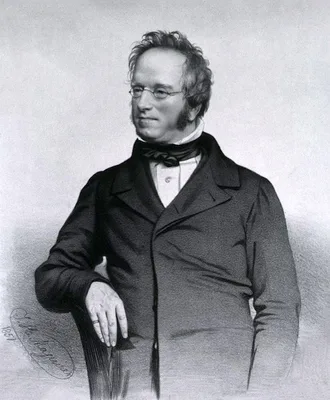
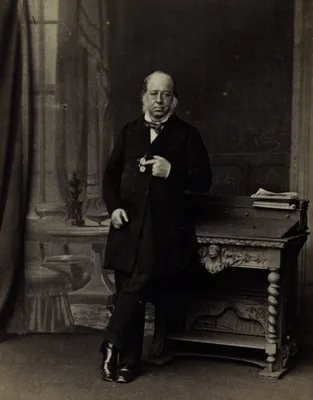
Digital facsimile from the Biodiversity Heritage Library at this link.
1843 CE
#9168
The regions of vegetation; being an analysis of the distribution of vegetable forms over the surface of the globe in connexion with climate and physical agents.
Digital facsimile of the copy presented by Hinds to Charles Darwin, with Darwin's annotations, from the Biodiversity Heritage Library at this link. This work also appeared as a section of Edward Belcher's Narrative of…
1844 CE
#9169
The botany of the voyage of H.M.S. Sulphur under the command of Captain Sir Edward Belcher....Edited and superintended by Richard Brinsley Hinds. The botanical descriptions by George Bentham.
Digital facsimile from the Biodiversity Heritage Library at this link.
1715 CE
#9170
Elephantographia curiosa, seu elephanti descriptio.
The first monograph on the elephant, including 28 plates. Digital facsimile from Google Books at this link.
1861 CE
#9171
Flora hongkonensis: A description of the flowering plants and ferns of the island of Hongkong.
The first comprehensive work on any part of the flora of China and Hong Kong. It included the first published description of Hong Kong Croton, or Croton hancei.
1863 CE–1878 CE
#9172
Flora Australiensis: A description of the plants of the Australian territory by George Bentham, assisted by Ferdinand Mueller. 7 vols.
The first comprehensive flora of any large continental area. It included descriptions of 8125 species. "Bentham prepared the flora from Kew; with Mueller, the first plant taxonomist residing permanently in Australia, …
1862 CE–1883 CE
#9173
Genera plantarum: Ad exemplaria imprimis in Herberiis Kewensibus servata definita; auctoribus G. Bentham et J.D. Hooker. 3 vols. in 9 parts.
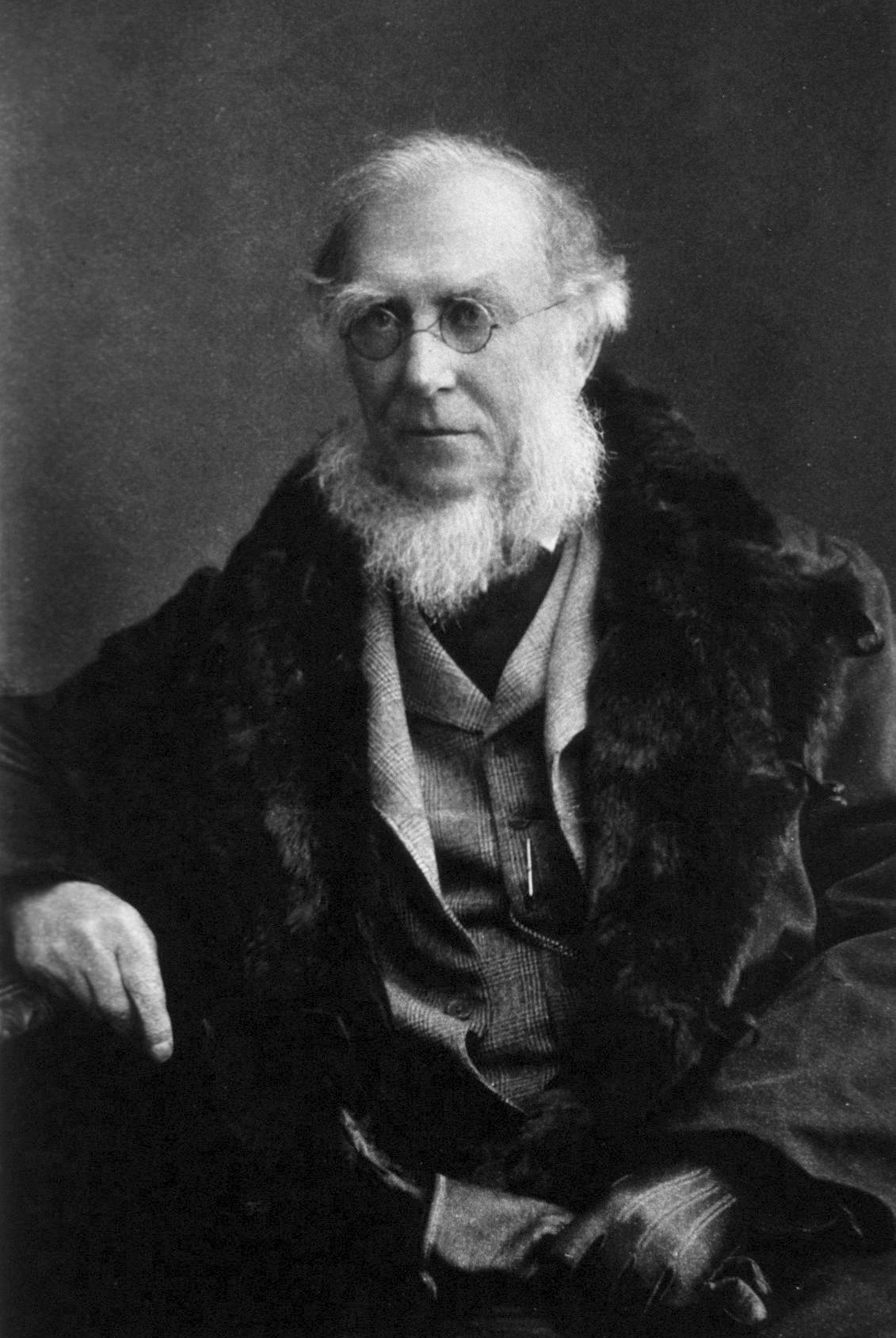
First publication of the Bentham & Hooker taxonomic system for seed plants published before there were internationally accepted rules for botanical nomenclature. Digital facsimile from the Biodiversity Heritage Archiv…
1878 CE
#9174
Tropical nature and other essays.
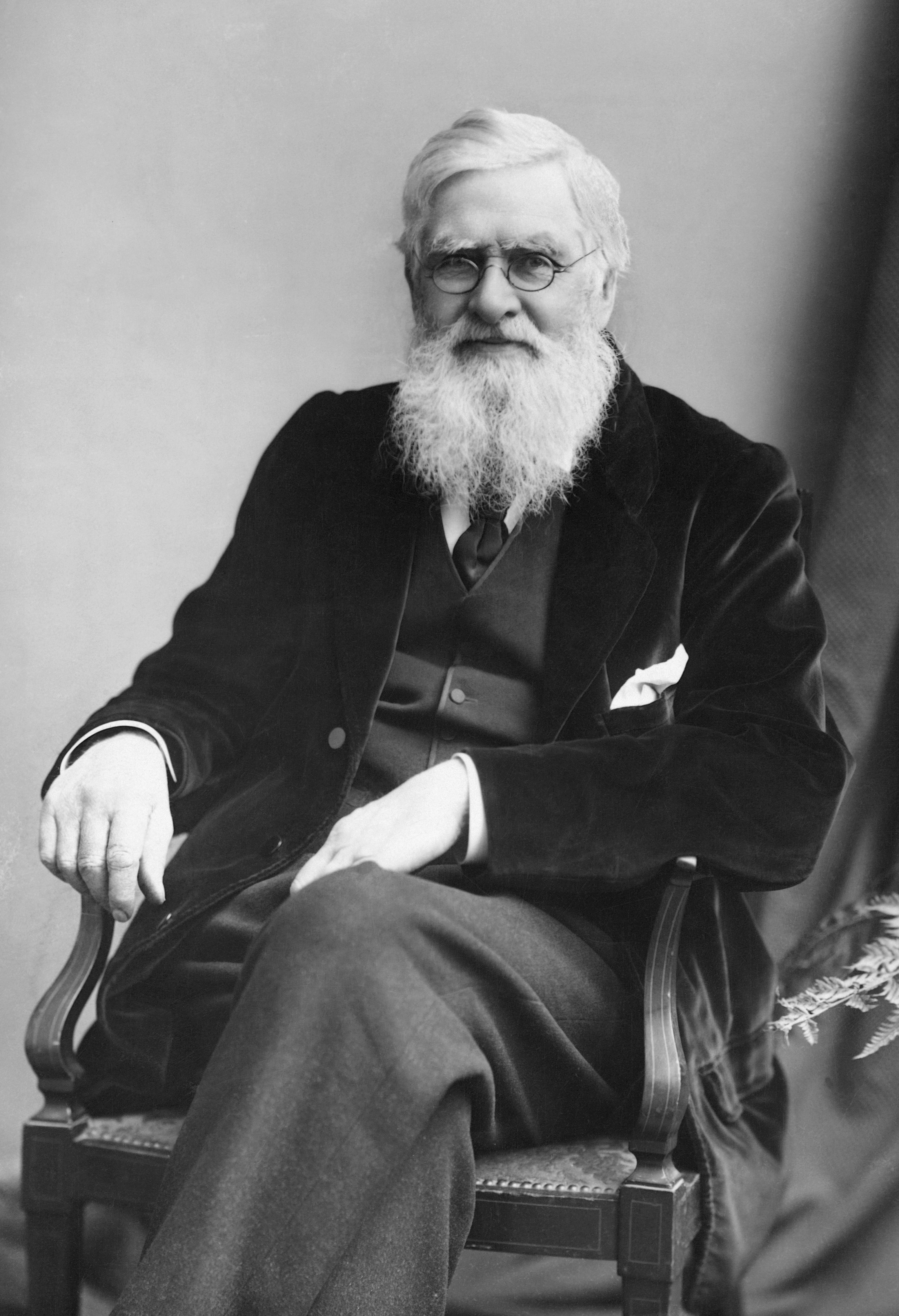
"Wallace's extensive work in biogeography made him aware of the impact of human activities on the natural world. In Tropical Nature and Other Essays (1878), he warned about the dangers of deforestation and soil erosio…
1981 CE
#9175
Molecular cloning of poliovirus cDNA and determination of the complete nucleotide sequence of the viral genome.


The poliovirus genome. Digital facsimile from PNAS through PubMedCentral at this link.
1981 CE
#9176
Primary structure, gene organization and polypeptide expression of poliovirus RNA.
The poliovirus genome. With around 10 co-authors. "The primary structure of the poliovirus genome has been determined. The RNA molecule is 7,433 nucleotides long, polyadenylated at the 3′ terminus, and covalentl…
1945 CE
#9177
Anatomy for artists.
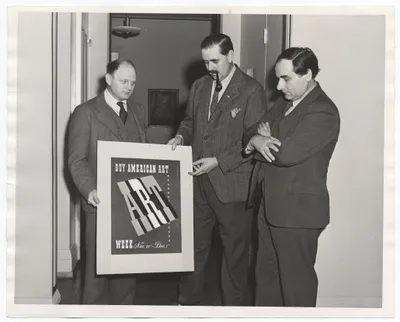
By the famous American social realist artist.
1858 CE
#9178
On the general geographical distribution of the members of the class Aves.
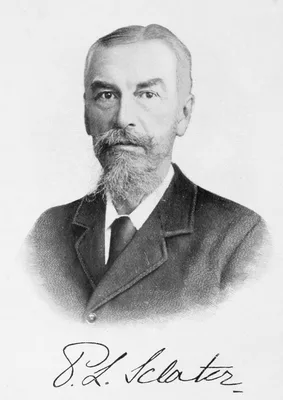
Sclater defined and named six zoological regions: the Palaearctic, Aethiopian, Indian, Australasian, Nearctic and Neotropical. With some name revision (Afrotropic for Aethiopian, and Indomalayan for Indian,) these zoo…
1948 CE
#9179
The geographical distribution of cold-blooded vertebrates.
"Darlington's most important contribution to science was his theory of the Old World tropical origin of dominant vertebrate groups. He first sketched out this formulation—which would influence research in zoogeo…
1911 CE
#9180
The world of life: A manifestation of creative power, directive mind and ultimate purpose.
"Wallace's comments on environment grew more strident later in his career. In The World of Life (1913) he wrote: "These considerations should lead us to look upon all the works of nature, animate or inanimate, as inve…
1907 CE
#9181
Is Mars habitable?
"His treatment of Mars in this book [Man's Place in the Universe] was brief, and in 1907, Wallace returned to the subject with a book Is Mars Habitable? to criticise the claims made by Percival Lowell that there were …
1915 CE
#9182
The north-west Amazons: Notes of some months spent among cannibal tribes.
"This 1915 volume recounts Captain Thomas Whiffen’s travels in Brazil and Colombia in the region between the rivers Issa (or Içá) and Apaporis, and the Putumayo District. The study looks at the way…
1511 CE
#9183
Libellus de lapidibus preciosis nuper editus.
The earliest medieval lapidary, and also the one which was quoted most widely. By the fourteenth century it was translated into French, Provençal, Italian, Irish, and Danish, and it was the first of Marbodius's…
1935 CE
#9184
Tiergeographie des Meeres.
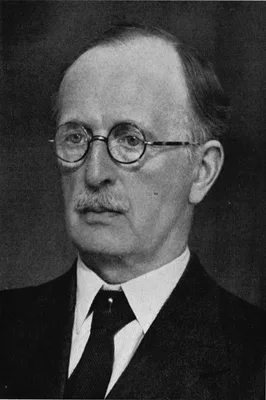
An analysis of all pertinent literature on marine animal distribution. Second edition published as English translation: Zoogeography of the sea (London: Sidgwick & Jackson, 1953).
1950 CE
#9185
Variation and evolution in plants.
The first comprehensive exposition of the relationship between genetics and natural selection in plants, and the most imporant book on plant evolution published during the 20th century. Stebbins combined genetics and …
1992 CE
#9186
Plant biomechanics: An engineering approach to plant form and function.
The first comprehensive treatment of plant biomechanics. "Niklas analyzes plant form and provides a far deeper understanding of how form is a response to basic physical laws. He examines the ways in which these laws c…
1994 CE
#9187
Plant allometry: The scaling of form and process.
The first book to apply allometry— one definition of which is the study of the growth rate of an organism's parts in relation to the whole — to studies of the evolution, morphology, physiology, and reprodu…
2002 CE
#9188
The structure of evolutionary theory.
A "technical book on macroevolution and the historical development of evolutionary theory.[1] The book was twenty years in the making,[2]published just two months before Gould's death.[3] Aimed primarily at profession…
1972 CE
#9189
Disease and society in provincial Massachusetts: Collected accounts, 1736-1939.
Includes Caulfield's "A history of the terrible epidemic, vulgarly called the throat distemper, as it occurred in His Majesty's New England colonies between 1735 and 1740," Yale J Biol Med. 11 (1939) 219–272. av…
1755 CE
#9190
Memoire sur les cors des pieds.
The first publication on podiatry, a pamphlet of 19, [1] pp. informally issued by Rousselot to promote his practice. Because of the non-standard title page without mention of place, publisher or date, the pamphlet see…
1966 CE
#9191
Phage and the origins of molecular biology. Edited by John Cairns, G. Stent, and J. D. Watson.

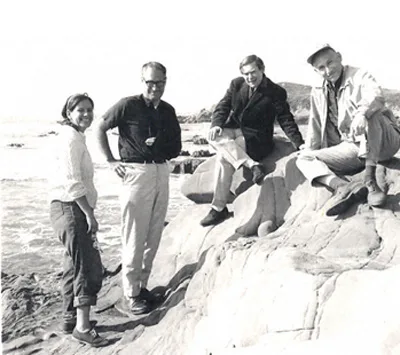
Expanded edition, 1992. 40th anniversary edition, 2007.
2000 CE
#9192
The emergence of life on earth. An historical and scientific overview.
1999 CE
#9193
The birth of the cell.
2000 CE
#9194
The evolution wars: A guide to the debates.

2015 CE
#9195
Radium and the secret of life.

2012 CE
#9196
Biology, computing and the history of molecular sequencing: From proteins to DNA, 1945-2000.
1820 CE–1823 CE
#9197
Zoological illustrations, or, original figures and descriptions of new, rare, or interesting animals, selected chiefly from the classes of ornithology, entomology, and conchology, and arranged on the principles of Cuvier and other modern zoologists. 3 vols.
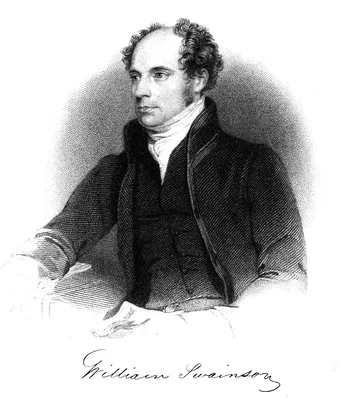
"Apart from the common and scientific names of many species, it is for the quality of his illustrations that he [Swainson] is best remembered. His friend William Elford Leach, head of zoology at the British Museum, en…
1682 CE
#9198
Dissertatio epistolaris . . . de observationibus nuperis circa curationem variolarum confluentium nec non de affectione hysterica.

"Sydenham so precisely describes the symptoms of hysteria that even today little can be added to what he said. He maintained that is was the most common chronic disease, and he recognized that in spite of the fact tha…
1954 CE–1956 CE
#9199