
1650–1659
46 entries with publication dates in this decade.
1650 CE
#10490
Anthropometamorphosis: Man transform’d, or the artificial changeling. Historically presented, in the mad and cruel gallantry, foolish bravery, ridiculous beauty, filthy fineness, and loathesome loveliness of most Nations, fashioning & altering their bodies from the mould intended by nature. With a vindication of the regular beauty and honesty of nature, and an appendix of the pedigree of the English gallant.
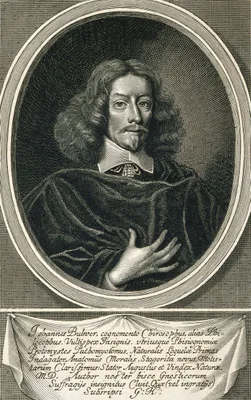
Extensively illustrated treatise on varieties of body modifications, real or imagined, includes details on hair styles, tatoos, piercing, including sexual aspects. Digital facsimile of the 1653 edition from the Intern…
1650 CE
#3729
De rachitide sive morbo puerili, qui vulgo The Rickets dicitur tractatus.
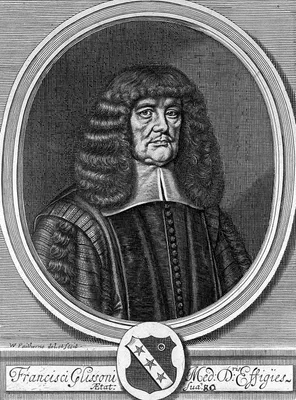
Although anticipated by Whistler and others in the description of infantile rickets, Glisson’s account was the fullest that had till then appeared. He was first (Chap. 22) to describe infantile scurvy. Glisson&r…
1650 CE–1653 CE
#11704
Historia naturalis. 6 vols: Historiae naturalis de quadrupedibus; Historiae naturalis de avibus; Historiae naturalis de piscibus et cetis; Historiae naturalis de exanguibus aquaticis; Historiae naturalis de insectis, de serpentibus et draconbius; Historiae naturalis de serpentibus.
The first 5 volumes were published in 1650; the last volume was published in 1653. This work, published in small folio format, includes 249 engraved plates and six elegant engraved title pages (4 resembling frontispie…
1650 CE–1653 CE
#13025
Historiae naturalis de quadrupetibus libri: Cum aeneis figuris; [Historiae naturalis de serpentibus libri II; Historiae naturalis de insectis libri III; Historiae naturalis de exanguibus aquaticis libri IV; Historiae naturalis de piscibus et cetis libri V; Historiae naturalis de avibus libri VI].
This work, which was a major expansion and reworking of material that Jonston originally outlined in his Thaumatographia naturalis (1632), was both illustrated and published by Matthäus Merian. Digital facsimile …
1651 CE
#382
Corporis humani disquisitio anatomica.
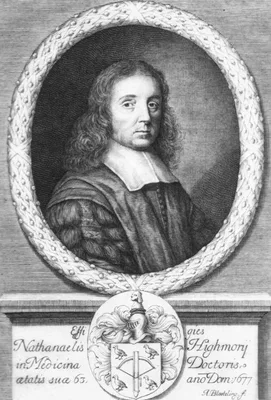
Highmore is remembered for his description of the maxillary sinus, known eponymically as the “antrum of Highmore” (already noticed by Casserius and figured by Leonardo da Vinci), the seminal ducts and the …
1651 CE
#467
Exercitationes de generatione animalium.
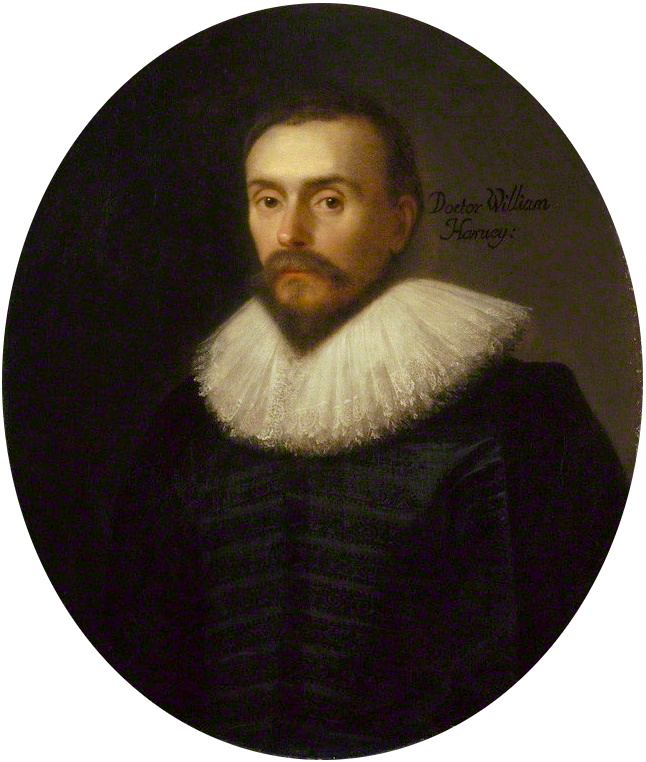
Harvey was among the first to disbelieve the erroneous doctrine of the “preformation” of the fetus; he maintained that the organism derives from the ovum by the gradual building up and aggregation of its p…
1651 CE
#1095
Experimenta nova anatomica, quibus incognitum chyli receptaculum, et ab eo per thoracem in ramos usque subclavis vasa lactea deteguntur.
Pecquet discovered the thoracic duct in dogs and its relation to the lacteals. Using a dog that was digesting, he described the thoracic duct, its entry into the subclavian veins, and the receptaculum chyli or chyle r…
1651 CE
#13742
Semeiotica uranica, or an astrological judgment of diseases from the decumbiture of the sick; 1. From Aven Ezra by the way of introduction. 2. From Noel Duret by way of direction. Wherein is layd down, the way and manner of finding out the cause, change and end of a disease. Also whether the sick be likely to live or dye, and the time when recovery or death is to be expected. To which is added the signs of life or death by the body of the sick party according to the judgment of Hippocrates.
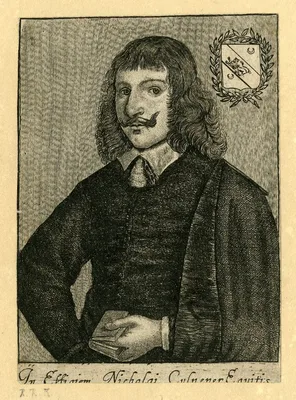
Digital text from quod.lib.umich.edu at this link
1651 CE
#467.1
The history of generation…
Highmore’s account of the development of the chick is the first embryological study based on microscopical examination, predating Malpighi (No. 468) by more than twenty years. This is also the first book in Engl…
1652 CE
#1096
De lacteis thoracicis in homine brutisque.
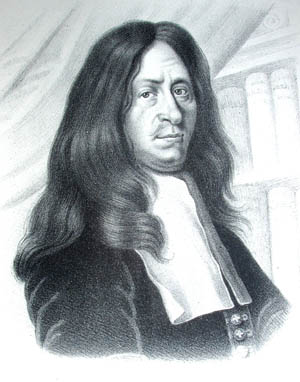
Contains Bartholin’s discovery of the thoracic duct. English translation, 1653.
1652 CE
#3050
Iatrologismorum seu medicinalium observationum pentecostae quinque utilibus praeceptis.
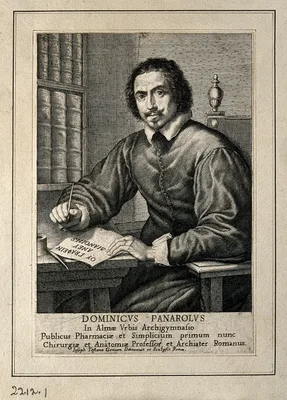
Panaroli described hemolytic jaundice of the newborn.
1652 CE
#3737
Observationes medicae.
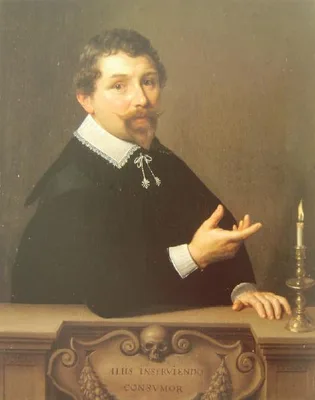
One of the earliest accounts of beri-beri is on pp. 300-05 of this work. Tulp, notable as the demonstrator in Rembrandt’s “Anatomy Lesson”, was among the first, in the same book, to describe the ileo…
1652 CE
#8588
The English physitian: Or, an astrologo-physical discourse of the vulgar herbs of this nation. Being a compleat method of physick, whereby a man may preserve his body in health; or cure himself, being sick, for three pence charge, with such things only as grow in England, as they being most fit for English bodies. Herein is also shewed, 1. The way of making plaisters, oyntments, oyls, pultisses, syrups, julips, or waters, of all sorts of physical herbs, that you may have them readie for your use at all times of the yeer. 2. What planet governeth every herb or tree (used in physick) that groweth in England. 3. The time of gathering all herbs, both vulgarly, and astrologically. 4. The way of drying and keeping the herbs all the yeer. 5. The way of keeping their juyces ready for use at all times. 6. The way of making and keeping all kind of useful compounds made of herbs. 7. The way of mixing medicines, according to cause and mixture of the disease, and part of the body afflicted.
"Culpeper attempted to make medical treatments more accessible to laypersons by educating them about maintaining their health. Ultimately his ambition was to reform the system of medicine by questioning traditional me…
1653 CE
#6320
De morbis puerorum, or, a treatise of the diseases of children.
The second work in English on pediatrics, published more than 100 years after the publication of Phaer’s book. Pemell was a general practitioner living at Cranbrook in Kent; he was buried only five days after th…
1653 CE
#3348
Grammatica linguae anglicae. Cui praefigitur, de loquela sive sonorum formatione tractatus grammatico-physicus.
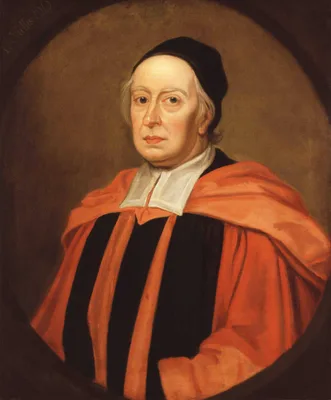
Wallis, a prominent teacher of deaf-mutes, classified the various sounds of the human voice. He taught by writing and gesture. He was Savilian Professor of Mathematics at Oxford.
1653 CE
#260
Historiarum et observationum medico-physicarum centuria prima (-secunda).
The first work to apply microscopy to medicine. Borel described 200 observations and applications; he probably saw the blood corpuscles and Sarcoptes scabiei.
1653 CE
#1098
Nova exercitatio anatomica, exhibens ductus hepaticos aquosos, et vasa glandularum serosa.
Rudbeck claimed to have discovered the intestinal lymphatics and their connexion with the thoracic duct in 1651, a claim disputed as to priority by Bartholin (Nos. 1096-97). This book was reproduced in facsimile in 19…
1653 CE
#5160
Thesis de carbunculo.
1653 CE
#1097
Vasa lymphatica.
Bartholin disputed the claim of Rudbeck as to priority in the discovery of the intestinal lymphatics. Although anticipated in this by Rudbeck, there is no doubt that Bartholinus was the first to appreciate the signifi…
1654 CE
#1098.1
Anatomia hepatis … subjiciuntur nonnulla de lymphae-ductibus nuper repertis.
Independently of Bartholin and Rudbeck, George Joyliffe (1621-58) observed the lymphatics. He communicated his discovery to Glisson early in 1652 and the latter included an account in the above work (Cap. xxxi). See N…
1654 CE
#972
Anatomia hepatis.
First accurate description of the capsule of the liver (Glisson’s capsule) and its blood-supply. He also described the sphincter of the bile duct (“Glisson’s sphincter”, the sphincter of Oddi).…
1654 CE
#151
Anthropometria.
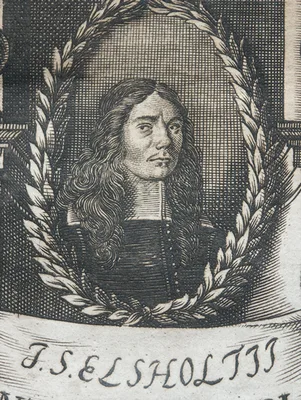
Elsholtz was the first physician to study anthropometry and human proportion.
1654 CE
#12810
Bibliotheca chimica. Seu catalogus liborum philosophicorum hermeticorum. In quo quatuor millia ciciter, authorem chimicorum vel de transmutatione metallorum, re minerali & arcanis, tam manuscriptorum, quam in lucem editorum, cum eorum editionibus, usque ad annum 1653 continentur.
The first independent bibliography of chemistry and alchemy, citing 4000 books and manuscripts, including authors or titles now lost or obtainable today only with great difficulty. Digital facsimile from Google Books …
1655 CE
#7121
Catalogus librorum rei medicae, herbariae, & chymiae bibliothecae Joannis Riolani medicorum Parisensium primarii.
The earliest sale catalogue of a private scientific or medical library may be that of Jean Riolan the Younger. John F. Fulton (1899-1960) owned a possibly unique copy of an inventory sale catalogue of Riolan’s l…
1655 CE
#6146.1
De nutritione foetus in utero paradoxa.
Page 245 contains a report of successful symphysiotomy.
1655 CE
#261
De vero telescopii inventore.
Borel collected evidence to show that Zacharias (sometimes called Zacharias Janssen) invented the compound microscope about 1590. Zacharias was a spectacle-maker of Middelburg, Holland.
1655 CE
#1452
Dissertatio de osse cribriformi, et sensu ac organo odoratus et morbis ad utrumque spectantibus, de coryza, hemorrhagia narium, polypo, sternutatione, amissione odoratus.
“Schneider’s membrane”, the pituitary membrane of the nasal chamber and sinuses.
1655 CE
#9324
Health's improvement, or rules for preparing all sorts of food used in this nation. Written by that ever famous Thomas Muffet, Doctor in physick: Corrected and enlarged by Christopher Bennet, Doctor in Physick, and fellow of the Colledg of Physitians in London.
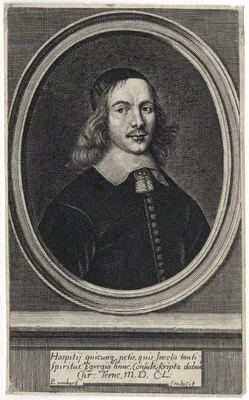
Moffet's work in nutrition was collected in his book Health's Improvement, which was designed more for the layman than for physicians. It also contains the first list of British wildfowl, recognizing for the first tim…
1655 CE
#7551
Museum Wormianum, seu, historia rerum rariorum: tam naturalium, quam artificialium, tam domesticarum, quam exoticarum, quae Hafniae Danorum in aedibus authoris servantur.
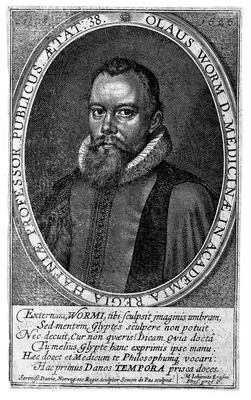
Edited for publication by Worm's son, Willum Worm. Digital facsimile from the Internet Archive at this link.
1655 CE
#10146
Prae-Adamitae, sive exercitatio super versibus duodecimo, decimotertio, & decimoquarto, capitis quinti Epistolae D. Pauli ad Romanos: Quibus inducuntur primi homines ante Adamum conditi.
"In his Prae-Adamitae, published in Latin in 1655 and in English as Men Before Adam in 1656, La Peyrère argued that Paul's words in Chapter 5, verses 12-14 of his Epistle to the Romans should be interpreted suc…
1655 CE
#3669.1
Χειροπλοθήκη seu armamentarium chirurgicum.
Scultetus is famous for his illustrations of surgical procedures and both surgical and dental instruments. With respect to dentistry he describes and illustrates stomatological operations and includes fine illustratio…
1656 CE
#1116
Adenographia: sive, glandularum totius corporis descriptio.
Wharton described the duct of the submaxillary salivary gland (“Wharton’s duct”). He described the thyroid more accurately than his predecessors, naming it. He also described “Wharton’s j…
1656 CE
#7620
Cortex Peruviae redivivus, profligator febrium, assertus ab impugnationibus Melippi Protimi ...
The first book on Peruvian bark or cinchona (chinchona) in the treatment of malaria.
1656 CE
#5821.1
Dissertationes anatomicae methodo synthetica exaratae…
Rolfinck was the first to demonstrate the location of cataract in the lens.
1656 CE
#8591
Flora sinensis, fructus floresque humillime porrigens serenissimo et potentissimo Leopoldo Ignatio, Hungariae regi florentissimo, &c. Fructus saecul promittenti Augustissimos.
The first description published in Europe of an ecosystem of the Far East, including animals as well as plants, with particular attention to Chinese fruit bearing plants, and medicinal properties of Chinese plants. Di…
1656 CE
#2120
Libellus de lithargyrii fumo noxio morbifico eiusque metallico frequentiori morbo vulgo dicto: Die Hütten Katze Oder Hütten Rauch: Cum Appendice de montano ffaectu asthmatico metallicidis familiari, quem Germanica lingua appellamus Die Bergsuche oder Berg Kranckheit.
Stockhausen had considerable experience in treating the diseases of miners. His book on industrial diseases did much to clarify contemporary knowledge regarding the relative toxicity of lead, mercury, arsenic, cobalt,…
1656 CE
#13071
Musaeum Tradescantianum: Or, a collection of rarities preserved at South-Lambeth neer London by John Tradescant.
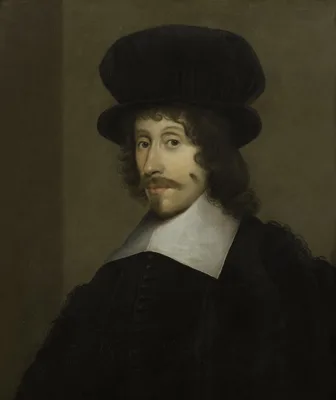
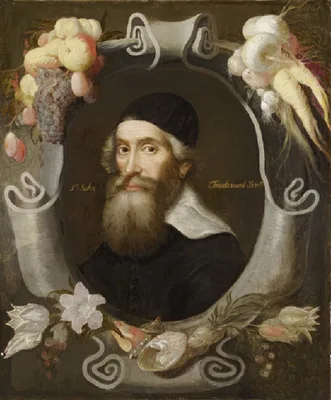
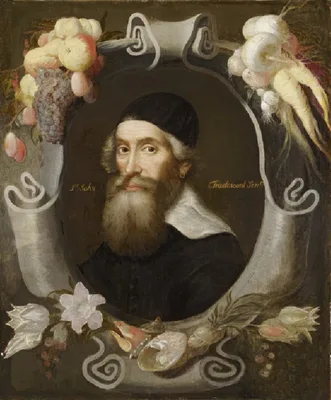
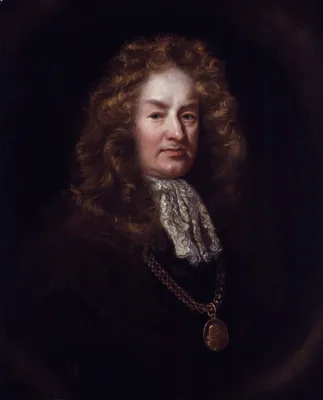
Catalogue of the first natural museum in England, the collection made by John Tradescant the Elder and the Younger, and left by John Tradescant the Younger to Elias Ashmole, who, along with Thomas Wharton, helped the …
1656 CE
#8861
Note overo memorie del museo di Lodovico Moscardo....Nel primo si disorre delle cose antiche, le quali in detto museo si trouano. Nel secondo delle petre, minerali, e terre. Nel terzo de corali, conchiglie, animali, frutti, & altre cose in quello contenute.
Moscardo's museum contained natural history specimens, archeological remains, and ethnographic objects. Around 1642 Moscardo acquired a portion of the collection of Francesco Calceolari and added it to his museum. Dig…
1657 CE
#8855
Bibliotheca botanica, seu herbarijstarum scriptorum promota synodia...Ia. Antonio Bumaldo [i.e. O. Montalbani], Collectore.
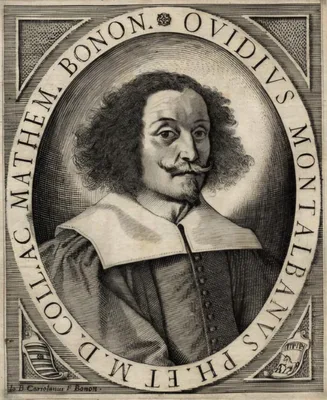
The first general bibliography of botany books, including herbals. The author, a prolific writer, often wrote under the pseudonym of Antonio Bumaldo.
1658 CE
#13396
Catalogus Horti Botanici Oxoniensis: Alphabeticè digestus, duas, præterpropter, plantarum chiliadas complectens, priore duplo auctior, ... : Cui accessere plantæ minimùm sexaginta suis nominibus insignitæ....Cura & opera socia Philippi Stephani et Guilelmi Brounei. Adhibitis etiam in consilium D. Boberto.
Catalogue of plants in the Oxford Botanic Garden, the oldest botanic garden in Great Britain. Digital facsimile from Google Books at this link.
1658 CE
#1825
De Indiae utriusque re naturali et medica libri quatuordecim.
This is an extensively revised and enlarged second edition of Piso’s Historia naturalis Brasiliae (1648). In this edition Piso reprinted Bontius's De medicina Indorum (1642) with two additional books on Asian fl…
1658 CE
#152
Metoposcopia libris tredecim et octingentis faciei humanae eiconibus complexa.
![CARDANO, Girolamo [Gerolamo; Hieronymus Cardanus] (1501 – 1576)](/media/portraits/7679)
Contains 800 illustrations of the human face. Cardan, Professor of Medicine at Padua as well as a celebrated mathematician and scientist, claimed to be able to draw horoscopes from the appearance of the face. A French…
1658 CE
#2703
Observationes anatomicae, ex cadaveribus eorum, quos sustulit apoplexia.
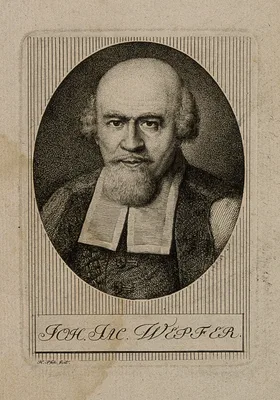
Wepfer showed apoplexy to be a result of hemorrhage into the brain. He described four cases, with clinical and post mortem findings. He preceded Willis (No. 1378) in describing the “circle of Willis”. Part…
1658 CE
#2528.1
Scrutinium physico-medicum contagiosae luis, quae pestis dicitur.
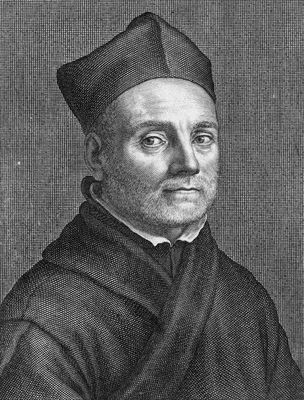
Kircher, a Jesuit scholar and polymath, not specifically trained in medicine, was probably the first to employ the microscope in investigating the cause of disease. He mentioned that the blood of plague patients was f…
1659 CE
#13819
Bibliotheca medical Henrici Fuiren.
Catalogue of the library of Henrick Fuiren compiled by his brother Thomas after Henrick's death. Henrick bequeathed the library to the University of Copenhagen.
1659 CE
#2464
Diatribae duae medico-philosophicae, quarum prior agit de fermentatione sive de motu intestino particularum in quovis corpore, altera de febribus sive de motu earundum in sanguine animalium.
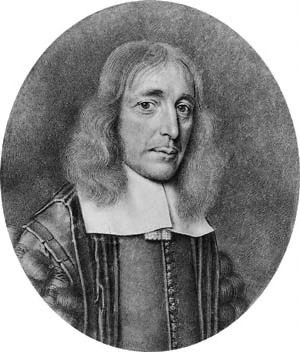
Includes (De febribus, cap. X, XIV) first description of epidemic typhoid. English translation in his Practice of physick, 1684, Treatise II, 83-98, 1111-18. Contains the earliest suggestion that fermentation is an in…