
1470–1479
45 entries with publication dates in this decade.
1470 CE
#13696
Rhetorica ad C. Herennium.
First description of the "method of loci," the memory technique as known as the "memory palace." Because of its wide use during the Middle Ages this text survives in hundreds of medieval manuscripts. Fourteen printed …
1471 CE
#1789
Antidotarium. Add: Quid pro quo; Synonyma.
This work, which first circulated in manuscript in 1140, was the first formulary to be printed. It consists of 139 prescriptions and includes the original formula for the “anesthetic sponge” (spongia somni…
1471 CE
#91
De proprietatibus rerum.
A condensed encyclopedia of what was then understood by natural science. The work was probably written about the middle of the 13th century. It was one of the most widely read scientific works of the Middle Ages. Caxt…
1471 CE
#11287
Liber servitoris de praeparatione medicinarum simplicium. Translated by Abraham Tortuosiensis. Edited by Simon a Cordo.
Book 28 on drugs from the Al-Tasrif, a 30-volume Arabic encyclopaedia on medicine and surgery, written ca. 1000 CE by Abulcasis. ISTC No. ia00014000. Digital facsimile from the Württembergische Landesbibliothek S…
1471 CE
#10960
Opera medicinalia. Ed: Peregrinus Cavalcobovis, with a preface by Nicolaus Gupalatinus. Consisting of: Canones universales. De simplicibus. Grabadin. Practica.
This undated edition, which the ISTC im00508000 catalogues as "not before 18 May 1471", may be the earliest printed edition of the writings of the medieval Persian or Assyrian Nestorian Christian physician Yuhanna ibn…
1471 CE
#11746
Ruralia commoda.
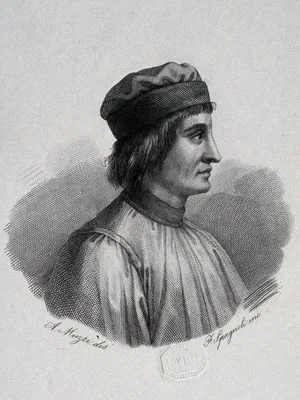
The most famous medieval agricultural treatise, and, apart from the Bartholomaeus Anglicus's De proprietatibus rerum, the earliest non-classical work to deal with agriculture and viticulture. The author, a successful …
1472 CE
#9400
Aristotle's De anima with the commentary of Averroes.
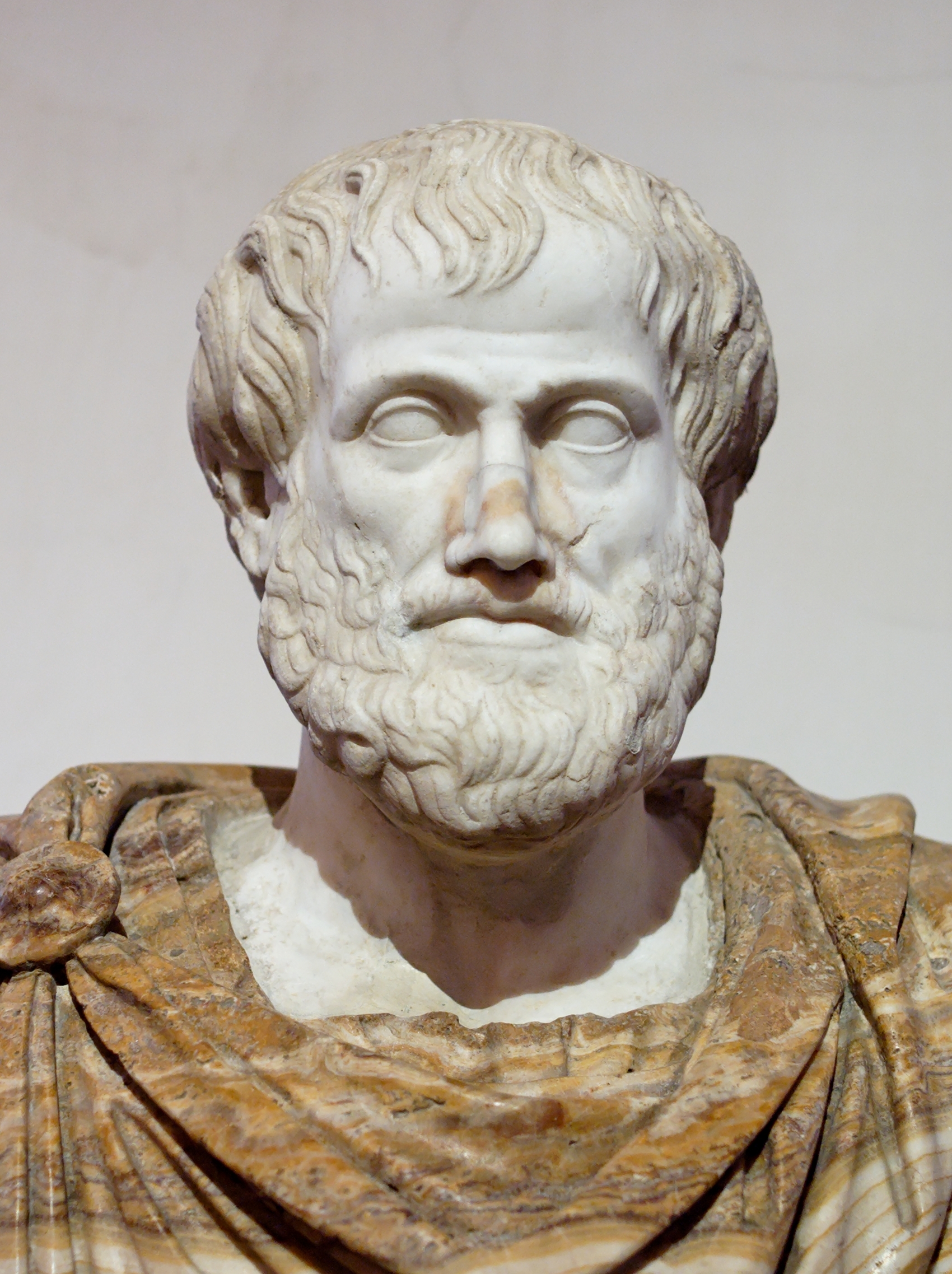
"Each paragraph of the text of Aristotle is printed in a new and an old translation, and is followed by the commentary of Averroes on the latter (BMC)" (ISTC No. IDia00969000). Because of the supreme position of Arist…
1472 CE
#2070
Conciliator differentiarum philosophorum et medicorum. Add: De venenis.
Includes the first printed book on toxicology; one of the more elegantly printed of medical incunabula, printed in folio format. For an English translation, see Ann. med. Hist., 1924, 6, 26-53. ISTC No. ip00431000. Di…
1472 CE
#6315
De infantium aegritudinibus et remediis.
The first printed book dealing exclusively with pediatrics. This was also the first medical treatise, and probably also the first scientific treatise, to make its original appearance in printed form rather than having…
1472 CE
#6787
Etymologiae.
The principal work of Isidore of Seville, one of the greatest educationists of the Middle Ages. The Etymologiae, an encyclopedic work, presented the sum of contemporary knowledge on all branches of science. Book IV af…
1472 CE
#2192
Opera medica, sive Practica cum textu noni ad Almansorem.
A commentary on Rhazes with notes and additions. For bibliographical and other details regarding this, the first large medical book to be printed, see the essay by Arnold C. Klebs in: Essays on the history of medicine…
1473 CE
#5114
Büchlein der Ordnung (Pest Regiment)
Steinhöwel was a Swabian author, humanist, and translator who was much inspired by the Italian Renaissance. His translations of medical treatises and fiction were an important contribution to early Renaissance Hu…
1473 CE
#43
Canon medicinae [Latin] (Lib I-V) (Tr: Gerardus Cremonensis) (5 vols.)
![AVICENNA, [Abū ʿAlī al-Ḥusayn ibn ʿAbd Allāh ibn Al-Hasan ibn Ali ibn Sīnā] (980 – 1037)](/media/portraits/9572)
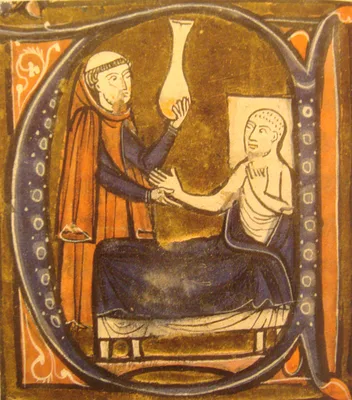
Avicenna is said to have written more than 100 books, most of which have perished. He wrote on the etiology of epilepsy and described diabetes, noticing the sweetish taste of the urine. His Canon is one of the most fa…
1473 CE
#13028
De balneis. Add: Francesco da Siena: Dicta de balneo Petrioli. Bonaventura de Castello: Recepta aquae balnei de Porrecta.
First printed edition of da Foligno's treatise on bathing together with the first printing with a definite date of Castelli's work. ISTC No. ig00133000. Remarkably the ISTC cites two different separate undated printin…
1473 CE
#88
De rerum natura.
The work is a reasoned system of philosophy written in verse. Book V attempts an explanation of the origin of the universe and life, and the gradual advance of man from the savage state. All these topics are treated f…
1473 CE
#12809
Liber Serapionis agregatus in medicinis simplicibus. Translatio Symois Januensis interprete Abraa iudeo tortuosiesi de arabico in latinu. Add: Galenus: De virtute centaureae.
![GALEN, [Κλαύδιος Γαληνός; Galen of Pergamon] (129 – 216)](/media/portraits/21)
"Serapion the Younger ... is called "the Younger" to distinguish him from Serapion the Elder, aka Yahya ibn Sarafyun, an earlier medical writer with whom he was often confused. Serapion the Younger's Simple Medicament…
1473 CE
#6316
Regiment der jungen Kinder.
This work has very little originality, being mainly derived from the Arabic physicians of 500 years before, but is noteworthy as being the first book on pediatrics printed in German. It includes what is probably the f…
1473 CE
#6788
Synonyma medicinae, seu clavis sanationis.
The first printed medical dictionary. It was originally published at Ferrara, 1471-2?, of which the only recorded copy is a fragment of 21 leaves in the Bodleian Library. ISTC No. is00526000. “The great work of …
1474 CE
#5816
De oculis eorumque egritudinibus et curis.
The earliest printed book on ophthalmology. Grassi was the most celebrated ophthalmic surgeon of the Middle Ages. English translation by Casey A. Wood, 1929. ISTC No. ig00352000.
1474 CE
#146
Historiae. Tr: Laurentius Valla. Ed: Benedictus Brognolus. Add: Benedictus Brognolus: Epistola ad Nicolaum Donatum.
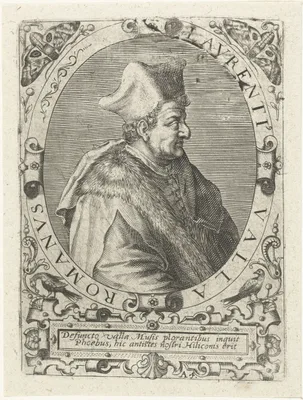
Born in Asia Minor, Herodotus travelled through Greece, Asia Minor and North Africa. His Historiae includes careful observations on the nature and habits of various peoples, and he may be regarded as the founder of an…
1474 CE
#5552
La ciroxia vulgarmente fata.
![SALICETO, Guglielmo da [WILLIAM OF SALICETO] (1210 – 1277)](/media/portraits/6798)
Saliceto was Professor of Surgery at Bologna about 1268; his treatise on surgery, written about 1275, was the leading work on the subject in the 13th century. William broke with tradition by claiming that pus formatio…
1474 CE
#7151
Liber pandectarum medicinae.
An encyclopedia of medicines, mostly derived from plants, completed about the year 1317. The medicines are arranged in alphabetical order. Two printed editions were issued in 1474. The first, issued in Naples, appeare…
1475 CE
#6789
Aggregator, sive de medicinis simplicibus.
First printed edition of an encyclopedic dictionary of medicine, containing a large number of medical recipes based upon Greek and Arabic sources. Dondi completed the work in 1355. Manuscripts of his text are preserve…
1475 CE
#276.1
Buch der Natur.
The first printed book to contain illustrations of animals, and the first notable scientific book in German. It discusses animals, birds, fish, anatomy, physiology, plagues, the medicinal value of plants and stones, e…
1475 CE
#9146
De conservatione sanitatis. With additions by Johannes Philippus de Lignamine.
This medieval guide to health and hygiene is sometimes misattributed to Hugo Benzi. It was one of the earliest medical or health texts to appear in print, and is unusual in that the printer, who was not a physician, i…
1475 CE
#10733
De honesta voluptate et valetudine.
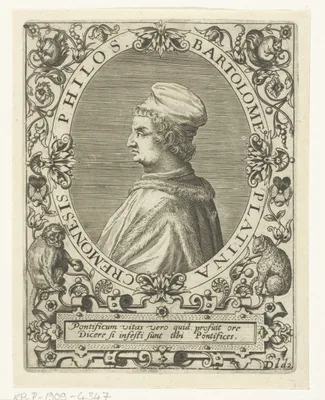
The first two editions of De honesta voluptate et valetudine, the first printed work on cookery, diet, and health, by Italian humanist and papal librarian Bartholomeo Platina (Sacchi) appeared at roughly the same time…
1476 CE
#52
Articella seu opus artis medicinae. Con: Johannitius: Isagoge ad tegni Galeni. Philaretus: De pulsibus; Theophilus Protospatharius: De urinis. Hippocrates: Aphorismi (comm: Galenus; tr: Constantinus Africanus); Prognostica (comm: Galenus); De regimine acutorum morborum (comm: Galenus; tr: Gerardus Cremonensis). Galenus: Liber Tegni, sive Ars medica (comm: Hali; tr: Gerardus Cremonensis).
![HIPPOCRATES, [Ἱπποκράτης; Hippocrates of Kos] (-460 – -370)](/media/portraits/50)
A collection of Greek, Roman and Byzantine texts on medicine, written in Latin, that was mainly used as medical school textbook or reference manual between the 13th and 16th centuries. The Articella grew around a synt…
1476 CE
#274
De animalibus. Translated by Theodorus Gaza. Edited by Ludovicus Podocarthus.
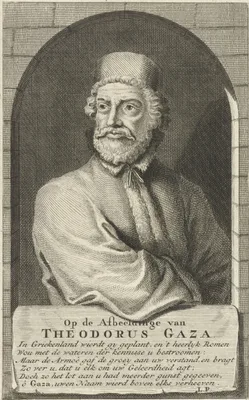
Includes Aristotle's De historia animalium, De partibus animalium, and De generatione animalium. Aristotle was the first scientist to gather empirical evidence about the biological world through observation. By his ca…
1476 CE
#39
Liber nonus ad Almansorem (cum expositione Silani de Negris).
The Almansor, so named after the prince to whom it was addressed, was a popular textbook and one of the first general medical texts to be printed. Rhazes ranks with Hippocrates and Galen as one of the founders of clin…
1476 CE
#4204
Summa conservationis et curationis. Chirurgia.
Contains (Cap. cxl) his classic account of renal edema: De duritie in renibus, an English translation of which is in Major, Classic descriptions of disease, 3rd ed., 1945, p. 527. ISTC no. is00032000.
1477 CE
#1791
De viribus herbarum carmen.
De viribus herbarum carmen has been attributed to Macer Floridus, a pseudonym of Odo of Meung, who lived in the Loire area of France towards the end of the eleventh century. Macer's unillustrated text described the me…
1477 CE
#10725
Liber phsionomiae [and other works].
![SCOT, Michael [Michael Scotus] (1175 – 1232)](/media/portraits/12461)
"Composed between 1209 and 1226, the first of the two primary texts discusses human generation — anatomy, physiology, astrology, sexual behavior, conception and the health of the fetus. The second part, the Phys…
1478 CE
#361
Anatomia.
First dated printed edition of the first medieval book devoted solely to anatomy, written by Mondino for his students in 1316. An earlier, but undated edition, of which only 3 copies are recorded, appeared in Padua ab…
1478 CE
#3666.83
Chirurgia [French]. Translated by Nicolaus Panis.
Guy de Chauliac studied medicine and surgery in Montpellier and Paris, and served as the personal physician to Popes Clement VI, Innocent VI and Urban V. His Chirurgia magna, written in the early 1360s, remained a sta…
1478 CE
#276
De animalibus. Edited by Fernandus Cordubensis (Fernando de Córdoba).
Albertus was a Dominican monk and the most eminent naturalist of the 13th century; his work on animals contained a good deal of personal observation. He was the first to comment on virtually all of the writings of Ari…
1478 CE
#6934
De materia medica. Ed: Petrus de Abano. Comm: Petrus de Abano.
![DIOSCORIDES, Pedanius [Πεδάνιος Διοσκουρίδης] (40 – 90)](/media/portraits/2028)
The first printed edition of Dioscorides, translator unidentified. A Greek physician from Anazarbus in Cilicia (now Turkey), Dioscorides traveled to the Greek mainland, to Crete, Egypt and Petra. He is believed to hav…
1478 CE
#20
De medicina. Ed: Bartholomaeus Fontius.
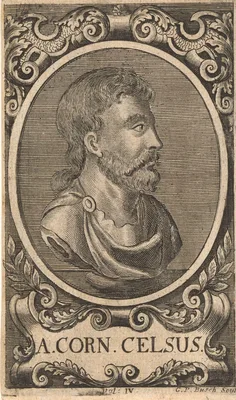
De Medicina is the oldest Western medical document after the Hippocratic writings. Written about 30 CE, it remains the greatest medical treatise from ancient Rome, and the first Western history of medicine. Celsus&rsq…
1478 CE
#7086
Halieutica, sive de piscatu. [Translated by Lorenzo Lippi, with recipes for cooking added by Lippi.]
The didactic poem on fish and fishing by Oppian of Anazarbus, a 2nd-century Greco-Roman poet, survived the Middle Ages essentially in its entirety, consisting of 3500 lines in Greek. The poem was dedicated to the empe…
1478 CE
#1959.2
Von Bewahrung und Bereitung der Weine.
The first printed book on wine, its production and preservation, translated from the Latin by Wilhelm von Hirnkofen. It discusses the value of wine in diet and as a medication. Wine has been called the oldest document…
1478 CE–1482 CE
#5115
Tractatus de pestilentia.
The most widely disseminated of all plague tracts from the time of the Black Death, of which 33 printed editions appeared in the 15th century. A French rhymed version appeared in 1476, but this version is very differe…
1479 CE
#17
Opera. In four parts dated: I) 15 Sept. 1479; II) 13 Oct. 1479; III) 21 Oct. 1479; IV) 8 Nov. 1479. Contents: [I] Praedicamenta, De interpretatione, Analytica priora (Tr: Boethius). Add: Porphyrius: Isagoge in Aristotelis Praedicamenta (Tr: Boethius). Gilbertus Porretanus: Liber sex principiorum. Boethius: Divisiones. [II] Analytica posteriora (Tr: Jacobus Veneticus). [III] Sophistici elenchi, Topica (Tr: Boethius). [IV] Physica (Tr: Guilelmus de Moerbeka).
Aristotle, at one time tutor to Alexander the Great, was, among other things, the first observational biologist, and the founder of comparative anatomy. His views had a profound influence in determining the direction …
c. 1474 CE
#5113
De epidemia et peste.
One of the earliest works written on public health, and one of the earliest printed medical books. It was first printed in Arnaldus de Villanova’s De arte cognoscendi venena (Padua, 1473; Mantua, 1473). Above is…
c. 1475 CE
#13544
Secreta mulierum et virorum (cum commento).
This work on the physiology and procreative "secrets" of women was attributed to Albertus Magnus, but is now thought to have been written by one of his disciples. It was one of the most widely printed medical works in…
c. 1477 CE
#1794
Artzneibuch.
The first German pharmacopeia, and a very early work written and published in the vernacular. The book was an important German text of popular medicine in its day. Digital facsimile from the Bayerische StaatsBibliothe…
c. 1477 CE–c. 1483 CE
#1959.3
Regimen sanitatis Salernitanum (With commentary by [Pseudo-Arnoldus de Villa Nova]). Add: Arnoldus de Villa Nova: Regimen sanitatis ad regem Aragonum.
Probably originating about 1160, the Regimen sanitatis from the medical school at Salerno (where medicine was first treated as a separate science) had greater popular influence than virtually any other medieval medica…